How to Care for Fine Thin Hair: A Step-by-Step Plan
To care for fine thin hair, the most reliable approach is a gentle, low-weight routine: mild cleansing, light conditioning focused on the ends, careful handling when hair is wet, and less heat and tension. Fine hair describes the thickness of each individual strand, while thin hair usually describes how many strands cover the scalp, and many people have one, the other, or both. Because the two overlap, the same habits tend to help either way, though results vary from person to person.
If you have ever watched a style collapse by lunchtime, felt a conditioner leave your roots flat, or noticed your scalp showing more under bright light, you know how frustrating this hair type can be. Products that work beautifully on coarse, dense hair can weigh yours down, and rough handling can leave strands looking frayed. The fix is rarely one miracle product. Solving it comes down to order: figure out what is happening first, change the quick wins next, build habits after that, and know when to bring in a professional.
Related reading: How to Choose a Shampoo for Your Scalp
Pinpoint the Problem First
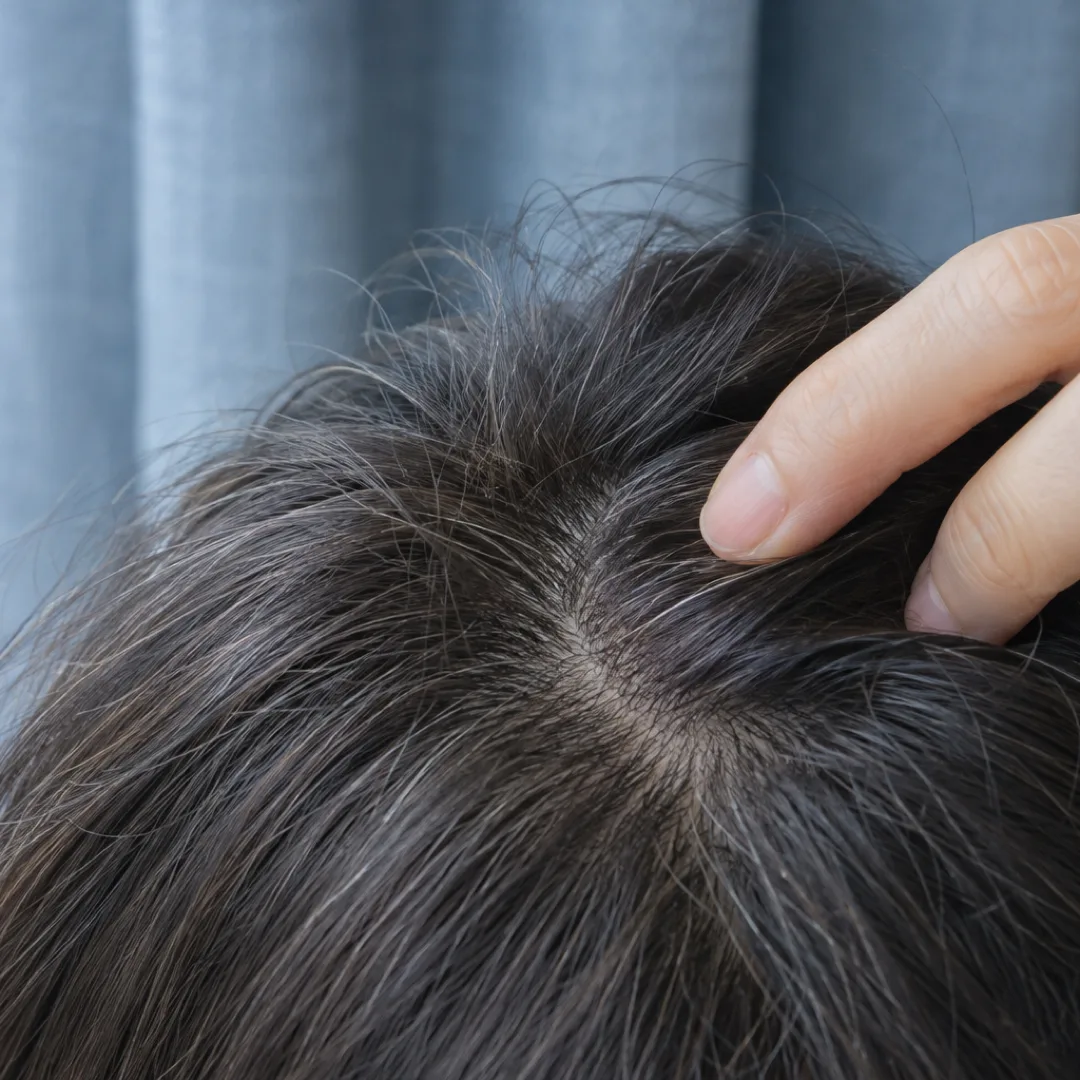
Before changing anything, it helps to separate three situations that often get lumped together. Fine hair means individual strands have a small diameter. Thin hair means lower density, so there is less hair per area of scalp. Hair loss or shedding is a change over time, where you are losing more than you used to. Each one calls for a slightly different response, and mixing them up can lead to buying products that do not match the real issue.
Questions that help you sort it out
- Has this always been your hair type? If your hair has been fine since childhood, you are likely dealing with a natural trait. A noticeable change over recent months is a different story.
- Is your hair breaking or falling out at the root? Short, snapped pieces of varying lengths often point to breakage from styling or friction. Strands with a small bulb at one end usually come out of the follicle, which is normal shedding in small amounts.
- Is it oily, dry, or both? Fine hair tends to show oil quickly because there is less hair to spread it across, but a dry or irritated scalp can also make hair look limp.
- What are you using now? Heavy oils, rich masks, and layered styling products are common reasons fine hair looks flat or greasy.
The American Academy of Dermatology notes that everyday hair shedding is normal and that hair loss can have many different causes. That is why self-sorting is only a starting point, not a diagnosis. If something about the pattern worries you, the last section covers when to get it checked.
Step 1: What to Change Right Now
These are the quick adjustments you can make today without buying much of anything. Each one follows the same logic: what to do, how to do it, and why it matters for fine strands.
- Swap heavy products for lightweight ones.
What: Look at your shampoo, conditioner, and any leave-in products. How: Choose formulas labeled lightweight, volumizing, or for fine hair, and keep thick butters and rich oils away from the roots. Why: Fine hair has less structural weight to support heavy ingredients, so residue can make it look flat, stringy, or greasy sooner.
- Condition the lengths, not the scalp.
What: Rethink where conditioner goes. How: Most people with fine hair keep it from the mid-lengths down to the ends and rinse thoroughly. Why: Ends are the oldest, most worn part of the strand and benefit most from moisture, while the roots usually have enough natural oil already.
- Handle wet hair gently.
What: Change how you towel-dry and detangle. How: Pat or squeeze water out rather than rubbing, and work through knots with a wide-tooth comb, starting at the ends and moving upward. Why: Wet hair is generally more fragile and stretches more easily, and fine strands have less cushion against snapping.
- Loosen your hairstyles.
What: Look at ponytails, buns, and braids. How: Use soft, snag-free hair ties and avoid pulling hair tight, especially in the same spot every day. Why: Repeated tension can stress the hairline and strands, and fine hair has less margin for it.
None of these steps require special equipment, and none of them promise a dramatic change overnight. They simply remove the common habits that tend to work against fine hair.
Step 2: What to Do Within the Week
Once the quick fixes are in place, a few slightly bigger adjustments can be made over the next several days. These take a bit of planning, which is why they come second.
- Audit your product shelf.
What: Go through everything you use on your hair. How: Set aside anything that feels waxy, sticky, or leaves a film, and note which products you layer together. Why: Buildup is a frequent reason fine hair looks dull and limp, and it is easier to spot once you compare products side by side.
- Adjust your washing rhythm to your scalp.
What: Decide how often to cleanse. How: Pay attention to when your roots actually start to feel oily or itchy, and let that guide your schedule rather than a rule you read somewhere. Why: Fine hair often looks greasy faster, but washing patterns that suit one person can feel too drying or too oily for another, so personal observation matters more than any fixed formula.
- Reconsider heat styling.
What: Look at how much heat you use. How: Try air-drying more often, and if you do use hot tools, use them on lower settings and consider a heat protectant made for hair. Why: Fine strands can be more vulnerable to heat damage, and the American Academy of Dermatology has pointed out that frequent heat styling can contribute to hair damage in general.
- Think about a shape that works with your hair.
What: Talk with a stylist about cuts. How: Ask about blunt lines, soft layers, or lengths that keep ends looking fuller. Why: Over-long, wispy ends can make fine hair look thinner, while a well-chosen cut can create the look of more body without changing the hair itself.
A note on products with active ingredients
Some people look at shampoos, serums, or topical products that mention growth, thickness, or scalp support. Claims in this area vary widely, and cosmetic products generally cannot promise to change how hair grows. If you are considering anything that goes beyond basic cleansing and conditioning, it is sensible to ask a pharmacist or a dermatologist before using it, especially if you have a sensitive scalp, a skin condition, or you are pregnant or nursing.
Step 3: Build Habits That Last
Fine hair rewards consistency more than intensity. The third stage is about the slow, ongoing choices that keep strands in better condition over months rather than days.
- Protect hair while you sleep.
What: Reduce overnight friction. How: Some people use a smooth pillowcase or a loose, soft hair tie at night. Why: Rubbing against rough fabric can rough up the outer layer of the strand, and fine hair tends to tangle and break more easily.
- Be cautious with chemical services.
What: Think carefully about bleaching, relaxing, and strong coloring. How: Spread services out, choose a trusted stylist, and tell them your hair is fine and thin before they start. Why: Chemical processing can weaken strands, and hair that is already delicate has less reserve to absorb the stress.
- Look at your overall lifestyle.
What: Consider factors beyond hair products. How: Aim for a varied, balanced diet, manage stress as best you can, and keep up with regular health checkups. Why: The National Institutes of Health and MedlinePlus note that nutrition, stress, illness, and certain medications can be linked to changes in hair, so hair often reflects what is happening elsewhere in the body.
- Be gentle with the scalp.
What: Treat the scalp as skin. How: Use fingertips rather than nails when cleansing, and rinse thoroughly so no product lingers. Why: A comfortable, clean scalp is the foundation for the hair that grows from it, and irritation can make hair look and feel worse.
- Style for volume without overdoing it.
What: Add lift in a way that does not stress strands. How: Many people with fine hair like a light volumizing product at the roots, blow-drying roots first, or using soft rollers. Why: These methods add body through shape rather than weight, though how long the effect lasts differs between people and weather conditions.
Patience matters here. Hair grows slowly, so changes in how it looks and feels usually show up gradually, and it can take a while before you can tell whether a new habit is making a difference.
When It Is Not Working
Sometimes careful home care is not enough, and that does not mean you did anything wrong. Hair thinning can have causes that a better shampoo cannot address, so it is worth knowing the signs that point toward a professional conversation.
Signs worth getting checked
- Hair that is shedding noticeably more than usual, or has changed quickly over a short period.
- A widening part, a receding hairline, or visible patches where the scalp shows through.
- Scalp itching, burning, pain, redness, scaling, or sores that do not settle down.
- Thinning that appears alongside other changes, such as unusual tiredness, weight changes, or irregular periods.
- Thinning that started after a new medication, illness, surgery, or a stressful period.
- Hair loss that is causing you distress, regardless of how it looks to others.
The American Academy of Dermatology advises that a board-certified dermatologist can look for the underlying reason behind hair loss, and that early evaluation is often useful because some types respond better when addressed sooner. A primary care provider can also be a good first stop, particularly if other symptoms are involved. They may ask about your history, examine your scalp, and decide whether tests are appropriate.
If a professional suggests a prescription, an over-the-counter topical, a supplement, or an in-office procedure, the right choice, amount, and timing are decisions for you and that clinician or pharmacist, based on your health and any other medicines you take. Be wary of anything that promises guaranteed regrowth. To care for fine thin hair well, treat home habits as a solid foundation, and treat a professional opinion as the next step when something seems off.
Frequently asked questions
Does washing less often make fine thin hair look fuller?
It depends on your scalp. If your roots stay comfortable between washes, spacing them out may reduce dryness, but if oil builds up quickly and weighs hair down, cleansing more often may suit you better. The most useful guide is how your own scalp feels rather than a fixed schedule.
Should I put conditioner on my roots if my hair is thin?
If your hair is fine and tends to go flat, keeping conditioner on the mid-lengths and ends is the more common approach, because roots usually have enough natural oil. A lightweight formula and thorough rinsing help reduce the residue that can make hair look limp.
Can styling habits alone cause thinning?
If you regularly wear tight styles or use high heat, those habits can stress strands and contribute to breakage, which may make hair look thinner. Thinning can also come from other causes unrelated to styling, so persistent or sudden changes are worth discussing with a healthcare professional.
When is a change in my hair worth seeing a professional about?
If you notice rapid shedding, bald patches, a scalp that is painful or inflamed, or thinning alongside other symptoms, a dermatologist or primary care provider can help work out the cause. The same applies if the change started after a new medication or illness, or if it is affecting your well-being.
Disclaimer: This article is for informational purposes only and is not a substitute for professional medical advice, diagnosis, or treatment. Please consult a licensed professional for personal health decisions.