How to Care for Fine Hair Without Weighing It Down
To care for fine hair without weighing it down, keep your routine light, targeted, and attached to habits you already have. Fine strands tend to go flat quickly when they meet heavy products, too much conditioner near the roots, or layers of styling add-ons. Instead of building a complicated new regimen, you can hang a few small actions onto things you already do every week, such as washing, brushing, or getting ready for bed. Results vary from person to person, so treat everything below as a flexible starting point.
This approach is sometimes called habit stacking: you take an existing routine and attach one small new behavior to it. It works well for fine hair because the goal is restraint. You are not adding more products, you are placing a few gentle choices at the right moments.
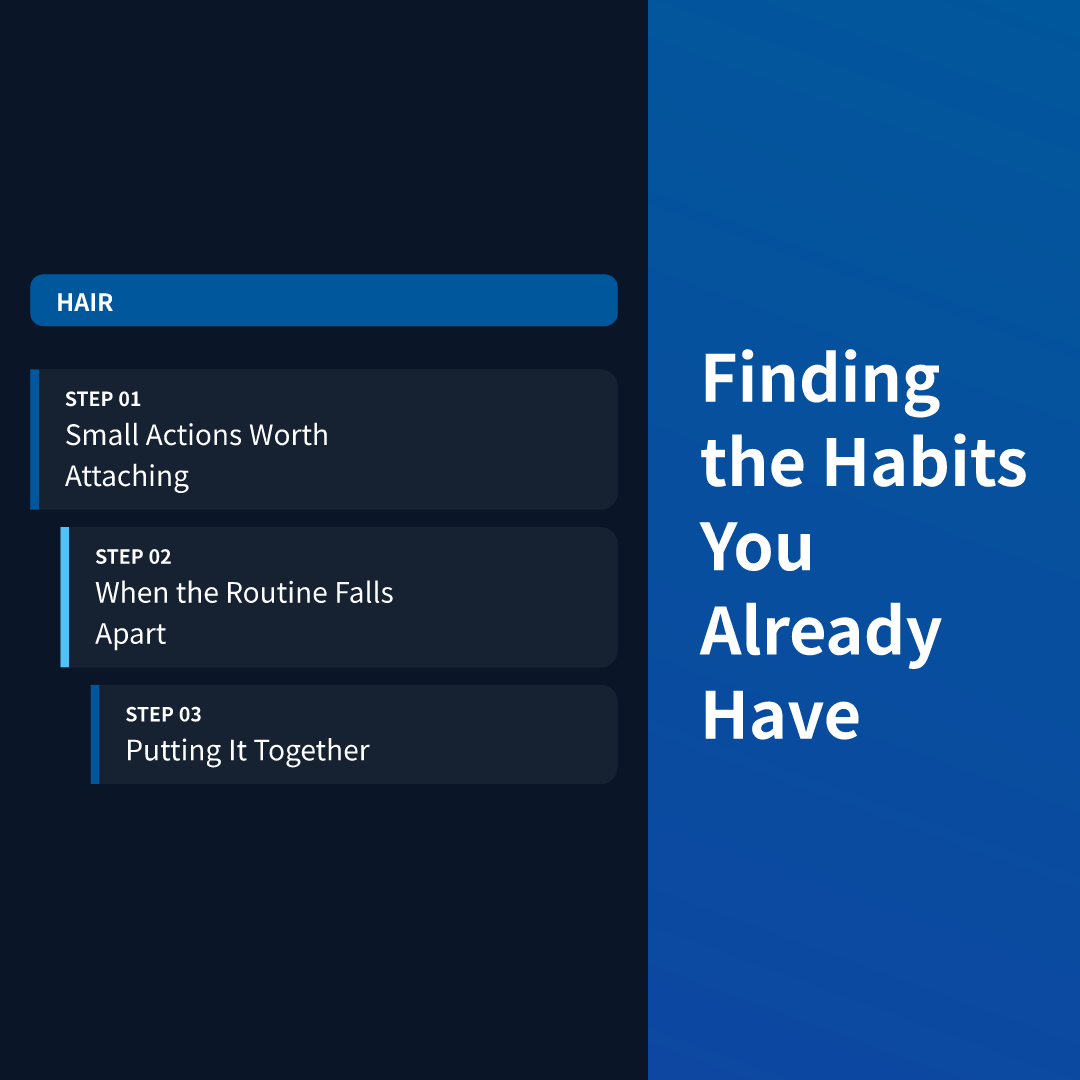
Finding the Habits You Already Have
Before changing anything, take a quiet inventory of what you already do with your hair. Most people have more anchor habits than they realize, and the best ones are things that happen at the same time and place with little thought. A habit that already happens on autopilot is a sturdy hook for something new.
Anchors that tend to work well
- Shower time: You already wash your hair on a fairly regular rhythm, which makes it an easy place to adjust how you cleanse and condition.
- Towel drying: The moment you step out is a natural spot to pause and be gentle with wet strands.
- Morning mirror time: Brushing teeth or applying skincare often puts you in front of a mirror, which suits a quick check of your parting and roots.
- Evening wind-down: Changing into comfortable clothes or setting out tomorrow's outfit can pair with a gentle hair step.
- Bedding changes: Whenever you swap your pillowcase, you have a chance to think about friction and overnight hair habits.
Know your fine hair before you design anything
Fine hair describes the thickness of each individual strand, not how many strands you have. Some people have fine but dense hair, while others have fine and sparse hair, and the two can behave quite differently. Fine hair is often more prone to looking flat, oily at the roots, or tangled, but this varies with texture, climate, and styling habits.
It also helps to notice your own pattern. Does your hair look limp by midday, or does it feel dry at the ends while the roots get greasy? Weighing it down usually shows up as a lack of movement, a slightly coated feel, or roots that go flat sooner than expected. Keeping a mental note of when this happens tells you which anchor habit to start with.
Small Actions Worth Attaching
The pairings below are examples, not rules. Pick one or two that suit your schedule rather than trying all of them at once. The aim is a routine you can actually keep, since a simpler plan you follow beats a perfect one you abandon.
Wash day plus a lighter conditioning approach
Many people with fine hair find that conditioner is most useful from the mid-lengths to the ends, where hair is usually older and drier. Concentrating it away from the scalp is a commonly suggested way to reduce that heavy, flat feeling at the roots. If you already condition in the shower, the new habit is simply being mindful of where it goes. For how often to wash or how much product suits your scalp, a hairstylist or a dermatologist can give guidance based on your situation.
Towel drying plus gentle handling
Wet hair is generally more fragile, and fine strands can be especially easy to stress. Pressing the towel gently against your hair rather than rubbing vigorously is a widely shared tip for reducing friction. Pairing this with the moment you step out of the shower costs you nothing extra. A soft microfiber towel or cotton shirt is one option people often choose, though it is a matter of preference.
Detangling plus a wide-toothed comb
If you already comb your hair after washing, you can attach the habit of starting from the ends and working upward. This is commonly recommended because it may reduce pulling on delicate strands. A wide-toothed comb is often favored for wet hair, although some people prefer a gentle brush, so go with what feels comfortable.
Morning mirror time plus a quick root check
While you are at the mirror anyway, take a few seconds to look at how your roots are sitting. Fine hair often benefits from lightweight styling, so this is a good moment to decide whether you need anything at all. Sometimes the lightest choice is no extra product. If you do use styling products, read the label and ask a pharmacist or professional if you have scalp sensitivities or a skin condition.
Product shelf plus a simplify moment
Layering several smoothing, shine, or hold products is one of the most common reasons fine hair feels coated. Whenever you restock or tidy your bathroom shelf, you can ask a simple question: does each product still earn its place? Heavier oils, butters, and rich creams are often designed for thicker or coarser textures, so they may feel like too much on fine strands. Labels that mention lightweight, volumizing, or weightless formulas are sometimes helpful, but they are marketing terms rather than guarantees, so your own experience is the best test.
Evening wind-down plus a low-friction setup
Friction overnight can contribute to tangles and breakage in some people. Swapping to a smoother pillowcase or loosely tying hair with a soft, gentle accessory are options some people choose. Tight elastics and heavy clips can tug on fine strands, so softer, looser options are generally considered kinder. If you notice increased shedding or thinning that worries you, a qualified professional can help look into possible causes.
Weekend habit plus a clarifying check-in
Fine hair can pick up buildup from styling products, dry shampoo, or hard water. If you already set aside weekend time for self-care, you can use it to notice whether your hair feels coated or looks dull. Clarifying products exist for this purpose, but they can be drying or irritating for some scalps. Ask a pharmacist or a hair professional whether they suit you, and follow the product's own directions rather than guessing at frequency.
Related reading: How to Tell If You Have Product Buildup in Your Hair
When the Routine Falls Apart

Every routine slips sometimes. You travel, get sick, run late, or simply forget. Planning for that in advance keeps one missed week from turning into abandoning the whole thing. The goal is not perfection but a quick way back.
Recovery rules for the messy weeks
- Shrink the habit, do not drop it. If you cannot manage the full pairing, keep just one small piece, like gentle towel drying, and let the rest wait.
- Do not double up to make up. Adding extra products to compensate for a lapse is the fastest route to weighed-down hair. Return to your normal, light approach instead.
- Restart at the next anchor. Skip the guilt and attach the habit to the very next wash day or evening, whichever comes first.
- Reset gently after heavy styling. If your hair feels coated after a stretch of extra products, a milder cleanse at your next regular wash is a reasonable step, and a professional can advise if you are unsure what suits you.
- Notice, do not judge. A flat-hair day is information about your products, weather, or schedule, not a failure.
Travel and busy-season versions
When your usual setup is not available, a stripped-down version helps. Keep a small, light set of products and rely on your most basic anchors. Hotel or gym products can feel richer than what you normally use, so some people with fine hair prefer to bring their own. If you notice irritation, redness, or persistent itching, stop using the product in question and check in with a healthcare professional, since reactions vary from person to person.
When to get professional input
Habit changes can only do so much. According to the American Academy of Dermatology's general guidance, noticeable hair loss, scalp pain, scaling, or sudden changes in hair texture are worth discussing with a board-certified dermatologist. Fine hair on its own is a normal variation, but new or worsening symptoms deserve a proper look. A stylist can also help with cuts and layering that add the appearance of body without any product at all.
Putting It Together
Caring for fine hair without weighing it down comes down to restraint, gentle handling, and routines that fit your life. Choose habits you already perform, attach one small action, and keep products light. Give yourself room to adjust, because your hair, scalp, and schedule will change over time, and what works for someone else may not work for you.
Your first two weeks: three simple rules
- Attach only one new action to one existing habit, and keep it for the full two weeks before adding anything else.
- Keep products light and away from the roots, and skip anything new unless you have a clear reason to add it.
- If you miss a few days, restart at the next natural anchor without doubling up, and ask a professional if something about your scalp or hair worries you.
Disclaimer: This article is for informational purposes only and is not a substitute for professional medical advice, diagnosis, or treatment. Please consult a licensed professional for personal health decisions.