How to Tell If You Have Product Buildup in Your Hair
If your hair feels dull and limp, the usual move is to wash it more often with a richer shampoo and add a heavier conditioner or serum. That tends to backfire when the real issue is product buildup, because layering more product on top of residue can make hair look flatter and feel coated. Knowing how to tell if you have product buildup starts with noticing a few patterns: hair that feels waxy or stiff, styling that stops holding, and a scalp that feels coated or itchy even right after washing.
This guide walks through the mistakes people commonly make when they suspect residue, why each one tends to backfire, and what to do instead. Hair and scalp differ widely between people, so treat everything here as general information rather than a diagnosis.
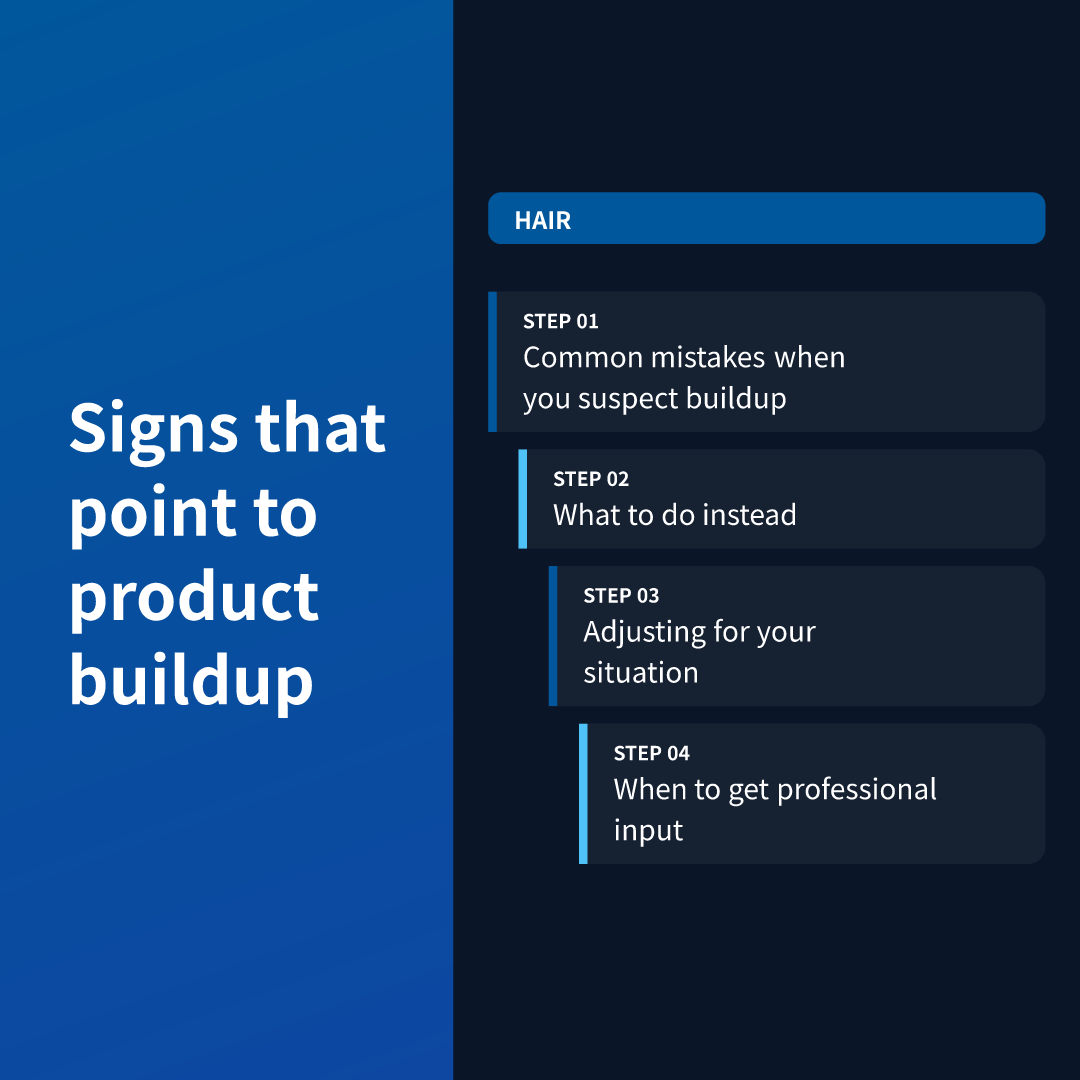
Common mistakes when you suspect buildup

Mistake one: assuming dull hair always means dry hair
Dullness is one of the most common complaints, and it is easy to blame dryness. Residue from conditioners, oils, silicones, hairspray, and dry shampoo can sit on the hair surface and scatter light, so strands look flat even when they are not actually dry.
The better approach is to look at the whole picture. Hair that looks dull but also feels slick, heavy, or slightly tacky after rinsing points more toward residue than dryness. Hair that feels rough, snaps easily, and tangles at the ends is more consistent with dryness or damage. Many people have a bit of both, which is why the signs can be confusing.
Mistake two: adding more conditioning product to fix the limpness
When hair will not hold a curl or sits flat at the roots, reaching for a thicker mask feels logical. The catch is that heavy creams, butters, and oils can cling to hair, especially fine or low-porosity hair, and build into a film over repeated use.
A more useful step is to pause and simplify. Look at how many leave-in products you layer in a typical routine and consider whether each one is doing a distinct job. Fewer products, used in modest amounts, give residue less to build on. Product labels and the brand's own guidance are the right place to check how a specific item is meant to be used.
Mistake three: scrubbing the scalp harder
If the scalp feels coated or itchy, scrubbing with fingernails or rough tools seems like a quick fix. It can irritate the skin and, in some people, make itching or flaking worse, which then gets mistaken for more buildup.
A gentler habit is to use the pads of your fingertips and take your time at the shampoo step, focusing on the scalp rather than the lengths. Thorough, unhurried rinsing matters as well, since leftover shampoo or conditioner is itself a source of residue.
Mistake four: confusing buildup with dandruff or a scalp condition
White or yellowish flakes and an itchy scalp are often assumed to be dandruff, and sometimes they are. But dried styling product and residue can also look like flakes, particularly after dry shampoo or hairspray. Treating the wrong problem can mean weeks of frustration.
One practical clue is the texture. Residue flakes often seem dry, powdery, or tied to the product you used, while flaking from a scalp condition may come with persistent redness, greasiness, or irritation that returns no matter what you wash with. The American Academy of Dermatology (AAD) has general guidance noting that persistent flaking, itching, or irritation can have several causes, so lingering symptoms are worth having looked at by a professional.
Mistake five: washing less to "protect" hair
Stretching time between washes can feel gentler, especially for curly and coily textures that tend to be drier. But when oils, sweat, environmental particles, and styling products sit on the scalp and hair for long periods, they can accumulate and weigh hair down.
Wash frequency is personal. It depends on hair texture, scalp oiliness, activity level, and how much product you use. If you notice that hair feels heavier and less responsive the longer you go between washes, it may be worth adjusting the rhythm gradually rather than making a big overnight change.
Signs that point to product buildup
Because the signs overlap with dryness, oiliness, and scalp conditions, it helps to look for a cluster rather than a single clue. These are the patterns people most often describe:
- A coated or waxy feel on the strands, even right after washing.
- Hair that looks dull or flat and seems to lose bounce or movement.
- Styles that will not hold, such as curls that fall quickly or waves that refuse to form.
- Products that seem to stop working or sit on the surface instead of absorbing.
- Hair that is hard to wet, where water seems to bead up or run off.
- A scalp that feels tight, itchy, or coated soon after cleansing.
- Stiffness or tackiness in the lengths when dry.
One at-home observation some people use is a simple water test: noticing whether clean, dry hair absorbs water readily or resists it. It is not a precise diagnostic tool, and hair texture and porosity affect the result, so use it only as one clue among several.
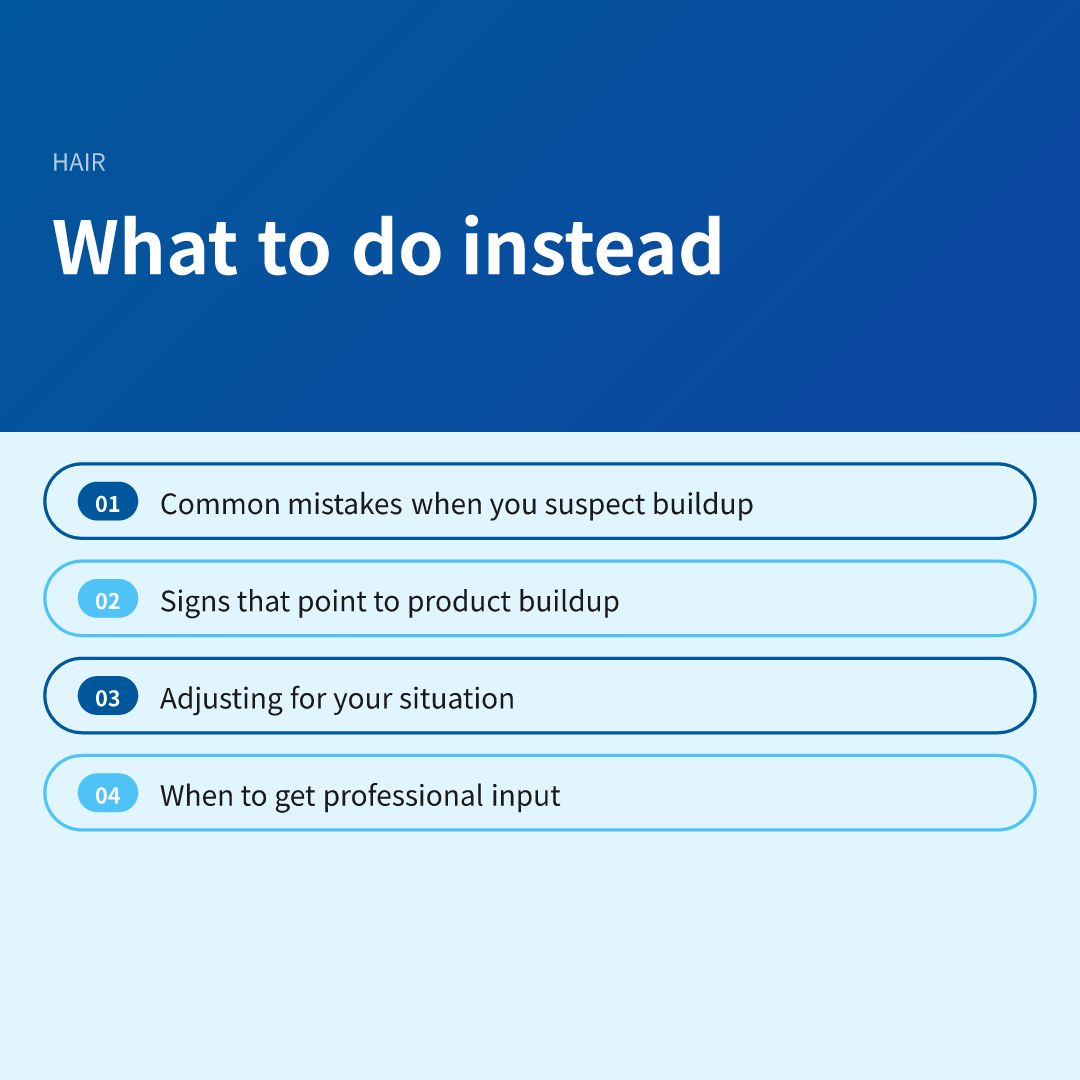
What to do instead
Audit your routine before changing it
Write down every product that touches your hair in a typical week, including styling sprays, leave-ins, oils, dry shampoo, and any scalp products. Seeing it laid out often shows overlap, such as two or three products doing the same job, or heavy items used every day.
Then look at ingredient lists. Heavier waxes, butters, and some silicones can be more likely to linger, especially on fine hair, while other formulas rinse away more easily. Ingredient behavior varies by formula and by person, so treat this as a starting point rather than a rule.
Consider a clarifying shampoo, with realistic expectations
Clarifying shampoos are formulated to cleanse more thoroughly than everyday shampoos, and they are widely used when residue is suspected. They can also be more drying or irritating for some people, particularly those with dry, color-treated, or sensitive scalps and hair.
How often a clarifying product suits you depends on your hair type, your styling habits, and the specific formula, so follow the directions on the product label. If you have a scalp condition, a history of irritation, or chemically treated hair, a hairstylist or dermatologist can help you decide whether it is appropriate.
Related reading: Sulfate Free Shampoo Explained in Plain Terms
Rinse more thoroughly and rethink product placement
Leftover shampoo and conditioner count as residue too. Taking extra time at the rinse, and keeping conditioner focused on mid-lengths and ends rather than the scalp, helps limit what stays behind.
The same logic applies to styling products. Many people apply more than they need, or concentrate it near the roots, where it can make hair look flat and feel coated. Using less and building up only if needed is a gentle way to find your own threshold.
Give hair a simpler stretch
If your routine has grown crowded, try trimming it back for a while and watching how your hair responds. Hair often looks more like itself once the extra layers are gone. Changes in appearance can take time, and results vary, so there is no set timeline to expect.
Adjusting for your situation
Fine or straight hair
Fine hair tends to show residue quickly because there is less strand mass to carry the weight. Lightweight formulas and conservative amounts are commonly suggested for this hair type, and flatness at the roots is often an early clue.
Curly and coily hair
Textured hair often benefits from richer products, which can make buildup harder to spot. Signs may include definition that fades, a stiff or crunchy feel that is not from a styling cast, and products that stop absorbing. Because curly and coily hair can be prone to dryness, a heavy-handed approach to cleansing may not suit everyone, so go gradually.
Color-treated or chemically processed hair
Color and chemical treatments can change how hair feels and how it holds onto products. Stronger cleansing may affect how long color lasts for some people. A colorist or stylist who knows your hair history is a good person to ask before using a clarifying product.
Oily or sensitive scalps
A scalp that gets oily quickly can feel heavy and coated, which looks a lot like buildup. Sensitive scalps may react to both residue and strong cleansers. If you notice burning, significant redness, painful patches, or ongoing flaking, that goes beyond a routine tweak. The AAD's general guidance suggests seeing a board-certified dermatologist for persistent scalp symptoms, since a diagnosis requires an in-person look.
Swimmers, hard-water households, and heavy styling users
Minerals in hard water, chlorine, and frequent use of sprays, gels, and dry shampoo can all contribute to a coated feel. Some people notice dullness and stiffness that feels different from classic product residue. The cause is not always the same, so if the feel persists after you simplify your routine, a stylist can help you work out whether water or products are playing a bigger role.
When to get professional input
Buildup is usually a cosmetic nuisance, but a few situations call for a professional rather than another product swap. These include scalp pain, strong or persistent itching, significant redness, crusting, patches of hair loss, or flaking that does not change with routine adjustments. In these cases, a licensed dermatologist is the right person to evaluate what is going on.
A hairstylist can also be a practical ally for everyday concerns, since they can feel texture, see how your hair behaves, and talk through your routine in a way that general articles cannot.
Frequently asked questions
Can product buildup cause hair loss?
Residue itself is not generally described as a direct cause of hair loss, but a very irritated or inflamed scalp can make shedding or breakage more noticeable for some people. If you see thinning, bald patches, or a sudden change in shedding, a dermatologist can look at the underlying cause. Cleaning up a routine may improve how hair looks and feels, but it is not a substitute for evaluation.
Do I really need a clarifying shampoo, or is that just marketing?
Not everyone needs one. People who use few products and wash regularly may never notice residue, while those who layer heavy styling products or live with hard water may find occasional deep cleansing useful. Whether it suits you depends on your hair type and scalp, and a stylist or dermatologist can help you decide.
If my hair still feels coated after I simplify my routine, what else could it be?
Several things can mimic buildup, including naturally oily scalp, mineral deposits from hard water, dryness, or a scalp condition. Because these look similar, it is hard to tell them apart from home. If the coated feel or itchiness continues, a professional can help sort out the cause rather than leaving you to guess.
Spotting product buildup comes down to noticing patterns: a coated feel, flat or dull hair, styles that will not hold, and a scalp that never quite feels clean. Reviewing your routine, rinsing carefully, and checking in with a stylist or dermatologist when symptoms linger are sensible next steps for most people.
Disclaimer: This article is for informational purposes only and is not a substitute for professional medical advice, diagnosis, or treatment. Please consult a licensed professional for personal health decisions.