Why Does Hair Get Greasy So Fast? What Your Scalp Is Doing
Hair gets greasy fast mostly because the oil glands in your scalp release sebum faster than your hair and washing routine can handle. Sebum is the scalp's natural oil, and it travels down each strand within hours, especially on fine or straight hair. Picture a single follicle in the morning: a tiny gland beside it is already working, and by afternoon the roots can look flat and shiny. That ordinary biology explains most cases, though several habits and conditions can turn it up or down.
What Happens on the Scalp Between Washes
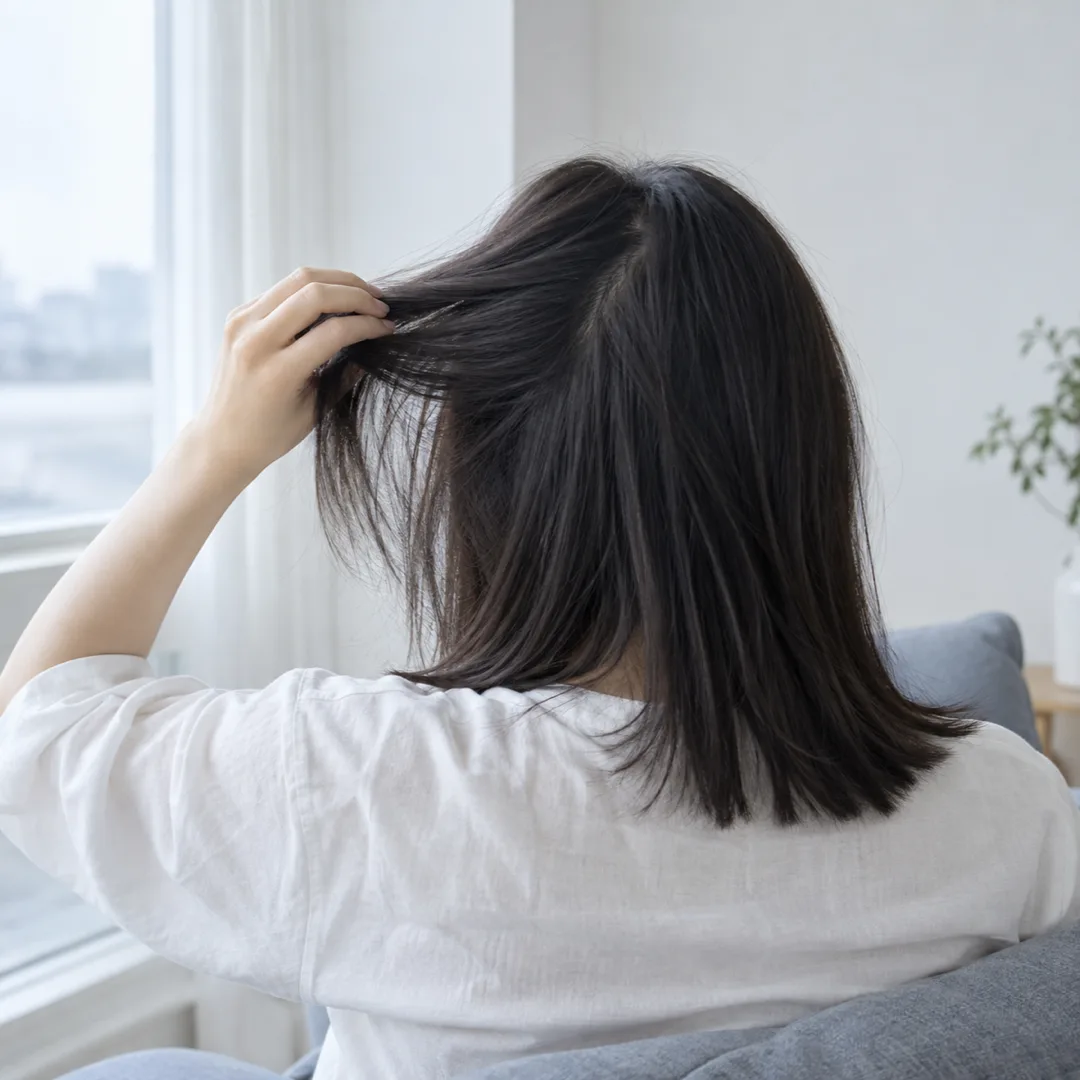
Each hair grows from a follicle, and attached to that follicle is a sebaceous gland, the small oil-producing gland that makes sebum. In everyday terms, it is a built-in conditioner dispenser. Sebum coats the hair shaft, helps limit moisture loss from the skin, and gives hair some natural shine.
After a wash, the scalp surface is stripped of most of its oil. The glands keep working, so oil begins to collect at the roots again. It then moves along the strand, a bit like ink wicking along a thread. Hair that is straight and fine gives oil a smooth, quick path, so the whole length can look slick sooner.
Why the roots go first
The roots sit closest to the gland, so they pick up oil first. Curly or coily hair has bends that slow the oil's travel, which is one reason textured hair often feels drier at the ends even when the scalp is oily. This is a general pattern, and individual hair varies a lot.
Why it can look worse than it feels
Fine hair has less surface area per strand, so a modest amount of oil is more visible. Thick hair can hold the same amount without looking greasy. Two people with similar sebum output may therefore describe their hair very differently.
The Factors That Influence Oil Production
Several things work together to decide how much sebum your scalp makes and how visible it becomes. None of them acts alone, which is why the cause of greasy hair is often a mix rather than a single culprit.
Hormones and the oil glands
Sebaceous glands respond to androgens, the hormones that are present in all genders and rise during puberty. This is why oily hair and skin often show up in the teen years. According to the American Academy of Dermatology's general guidance, hormonal shifts can affect oil production, and people sometimes notice changes around menstrual cycles, pregnancy, or menopause. The pattern varies from person to person.
Genetics and hair type
How active your glands are is partly inherited. If oily scalps run in your family, yours may too. Hair texture, density, and strand thickness are inherited as well, and they shape how obvious the oil looks.
Washing habits
Shampoo removes oil, but the scalp does not keep a fixed score. Some people find that very frequent, harsh cleansing leaves the scalp feeling tight and then oily again soon after. Others find that washing too rarely lets oil, sweat, and product build up. Research on this feedback idea is not settled, so it is best treated as something some people notice rather than a rule.
Products and buildup
Heavy conditioners, oils, and styling products applied near the roots can make hair look greasy even when the scalp itself is not producing much extra oil. Product residue also traps dust and sweat. A clarifying shampoo (a cleanser formulated to remove residue) is sometimes used by people who suspect buildup, and a pharmacist or the product label can explain how it fits with your hair type.
Touching, brushing, and heat
Hands carry natural skin oil, so frequent touching moves it into the hair. Brushing can spread sebum from root to tip, which helps dry ends but makes roots look flatter. Hot, humid weather and heavy sweating can also make hair look greasier faster.
Related reading: Do Hair Oils Really Seal in Moisture? What Holds Up
When the Balance Tips Too Far
Your scalp has a balance between oil, moisture, and the microbes that normally live on it. Greasy hair is not always a sign that this balance is off, but certain conditions can push it in that direction.
Seborrheic dermatitis and flaking
If greasiness comes with yellowish flakes, redness, or itching, the cause may be seborrheic dermatitis, a common inflammatory scalp condition often described as a stubborn, oily form of dandruff. According to the American Academy of Dermatology, it often involves oily areas of the skin, and a yeast that naturally lives on skin may play a role. Because it can resemble other conditions, a dermatologist is the right person to confirm what is going on.
Stress, sleep, and diet
People often report oilier hair during stressful or sleep-poor stretches. The link is plausible because stress hormones can influence skin, but evidence for specific foods or habits causing greasy hair is limited. It is more accurate to say these factors may contribute for some people than to say they cause it.
Health conditions and medicines
Hormone-related conditions and some medications can change oil production. A sudden, unexplained shift in your scalp or hair, especially alongside other symptoms, is worth raising with a healthcare professional. Please do not start or stop any medicine on your own because of a hair change; a doctor or pharmacist can advise you.
Overcorrecting with harsh products
Strong cleansers, alcohol-heavy sprays, and very hot water can irritate the scalp. Irritation may bring itching, tightness, or redness, which can be mistaken for an oil problem. Reactions to ingredients differ from person to person, so patch caution and a gentler approach are sensible if your scalp feels sore.
How the Scalp Settles Back Down
Oil production does not reset overnight, and the scalp tends to adjust gradually. If you change your routine, it may take a few weeks before you can judge how your scalp is responding. Quick verdicts after one or two washes are often misleading.
Gentler, consistent habits
Many people find that a steady rhythm works better than constant switching. Choosing a cleanser that suits your scalp, rinsing thoroughly so no residue remains, and keeping heavy conditioner toward the ends rather than the roots are commonly described approaches. Hair type, climate, and activity level all change what works, so there is no single schedule that fits everyone.
Cutting down on buildup
Rinsing well, limiting layered styling products at the roots, and cleaning brushes and pillowcases can reduce the grease that comes from outside the scalp. These are small steps, and their effect varies between people.
Managing the look in the meantime
Some people use dry shampoo between washes to absorb surface oil. It adds product to the roots, so heavy daily use can contribute to buildup for some. Check the label and ask a pharmacist if you have questions about ingredients, especially if you have sensitive skin.
Related reading: Oily Scalp Care Basics: Why Your Roots Get Greasy
When professional care makes sense
Consider seeing a doctor or dermatologist if greasiness comes with persistent itching, redness, thick flakes, sores, or noticeable hair shedding, or if it appears suddenly without an obvious reason. The same goes for oily hair that does not improve after you have adjusted your routine for a reasonable time. A professional can examine your scalp, consider your health history, and discuss options suited to you. A cosmetic product is not meant to diagnose or treat a medical condition.
Putting It Together
So, why does hair get greasy so fast? Here is the principle in three lines:
- Sebaceous glands release sebum continuously, and it spreads fastest along fine, straight hair.
- Hormones, genetics, washing habits, and product buildup together decide how oily hair looks.
- The scalp usually adjusts gradually, so changes to your routine are best judged over weeks, not days.
One exception to keep in mind: this explanation assumes a healthy scalp. If oiliness arrives with persistent flaking, redness, itching, or hair loss, the cause may be a skin or health condition rather than ordinary oil production, and a professional evaluation is the better next step than adjusting products at home.
Disclaimer: This article is for informational purposes only and is not a substitute for professional medical advice, diagnosis, or treatment. Please consult a licensed professional for personal health decisions.