How Often Should You Wash Your Hair, Really?
There's no single number that works for everyone—how often you should wash your hair depends mostly on your scalp's oil production, your hair texture, and how you style it day to day. Someone with fine, straight hair and an oily scalp might need a wash every day or two, while someone with thick, curly, or chemically treated hair could go closer to a week between washes. The honest answer is that this is a personal rhythm you build over time, not a fixed rule.
Hair washing frequency refers to how often you cleanse your scalp and strands with shampoo (or a shampoo alternative) to remove oil, sweat, product buildup, and environmental debris. The goal isn't to strip the scalp completely—it's to keep sebum, the natural oil your scalp produces, at a level where hair looks healthy without feeling greasy or overly dry. Because sebum production, hair porosity, and lifestyle habits vary so much from person to person, "correct" frequency is really a range rather than a fixed rule.
Why This Question Keeps Coming Up Lately
Interest in hair washing habits tends to spike whenever people start experimenting with new routines—switching to sulfate-free shampoos, trying "no-poo" methods, or simply noticing their hair looks different after starting a new job with more physical activity or a new gym routine. Social media has also normalized talking openly about oily roots, dry ends, and scalp buildup, which used to be more private topics.
At the same time, many people are re-evaluating old habits they picked up as teenagers, like washing every single day out of routine rather than actual need. As hair care conversations become more nuanced, people are asking whether their childhood habits still make sense for their adult hair, scalp, and lifestyle.
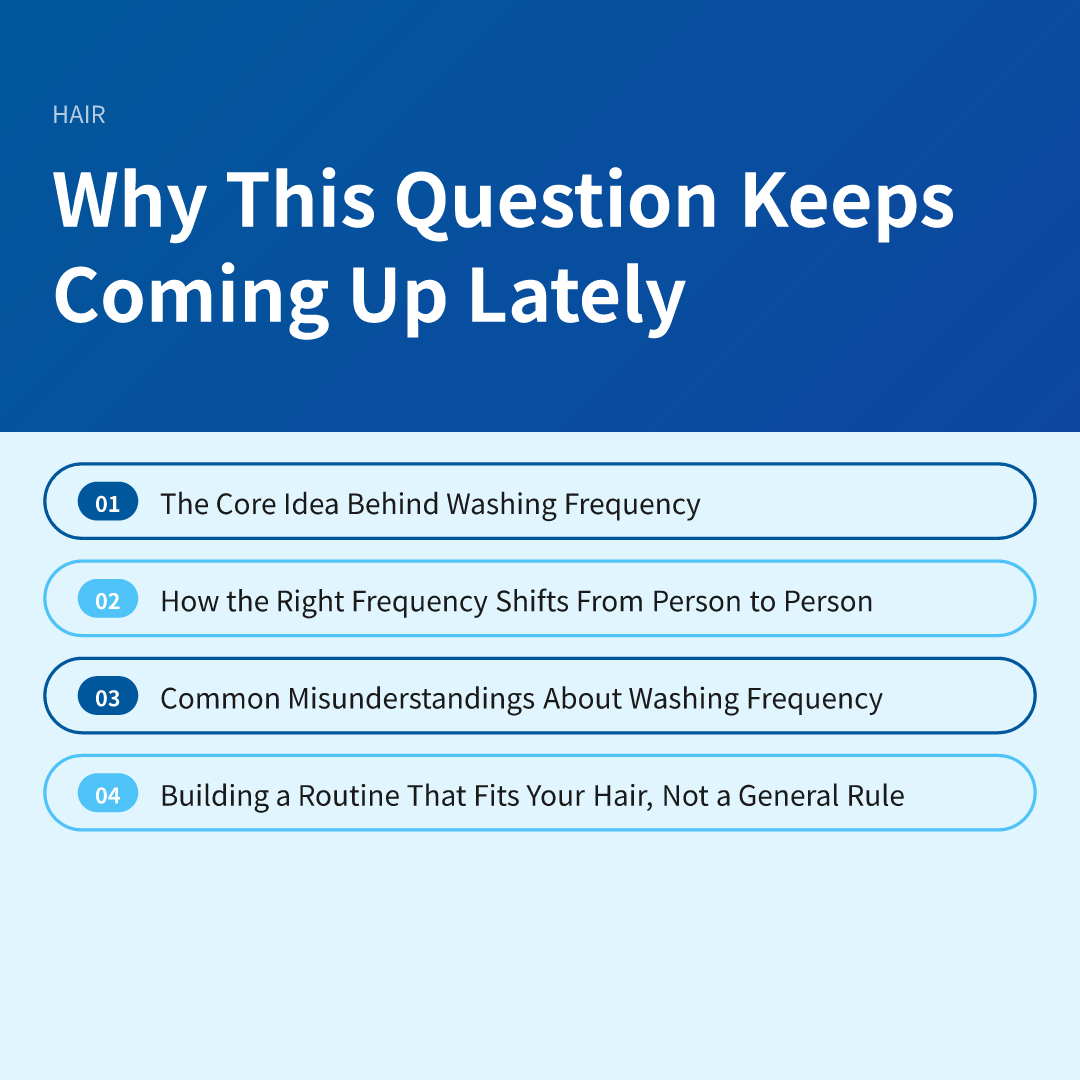
The Core Idea Behind Washing Frequency
At its most basic level, hair washing frequency is about balancing two things: oil buildup and moisture loss. Wash too often, and you risk stripping natural oils, which can leave hair dry, frizzy, or prone to breakage—especially for curly or color-treated hair. Wash too rarely, and oil, sweat, and product residue can accumulate, potentially leading to a greasy scalp, flat roots, or in some cases, irritation.
Dermatology-focused resources like the American Academy of Dermatology's general guidance on hair washing note that oily hair may benefit from more frequent washing, while dry or coarse hair often does better with more spacing between washes. This general framework is a useful starting point, but individual results still vary depending on scalp condition, climate, and hair treatments.
It's also worth understanding that "clean" doesn't always mean "washed daily." A scalp that's slightly oily isn't necessarily unhealthy—it's simply doing its job of producing sebum, which helps protect hair strands and skin.
How the Right Frequency Shifts From Person to Person
Consider two common, everyday scenarios that illustrate how differently this plays out.
Scenario one: Picture someone with fine, straight hair who exercises most mornings before work. Sweat combines with naturally higher oil production near the scalp, so by the next day, roots can look noticeably flat and shiny. For this hair type and lifestyle, washing every one to two days often feels more comfortable and manageable.
Scenario two: Now picture someone with thick, curly hair who works from home and rarely sweats heavily during the day. Curly and coily hair textures tend to have natural oil travel more slowly down the hair shaft, and frequent washing can leave curls dry, frizzy, or harder to define. For this person, washing once or twice a week—sometimes with a gentler co-wash in between—may support healthier-looking hair.
Neither approach is "correct" in an absolute sense; they simply reflect different scalp behavior, hair texture, and daily habits. This is exactly why generic advice like "wash every other day" doesn't work universally.
A General Reference Table (Not a Strict Rule)
| Hair Type / Scalp Condition | Commonly Reported Washing Pattern | Things That Can Change This |
|---|---|---|
| Fine, straight, oily scalp | Roughly every 1–2 days | Exercise, humidity, heavy styling products |
| Wavy, normal scalp | Roughly every 2–3 days | Season, sweat levels, product buildup |
| Curly or coily hair | Roughly once or twice a week | Scalp dryness, protective styles, co-washing habits |
| Chemically treated or color-treated hair | Often less frequent than natural hair | Type of treatment, dryness level, fading concerns |
This table reflects commonly discussed patterns rather than a fixed medical standard—your own scalp and hair may behave differently, and that's completely normal.
Common Misunderstandings About Washing Frequency
One frequent misunderstanding is that washing hair every day is inherently bad for it. For people with genuinely oily scalps, daily washing with a gentle formula isn't automatically harmful—it may actually help maintain scalp comfort. The idea that everyone needs to "train" their scalp to produce less oil by washing less often isn't something that applies uniformly, and results here vary a lot between individuals.
Another common myth is that dry shampoo is a real substitute for washing. Dry shampoo can absorb some surface oil and refresh the look of roots temporarily, but it doesn't cleanse the scalp the way water and shampoo do. Relying on it for extended periods can allow product and oil buildup to accumulate at the scalp level.
There's also confusion around scalp itchiness or flaking. People sometimes assume this always means they need to wash more—but it can also point toward product buildup, sensitivity to a specific ingredient, or an underlying scalp condition. When itching, redness, or flaking persists regardless of washing frequency, that's a signal worth bringing up with a dermatologist rather than solving through trial and error alone.
Hair washing frequency is less about following a strict number and more about reading your own scalp's signals over a couple of weeks.
For readers interested in the broader routine around this, it can help to look at alongside washing frequency, since the product itself changes how often washing feels necessary.
Building a Routine That Fits Your Hair, Not a General Rule
Instead of aiming for a specific number of days, many hair care discussions now encourage watching for real signals: Does your scalp feel itchy or tight? Do your roots look visibly oily by midday? Does your hair feel coarse or straw-like after washing? These observations, tracked over a week or two, tend to reveal a more accurate personal rhythm than copying someone else's routine.
Climate and season also play a role that's easy to overlook. Humid summer months often call for more frequent washing due to sweat and oil production, while drier winter air may allow for slightly longer stretches between washes. Frequent swimmers, for instance, may need a different approach altogether because chlorine and salt water can affect both scalp and hair differently than daily city life does. Related habits, like how hair is dried and styled, are also worth considering—see for a deeper look at how tools and heat interact with washing frequency.
Scalp treatments, hair growth concerns, or persistent conditions like dandruff or seborrheic dermatitis add another layer of complexity. In these cases, washing frequency is often tied to treatment plans recommended by a healthcare provider, and general lifestyle advice may not fully apply. If you notice ongoing scalp discomfort, unusual hair thinning, or a rash-like condition on the scalp, that's a reasonable moment to consult a dermatologist rather than adjusting shampoo habits on your own. You might also want to explore .
Bringing It All Together
There's no universal formula for how often you should wash your hair—your scalp type, hair texture, activity level, and even the season all shift the answer. Fine or oily hair tends to do better with more frequent washing, while curly, coarse, or treated hair often benefits from more spacing in between. Paying attention to how your scalp and strands actually feel, rather than following someone else's schedule, is generally the more reliable approach.
- Hair washing frequency should be based on your scalp's oil level and hair texture, not a fixed number of days.
- Overwashing and underwashing can both cause noticeable issues, just in different ways.
- Persistent scalp irritation, flaking, or unusual hair changes are worth discussing with a dermatologist rather than managing through washing habits alone.
If you're dealing with ongoing scalp sensitivity, unexplained hair loss, or a condition that doesn't improve no matter how often (or rarely) you wash your hair, it's worth scheduling a visit with a dermatologist or qualified hair care professional who can look at your specific situation.
Disclaimer: This article is for informational purposes only and is not a substitute for professional medical advice, diagnosis, or treatment. Please consult a licensed professional for personal health decisions.