How to Choose a Conditioner for Your Hair Type
Learning how to choose a conditioner for your hair type comes down to matching the product's weight and ingredients to your strand thickness, curl pattern, porosity, and scalp. Fine hair, coily hair, color-treated hair, and oily-scalp hair often need quite different things from the same bottle. The mismatch is common: hair that feels limp and greasy by afternoon, ends that still feel straw-like after conditioning, or frizz that seems to get worse with a "smoothing" formula.
Most people grab a conditioner based on the front label, a scent they like, or whatever shares a brand with their shampoo. Then they wonder why the results feel off. The fix is rarely about buying something more expensive. Solving it works best in order: figure out what your hair is actually doing, make a few quick adjustments today, refine over the next week, and then settle into habits you can maintain.
Pinpointing What Your Hair Actually Needs
Before comparing products, it helps to describe your hair in plain terms. Conditioners are generally designed to smooth the outer surface of the hair shaft, reduce friction, and make strands easier to detangle. How much of that you need depends on a handful of traits, and none of them is a diagnosis. They are simply useful descriptors.
Strand thickness and density
Strand thickness is how wide each individual hair is, while density is how many hairs cover your scalp. You can have fine strands with high density, or coarse strands with low density. Fine hair tends to be weighed down easily, so lightweight formulas are often a better fit. Thicker strands usually tolerate richer creams and butters without going flat.
Curl pattern
Straight hair lets scalp oils travel down the strand easily, so the ends are often the driest part. Wavy, curly, and coily hair has bends that slow that journey, which is why length and ends can feel drier even when the roots look oily. Curlier textures commonly benefit from more slip and moisture, though individual preferences vary quite a bit.
Porosity
Porosity describes how readily hair absorbs and holds onto moisture. Hair that has been bleached, heat-styled often, or colored repeatedly may behave as if it is more porous, soaking up water quickly and drying out just as fast. Naturally resistant hair may repel water at first, then feel heavy once product builds up. A common informal check is whether hair feels rough or snags easily, but that is only a rough clue rather than a measurement.
Scalp condition
Your scalp matters even though conditioner is mostly used on lengths and ends. An oily scalp usually does better when conditioner stays away from the roots. A dry or sensitive scalp may react to fragrance or certain preservatives. If you have persistent itching, flaking, redness, or soreness, that is a question for a qualified professional rather than a product swap.
Chemical and heat history
Coloring, bleaching, relaxers, perms, and frequent hot tools all change how hair feels and behaves. Hair with that history often needs more conditioning support than virgin hair of the same texture. It can also be more fragile, so gentle handling matters as much as the product.
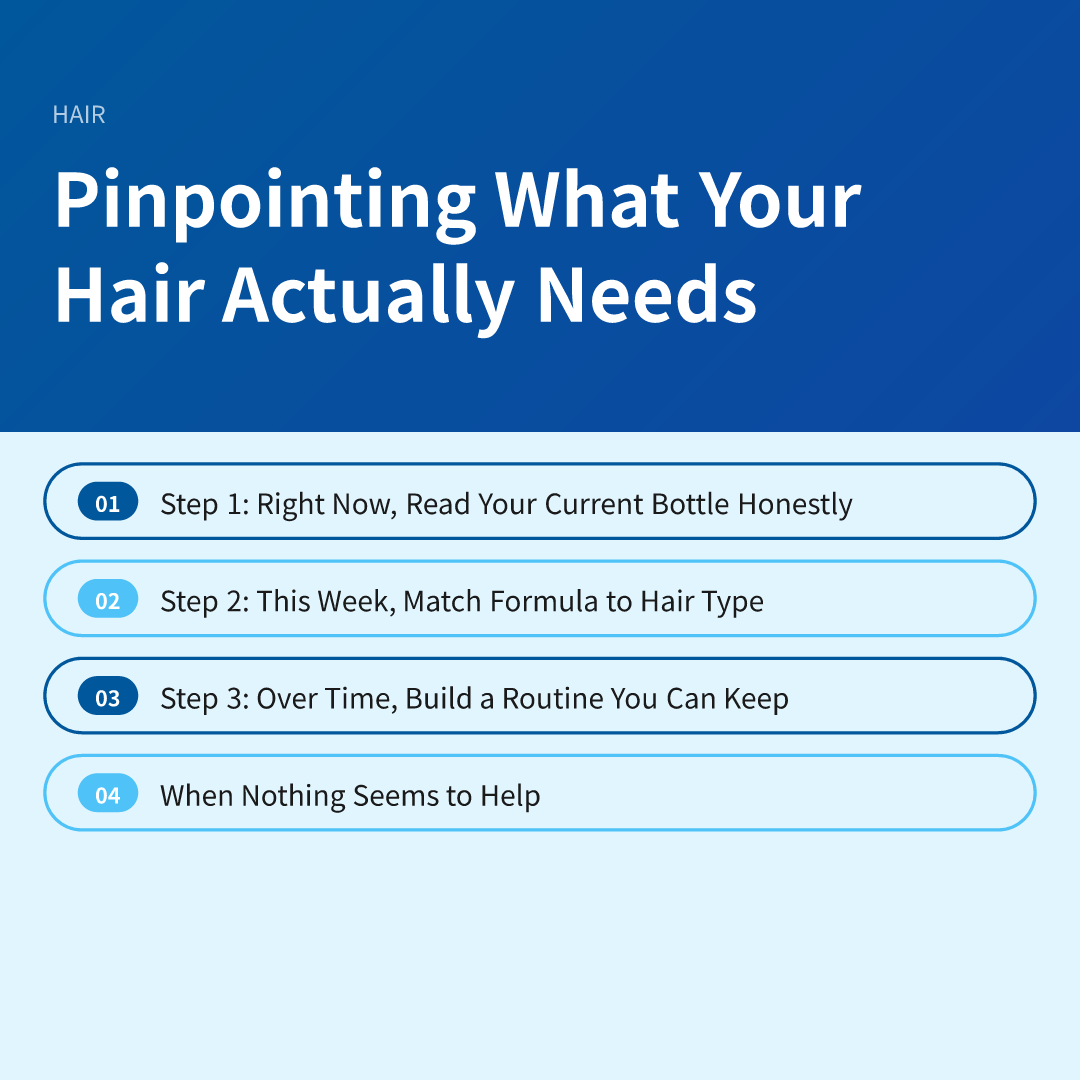
Step 1: Right Now, Read Your Current Bottle Honestly
The quickest win costs nothing. Look at what you are using today and compare it to what your hair is telling you. This step is about gathering information, not buying anything.
- What: Note how your hair feels one day after washing and conditioning. How: Pay attention to whether the roots look oily, the lengths feel coated or tacky, or the ends feel dry and tangled. Why: Hair that feels heavy usually points to a formula that is too rich or used too close to the scalp, while hair that still feels rough may need more moisture or slip.
- What: Check where on your head you apply conditioner. How: Many people concentrate it on the mid-lengths and ends rather than the scalp, especially with oily roots. Why: Ends are the oldest and most worn part of the hair, and keeping conditioner off the scalp may reduce the greasy, weighed-down feeling.
- What: Rinse thoroughly. How: Make sure water runs clear of slippery residue before you step out. Why: Leftover conditioner can make fine hair look limp and can contribute to a dull feel over time.
- What: Detangle with intention. How: Many people find a wide-tooth comb works best when hair is wet and coated with conditioner, starting from the ends and working upward. Why: Wet hair is more fragile, and conditioner's slip can reduce pulling and breakage during combing.
Often these small adjustments change more than a new product would. If you still feel mismatched afterward, you have good information to take into the next step.
Step 2: This Week, Match Formula to Hair Type
Over the next several days, you can shop or sample with a clearer idea of what to look for. The goal is a shortlist, not a perfect answer. Reactions to products vary from person to person, so treat the first bottle as a trial.
Fine or thin hair
Look for words like lightweight, volumizing, or weightless on the label. Rinse-out formulas with a thinner, lotion-like texture often suit this group. Heavy butters and thick oils are commonly described as more likely to flatten fine strands, though there is no universal rule.
Thick or coarse hair
Creamier formulas with emollients such as shea butter or plant oils are often described as a good match for thicker strands. These textures tend to hold moisture better when paired with a conditioner that offers noticeable slip. If your hair is thick but also oily at the scalp, keeping the richer product to the lengths still applies.
Wavy, curly, and coily hair
Curl patterns commonly pair well with moisture-focused conditioners that help with detangling and definition. Many people with curlier textures also use a deeper treatment on a separate schedule, which is covered in the next step. Look for formulas that describe themselves as hydrating or detangling, and check whether the ingredient list leans heavily on fragrance if your skin is reactive.
Color-treated or heat-damaged hair
Labels for color-treated hair usually promise gentleness and color care, and some are formulated to be mild on dye. Protein-containing formulas are often marketed for hair that feels stretchy or weak, while moisture-heavy formulas are marketed for hair that feels brittle and dry. Telling which one you need can take trial and error, and overdoing protein can leave some hair feeling stiff.
Oily scalp with dry ends
This combination is extremely common. A lighter conditioner applied only from the ears down often works better than a heavy one used everywhere. Some people split the difference by using a lightweight formula on the lengths and a richer treatment only on the very ends.
Sensitive or reactive scalp
If you tend to react to fragranced products, fragrance-free options exist and may be worth trying. The FDA notes that cosmetic ingredients can cause reactions in some people, and that those reactions differ from person to person. If a product causes burning, swelling, or a rash, stopping use and speaking with a qualified professional is the sensible path.
Related reading: What Hair Porosity Means for Your Strands
Reading the ingredient list without overthinking it
You do not need to memorize chemistry. A few general patterns are useful:
- Humectants such as glycerin are commonly used to attract water to hair.
- Emollients and butters help hair feel softer and smoother, and richer ones tend to feel heavier.
- Silicones add slip and shine; some people love them, and others feel they build up on certain hair types.
- Proteins such as hydrolyzed wheat or keratin are often included in formulas aimed at strengthening the look and feel of hair.
- Fragrance and essential oils make products pleasant but can bother sensitive scalps.
Marketing terms like "repair," "restore," or "strengthen" are not tightly standardized for cosmetics. Conditioners work on the surface of hair and cannot rebuild damaged strands from within, so it is wise to read those words as descriptions of how hair may look and feel rather than as guarantees.
Step 3: Over Time, Build a Routine You Can Keep
Once you have a conditioner that seems to suit you, consistency tends to matter more than constant switching. Hair responds gradually, and judging a product after a single wash can be misleading.
- What: Give a new conditioner a fair trial. How: Use it across several washes and notice trends in tangles, frizz, and how long your hair stays fresh. Why: Hair can feel different depending on water, weather, and styling, so one wash rarely tells the full story.
- What: Adjust for the seasons. How: Many people find they want a richer formula in dry, cold months and a lighter one in humid weather. Why: Humidity and indoor heating change how hair holds moisture, so your best match can shift during the year.
- What: Consider a periodic deeper treatment. How: Rinse-out masks and deep conditioners are typically sold with their own directions, so follow the product label. Why: Hair that is dry, textured, or processed often benefits from extra conditioning beyond the daily formula, though not every hair type needs it.
- What: Watch for buildup. How: If hair begins to feel coated, dull, or limp despite a good routine, a clarifying shampoo from time to time is something many people use; ask a stylist about frequency for your hair. Why: Buildup from conditioners, styling products, and hard water can make a once-good formula feel wrong.
- What: Protect your hair outside the shower. How: Gentler towel drying, lower heat settings, and heat protectants labeled for styling are common habits. Why: Conditioner can only do so much if hair is repeatedly stressed by friction and heat.
Conditioner, co-wash, leave-in: knowing the difference
A rinse-out conditioner is applied after shampooing and washed away. A leave-in stays in the hair and is usually lighter. A co-wash is a cleansing conditioner some curly and coily hair types use in place of shampoo, though it may not clear buildup as thoroughly. These are not interchangeable, and which ones you add depends on your texture and preferences.
Common mistakes worth avoiding
- Choosing a formula only because it matches your shampoo's brand or scent.
- Applying heavy conditioner right at the scalp when roots run oily.
- Switching products every week and never learning what works.
- Expecting a conditioner to permanently repair split ends, which generally need to be trimmed.
- Ignoring irritation because the product is "natural"; natural ingredients can still bother some people.
When Nothing Seems to Help
Sometimes you do everything sensibly and your hair still feels dry, brittle, greasy, or tangled. That does not mean you are doing it wrong. Hair texture and scalp health can be influenced by factors a conditioner cannot address, including hair styling practices, water quality, and general health. The American Academy of Dermatology offers general public guidance on hair and scalp care, and it is a reasonable place to read more about when to seek help.
Consider talking with a qualified professional, such as a licensed dermatologist, if you notice any of the following:
- Increased shedding, thinning, or bald patches that appear without a clear reason.
- A scalp that is persistently itchy, flaky, painful, red, or has sores or scaling.
- Breakage that is severe or sudden, especially after a chemical treatment.
- Reactions after using a product, such as swelling, burning, hives, or a rash.
- Hair changes that come alongside other symptoms, such as fatigue or unexplained changes in your health.
A licensed stylist can also help with practical questions, such as how often to trim, whether your color process is too aggressive for your hair, and which formulas suit your texture. For anything that looks or feels like a medical concern, a clinician is the right person to ask. Bringing the product names you use and a rough description of your routine can make that conversation more productive.
Finding the right conditioner for your hair type is usually a process of observation and small adjustments rather than a single perfect purchase. Be patient, keep notes if it helps, and ask for professional guidance when something feels beyond what a bottle can fix.
Disclaimer: This article is for informational purposes only and is not a substitute for professional medical advice, diagnosis, or treatment. Please consult a licensed professional for personal health decisions.