Normal Daily Hair Shedding Explained, Hour by Hour
Big hair plans tend to fizzle, while small habits tucked into three points of the day (morning, midday, and evening) tend to stick. That rhythm also happens to be the easiest way to understand normal daily hair shedding explained in plain terms: most people lose some strands every day as part of the hair growth cycle, and where you notice them depends on when you brush, wash, and style. This article walks through the day in order, so you can tell what is typical from what might deserve a closer look.
A quick note on scope. I am a writer and information editor, not a clinician, so nothing here is a diagnosis. Shedding patterns vary a lot from person to person, and the goal is to help you notice your own baseline.
Why Hair Sheds at All
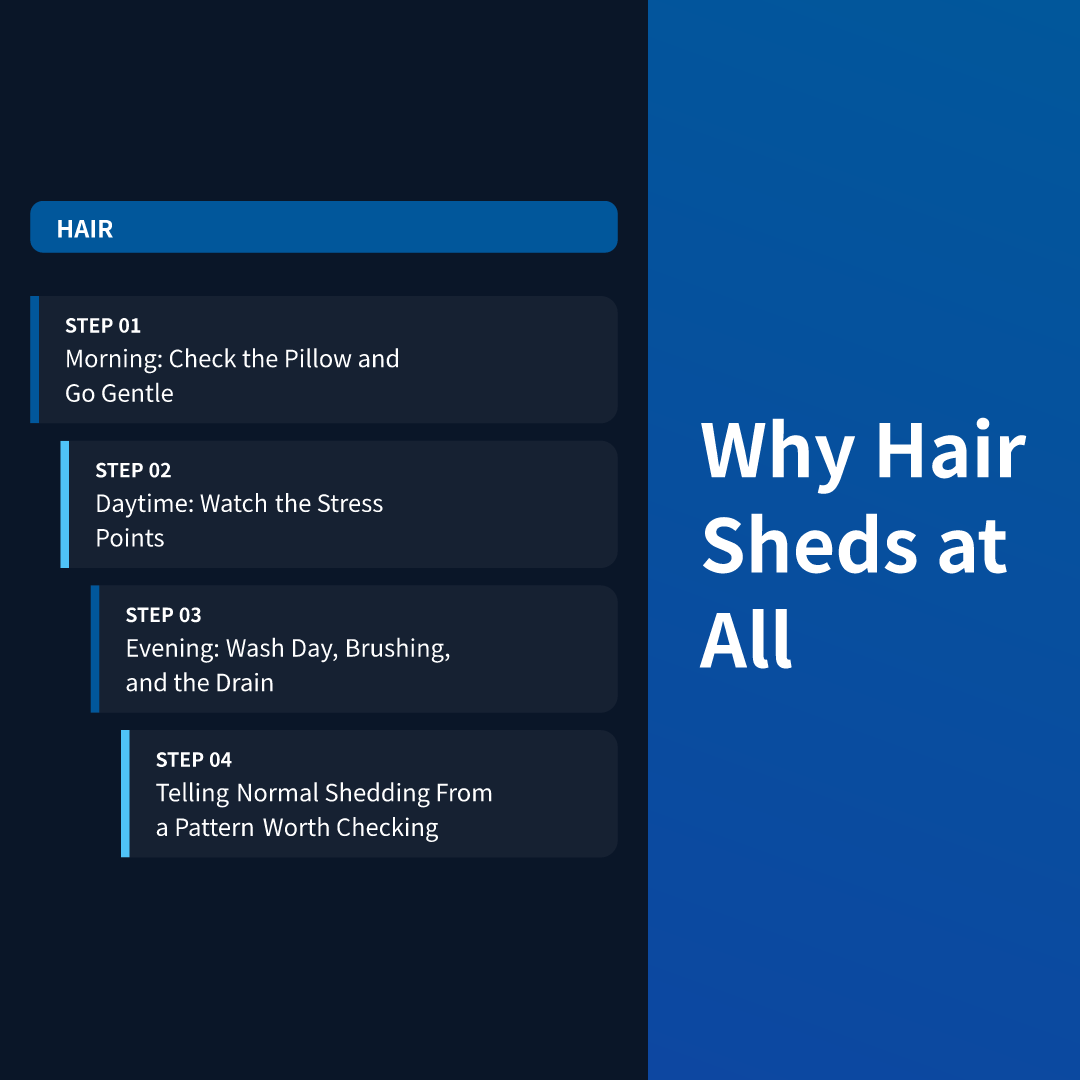
Each hair follicle moves through phases: a growth phase, a short transition phase, and a resting phase that ends with the strand letting go. According to the American Academy of Dermatology's general guidance, it is common to lose some hairs every day as part of this cycle, and new hairs typically grow in to replace them. Because follicles are not all in the same phase at once, shedding is usually spread out rather than happening all together.
Here is the part that surprises many readers: a hair that falls out is often a hair that has already finished its resting phase. A tiny white bulb at the root end is commonly seen on shed hairs and is generally part of that natural process. Breakage is different, since a snapped strand has no bulb and is often shorter than the rest.
Things that shift your baseline
- Hair length and density: Longer hair makes each strand easier to spot, so the same amount of shedding can look dramatic on one person and invisible on another.
- Washing frequency: Hairs that loosen between washes often collect and come out all at once on wash day.
- Styling habits: Tight styles, heat, and friction can contribute to breakage that gets mistaken for shedding.
- Life events: Illness, major stress, childbirth, and big changes in eating are commonly discussed as triggers for temporary increases in shedding, according to the National Institutes of Health's MedlinePlus overview of hair loss.
- Seasonal changes: Some people report noticing more shedding at certain times of year, though experiences differ.
Morning: Check the Pillow and Go Gentle
The morning is your first data point. Strands that loosened overnight tend to show up on the pillowcase, on your shoulders, or in your first brush-through. Seeing a few there is generally expected, because hair that is ready to release often does so with the mild movement of sleeping.
Small action: glance, don't count
A casual look at the pillow is enough. Counting strands every morning tends to raise anxiety without adding useful information, and counts naturally bounce around from day to day. What matters more is whether your general impression changes over weeks, not whether Tuesday looked different from Monday.
Small action: brush with a light hand
Why this point in the day? Hair is often tangled after sleep, and forceful detangling is a common source of breakage. Many people find a wide-tooth comb or a brush with flexible bristles feels gentler, and starting from the ends and working upward is a technique often described in general hair care guidance. If your hair is textured, curly, or chemically treated, it can be more fragile, so a slower approach may suit you.
Daytime: Watch the Stress Points
Between breakfast and dinner, your hair meets friction, tension, heat, and weather. Midday is not when most shedding happens, but it is when many breakage triggers sneak in, which is why this stretch deserves its own attention.
Small action: loosen up the tension
Tight ponytails, buns, braids, and heavy clips pull on follicles for hours. The American Academy of Dermatology's general guidance notes that hairstyles that put steady tension on the hair can contribute to hair loss over time. If you wear your hair up often, switching the position of the style or choosing looser options on some days is a common way people reduce strain.
Small action: be realistic about touching and styling
Running fingers through your hair, twisting it, or checking the mirror repeatedly can pull out hairs that were already loose. That can feel alarming when a handful comes away in your hand, yet those strands were often ready to go. It may help to notice the habit without judging it, since the stress of worrying about shedding is its own cycle that no one needs.
Why this point in the day
Daytime is when your hair is under the most mechanical stress, so it is the best moment to spot patterns. If you notice breakage near the same spot every day, a particular accessory or style may be involved. Heat tools and some chemical treatments are also commonly mentioned as contributors to damage, so how often you use them is worth a glance.
Evening: Wash Day, Brushing, and the Drain
Evening is when shedding tends to feel most visible, because showering and brushing release hairs that have been loosening for a while. A clump in the drain can be startling, but it often reflects several days of hairs that stayed in place until water and gentle movement freed them.
Small action: wash gently, then rinse thoroughly
Many people find that massaging the scalp lightly with fingertips rather than nails feels more comfortable and avoids unnecessary pulling. How often to wash depends on your scalp, hair type, and lifestyle, and there is no single right schedule. If you have a scalp condition or take a prescribed topical, ask a pharmacist or doctor how it fits with your washing routine.
Small action: wind down with low-tension hair
Before bed, loosening tight styles may feel better on the scalp. Some people choose a loose braid or a soft scrunchie, while others prefer a smooth pillowcase or satin bonnet to reduce friction. Evidence on whether these specific items change shedding is limited, so treat them as comfort choices rather than proven fixes.
Why this point in the day
The evening is a natural checkpoint because you are already handling your hair. It is easier to notice changes in texture, density, and scalp feel when you are washing and drying, and it takes no extra effort to do a quick mental note.
Related reading: How to Care for Thick Coarse Hair: Guide by Hair Type
Telling Normal Shedding From a Pattern Worth Checking
Because there is no single number that fits everyone, it helps to think in terms of change rather than a fixed target. According to MedlinePlus, hair loss has many possible causes, including hormonal shifts, nutritional factors, medical conditions, medications, and stress, and a professional is the right person to sort out which applies. Some patterns are worth raising sooner rather than later.
- Shedding that seems clearly heavier than your usual for a stretch of weeks rather than a few days.
- Visible thinning at the part, temples, or crown, or a widening part.
- Patchy areas where hair is missing.
- Scalp redness, burning, itching, scaling, pain, or sores along with shedding.
- Shedding that follows a new medication, a significant illness, or a major life change.
- Hair breaking along the shaft in a way that you suspect is related to styling or treatments.
A primary care clinician or dermatologist can evaluate the scalp and may ask about your health history, medications, and recent events. Please do not start supplements or over-the-counter hair products on a guess; ask a pharmacist or doctor first, since some products interact with medications or are not suitable for everyone.
What Normal Can Look Like for Different People
Comparisons with friends rarely help. Someone with fine, long hair may see strands everywhere and feel alarmed, while someone with short, dense hair may barely notice the same loss. Textured and curly hair can also hide shed strands, because hairs get caught within the curl pattern and release later during washing or detangling, which can make wash day look like a sudden event.
Hormonal changes are another reason experiences differ. Many people notice a temporary increase in shedding some months after pregnancy or a major physical stressor, and this is widely described as a temporary phase for many, though duration varies. If it lingers or comes with other symptoms, a professional can help clarify what is going on.
Weekly Check-In: A Simple List
Once a week is enough to see trends without turning hair into a daily worry. Use this list as a calm review rather than a test.
- Compare the feel: Does your wash day shedding seem roughly like last week's, or noticeably different?
- Look at the strands: Are shed hairs mostly full length with a small bulb at the root, or short and snapped?
- Check the part and hairline: Does the part look about the same width as usual?
- Review styling tension: Which styles, clips, or heat tools did you use most, and did any seem to pull?
- Notice your scalp: Any itching, tenderness, flaking, or redness that is new?
- Think about life changes: Recent illness, stress, new medications, or shifts in eating?
- Jot a short note: A line in your phone is enough to compare across several weeks.
- Decide on next steps: If changes persist across multiple weeks or come with scalp symptoms, consider booking time with a qualified professional.
To bring it back to the idea that started this article, normal daily hair shedding explained simply means expecting some loss, watching for change over time, and keeping your habits gentle across the morning, daytime, and evening. Your own baseline is the most useful yardstick, and a professional is the right person to ask when that baseline shifts.
Disclaimer: This article is for informational purposes only and is not a substitute for professional medical advice, diagnosis, or treatment. Please consult a licensed professional for personal health decisions.