How to Keep Hair Care Cheap but Effective
The most common budget mistake is buying a new product every time your hair looks dull, because that habit usually costs more and rarely fixes the real cause. If you want to keep hair care cheap but effective, the answer is a short routine built around a few basics: a cleanser that suits your scalp, a conditioner that suits your lengths, and gentle handling. Hair type, climate, and styling habits differ a lot, so what follows is general information rather than a prescription for any one person.
Why does the product-hopping habit backfire? Most people switch before a product has had a fair trial, and they layer new formulas on top of old ones. The result is often buildup, irritation, or a bathroom shelf full of half-used bottles. Below, each common mistake is paired with the reason it backfires and a practical alternative.
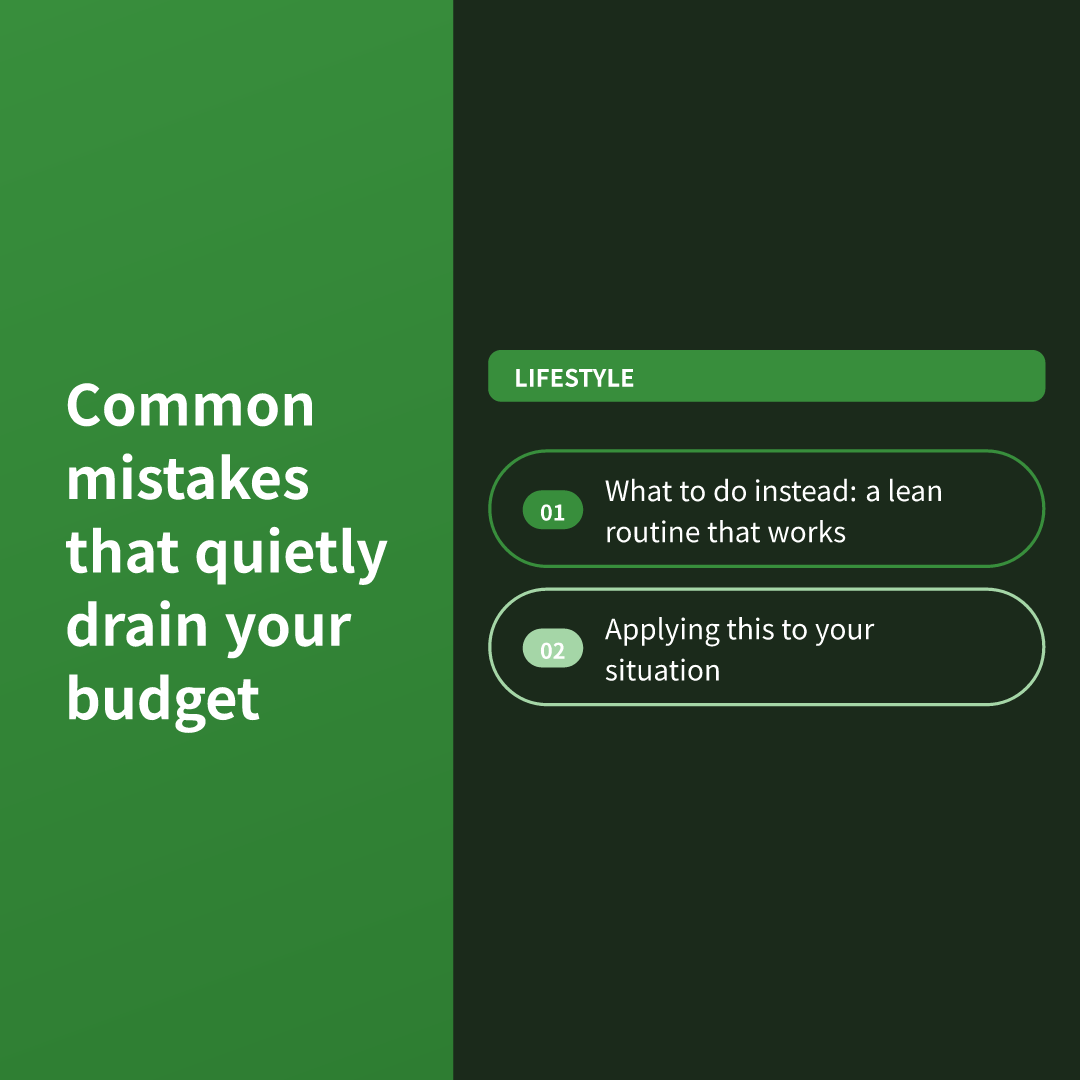
Common mistakes that quietly drain your budget
Mistake one: chasing every trending product
Social feeds make it easy to believe your hair needs a serum, a mask, a scalp scrub, a leave-in, and a bond treatment all at once. The reason this backfires is simple: more products mean more cost, more chances for irritation, and more difficulty working out what is actually helping. Many ingredient lists across price levels share the same core ingredients, such as cleansing agents, conditioning agents, and moisturizers.
A better approach is to pick one problem at a time, such as dryness, frizz, oiliness, or flaking, and choose a single product aimed at it. Give it a reasonable stretch of regular use before judging it. If you cannot name the problem a product solves, it is probably a candidate to skip.
Mistake two: assuming a higher price means better results
Price often reflects packaging, marketing, fragrance, and brand positioning as much as formulation. The FTC's general consumer guidance on advertising encourages shoppers to be cautious about bold claims, and that applies to hair products too. Words like "salon quality" or "professional strength" are marketing phrases, not guarantees of performance.
Instead, read the ingredient list and the label's stated purpose. Many drugstore shampoos and conditioners use similar ingredient types to pricier ones. If a budget option leaves your hair feeling clean and manageable, there is no practical reason to upgrade.
Mistake three: using too much product
It is tempting to squeeze out a big handful because a generous amount feels luxurious. The reason this costs you is that a bottle empties faster, and extra product can leave hair heavy or coated. Rinsing it all out also takes longer, which adds to water use.
A smaller amount, worked through thoroughly, usually does the job. Concentrate shampoo on the scalp, where oil and sweat collect, and let the lather rinse down the lengths. Put conditioner mainly on the mid-lengths and ends, which are the oldest and driest parts of the hair.
Mistake four: washing on a rigid schedule
Some people wash daily because they always have, while others stretch washes too long because they heard frequent washing is bad. Neither rule fits everyone. Washing too often may leave some hair types feeling dry, and washing too rarely may leave the scalp feeling greasy or itchy for others.
A more flexible habit is to let your scalp set the schedule. Oilier scalps often need more frequent cleansing, while very dry or textured hair often does well with fewer washes. Adjust gradually and notice how your hair and scalp respond over a few weeks.
Mistake five: relying heavily on heat and harsh styling
Frequent hot tools, tight ponytails, and aggressive brushing can lead to breakage, which then sends people shopping for repair products. The reason this is a budget issue is that damage is far more expensive to manage than to avoid. Repair-style products generally coat or temporarily smooth hair rather than rebuild it.
The alternative is to cut back on heat where you can, let hair air-dry some of the time, and handle wet hair gently, since it is more fragile. If you do use heat, many people choose a lower setting.
What to do instead: a lean routine that works
Start with the scalp
Healthy-looking hair starts at the scalp, so one dependable shampoo is the best place to put your money. Choose a formula that matches how your scalp tends to feel, whether oily, balanced, dry, or prone to flaking. The American Academy of Dermatology offers general public guidance on hair and scalp care, and it is a helpful place to read broader background before buying anything specialized.
Lather gently with your fingertips rather than scrubbing with nails. A quick, thorough rinse matters just as much as the product itself, because leftover residue can make hair feel flat or itchy.
Condition with purpose
A basic conditioner is often enough for many people. It is generally used to soften the hair surface and make detangling easier, which can reduce breakage over time. If your hair is fine, a lightweight formula may feel better, while thicker or curlier hair often prefers richer ones.
A wide-tooth comb used gently on damp hair, starting from the ends and working upward, is a low-cost tool that protects strands. You do not need a premium brush to do this well.
Choose multi-purpose items
Products that do double duty can shrink your shopping list. A simple leave-in conditioner, for example, may handle both frizz and detangling for some people. Others find one basic oil or cream, used sparingly on dry ends, covers most of their styling needs.
Before adding anything new, ask whether an item you already own can serve that purpose. This simple question prevents many impulse buys.
Buy smart, not just cheap
Savings come from buying thoughtfully rather than always buying the lowest price. A few habits help:
- Compare by use, not by bottle size. A larger bottle is only a bargain if you will finish it before it changes in smell or texture.
- Try travel sizes first. A small bottle lets you test a formula before committing to a full one.
- Check store brands. Many retailers sell their own shampoos and conditioners with ingredient types similar to name brands.
- Finish what you own. Using up half-empty bottles before opening new ones reduces waste.
- Watch for fragrance sensitivity. Strongly scented products can bother some scalps, so unscented options may suit sensitive skin better.
Treat the basics as the real investment
Sleep, a varied diet, and gentle habits all play a role in how hair looks and feels, although the effect differs from person to person. The NIH's MedlinePlus offers general information on hair care and hair loss, and it is a credible starting point for questions about why hair changes. Spending less on gadgets and more on consistent, simple habits is often the more economical path.
Applying this to your situation
If you have oily hair
Oily hair often does best with a cleansing shampoo and a light conditioner kept away from the roots. The common mistake here is skipping conditioner entirely, which can leave ends dry and prompt extra product purchases. Using a small amount on the ends only is a budget-friendly compromise.
If you have dry or textured hair
Dry or textured hair tends to benefit from gentler cleansing and more moisture-focused conditioning. A frequent trap is buying many specialty products when one good conditioner and careful detangling would do more. Protecting hair at night with a soft covering or a smooth pillowcase is an inexpensive step many people find helpful.
If you have fine or thinning-looking hair
Fine hair can look flat when weighed down by heavy formulas, so lightweight products tend to be a better fit. Be cautious about costly products that promise to regrow hair, since marketing claims in this area can be bold. If you notice sudden shedding, patchy loss, or changes in your scalp, a dermatologist or other licensed clinician can look into possible causes.
If you color or chemically treat your hair
Treated hair is often more fragile, so a basic conditioner and reduced heat become even more important. Color-safe formulas are widely sold, but they are not always necessary for every person or every dye. Your stylist can explain how to care for your particular treatment, and that conversation is usually free.
If you have a sensitive or itchy scalp
Persistent itching, redness, burning, or flaking is not something to solve by buying more products. Reactions to ingredients vary from person to person, and stacking new items can make it harder to identify the trigger. A clinician can assess whether the cause is a product reaction or a skin condition, and a pharmacist can answer questions about medicated shampoos before you use them.
If you want to trim costs on cuts and styling
Regular trims can help keep ends from splitting further, though how often depends on your hair and goals. Some beauty schools offer supervised services at lower prices, which can be an option if you want to spend less. Check the school's own policies and ask about who supervises the work.
Frequently asked questions
Is cheap shampoo really as good as expensive shampoo?
For many people, yes, an affordable shampoo can clean the scalp just as well as a pricey one. What matters more is whether the formula suits your scalp and hair type, and how you use it. Results differ between individuals, so it is reasonable to test an inexpensive option first.
Do I need a special treatment mask or serum to see a difference?
Not necessarily. Many people find that a suitable conditioner, gentle detangling, and less heat do most of the work, while masks and serums are optional extras. If you are curious, try one product with a clear purpose rather than several at once.
When is it worth spending more on hair care?
Spending more can make sense when you have a specific need that basic products have not met, such as a sensitivity to certain ingredients or a professionally recommended medicated shampoo. In those cases, a licensed clinician or pharmacist can guide you on what is worth paying for. For everyday cleansing and conditioning, a higher price does not automatically mean better performance.
Keeping hair care cheap but effective comes down to fewer products, better habits, and patience. Choose basics that suit your scalp and hair, pay attention to how your hair responds, and seek professional advice if you notice ongoing irritation or unusual hair loss.
Disclaimer: This article is for informational purposes only and is not a substitute for professional medical advice, diagnosis, or treatment. Please consult a licensed professional for personal health decisions.