How Sleep Affects Hair and Scalp: Reading the Fine Print
How sleep affects hair and scalp is a bigger question than any single product label can answer, but the labels are still a useful place to start. Many "overnight" serums, silk pillowcases, scalp masks and hair supplements are marketed around the idea that nights matter for hair. Some of that framing is reasonable, and some of it stretches well past what anyone can verify. Let's read the back of the package together, so you know what the words mean, what they leave out, and how to match them to your own situation.
One honest caveat first: sleep science and hair science are both complicated, and the direct link between sleep quality and hair outcomes is not fully mapped out. According to the National Institutes of Health's general guidance, sleep supports many body processes, and hair growth is influenced by a mix of factors such as genetics, hormones, nutrition, stress and underlying health conditions. Sleep is one piece of that picture, not a switch that controls everything.
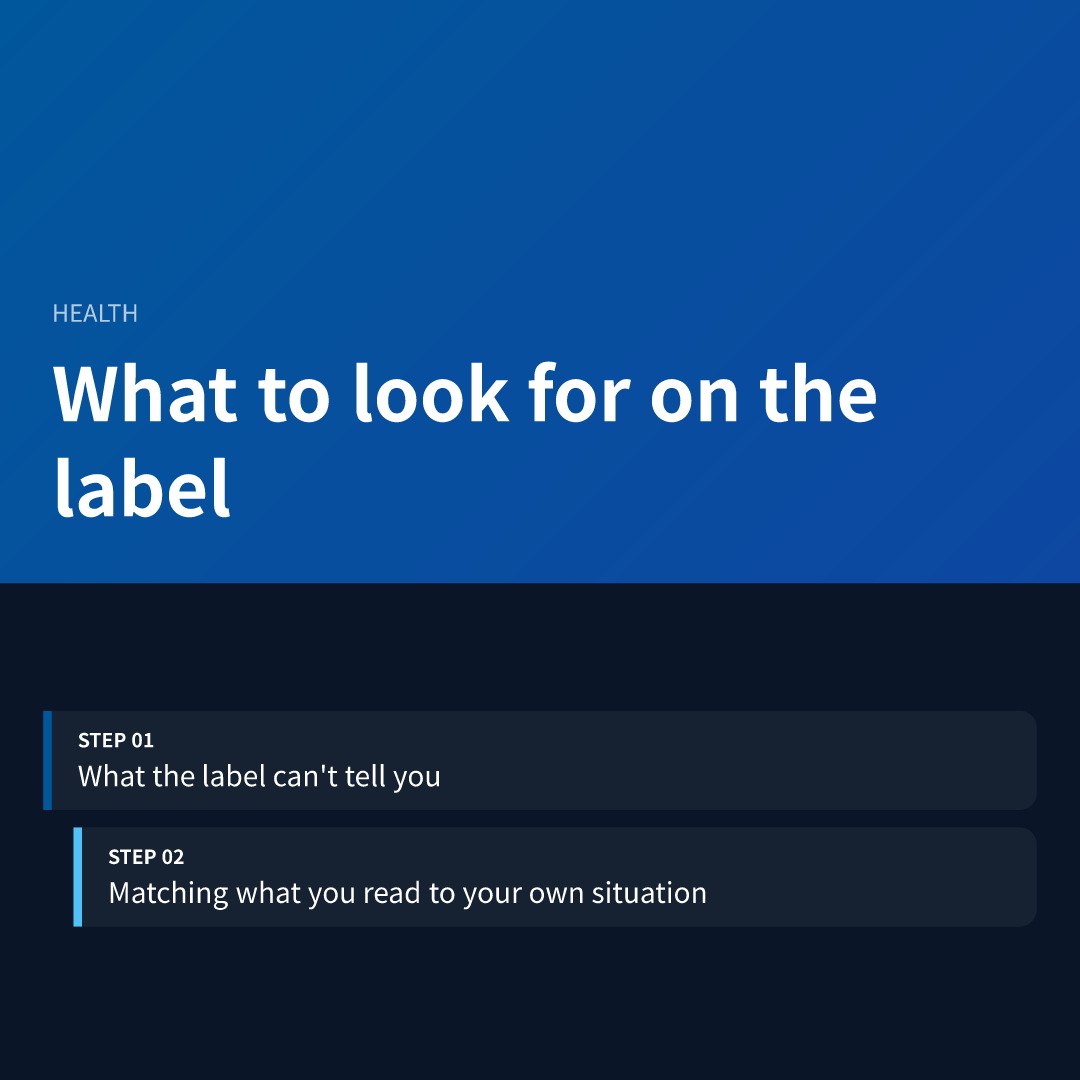
What to look for on the label
Products tied to sleep and hair tend to use a handful of recurring phrases. Each one has a plain-language meaning, and each one tends to attract a common misunderstanding. Here they are in pairs.
"Overnight" or "night" treatment
What it means: The product is designed to be left on the hair or scalp for an extended period, usually while you sleep, rather than rinsed quickly. The idea is that longer contact time gives conditioning or moisturizing ingredients more opportunity to sit on the hair surface.
The common misunderstanding: Many readers take "overnight" to mean the product works with your body's nighttime repair cycle. In most cases the word describes how long the product stays on, not a biological mechanism. A leave-in formula does not become more powerful because you are asleep.
"Repairs" or "restores" damaged hair
What it means: In cosmetic language, this usually refers to smoothing the outer surface of the hair shaft so it looks and feels less rough. Conditioning agents, oils and film-forming ingredients are often used for this purpose.
The common misunderstanding: Hair strands above the scalp are not living tissue, so a cosmetic cannot truly rebuild them the way skin heals. What a product can often do is change how hair feels and reflects light for a while. That is a real benefit for many people, but it is cosmetic rather than structural, and results vary.
"Scalp-balancing" or "soothing"
What it means: These terms usually point to ingredients intended to moisturize, calm the look of dryness, or help the scalp feel more comfortable. They are cosmetic descriptions, not statements about a medical condition.
The common misunderstanding: "Soothing" is sometimes read as "suitable for any scalp problem." It is not a promise that flaking, itching or redness will resolve. Persistent scalp symptoms can have several causes, and a label cannot sort out which one applies to you.
Ingredient list order and "free-from" claims
What it means: In many markets, ingredients are listed in descending order of concentration, at least for the main portion of the list. Ingredients near the top are generally present in larger amounts than those near the end. Phrases like "fragrance-free" or "sulfate-free" describe what was left out of the formula.
The common misunderstanding: "Free-from" does not automatically mean gentler or safer for you. A fragrance-free product can still contain ingredients that irritate a particular person, and a product with a long botanical list can be more likely to trigger a reaction in someone sensitive. Reactions vary from person to person.
Fabric and accessory claims
What it means: Silk or satin pillowcases, soft hair wraps and similar accessories are usually described as creating less friction against hair during sleep. Lower friction is the core idea, and it is a reasonable one for people who notice tangling or frizz in the morning.
The common misunderstanding: Less friction is not the same as stronger hair or faster growth. These items may make mornings easier for some people, but they are not a documented way to change how fast hair grows. It is fair to treat them as a comfort and handling choice.
What the label can't tell you
Even a carefully written label leaves out the most important variable: you. Packaging is written for a broad audience, and the connection between sleep and hair depends on things a bottle cannot see.
It can't tell you why your hair is changing
People often connect a stretch of poor sleep with more shedding or a dull scalp, and that connection feels intuitive. The trouble is that poor sleep often shows up alongside other things, such as high stress, schedule changes, illness, hormonal shifts or changes in eating. Any of these may be associated with changes in hair, and it can be hard to tell which one is doing the work. A product label cannot untangle that for you.
Hair also has a lag built in. According to general information from MedlinePlus, shedding patterns can show up weeks to months after a triggering event, which means the thing you notice today may relate to something that happened a while ago. That timing makes it easy to blame the wrong cause, including last week's bad nights.
It can't tell you how your scalp responds to sleep habits
Sleep routines are bundled with other habits. Going to bed with a sweaty scalp, sleeping on the same pillowcase for a long stretch, tying hair tightly, or using heavy leave-in products can each affect how hair and scalp feel by morning. None of these are about sleep itself, but they all happen during sleep, and they get mixed together in people's minds. A product claiming a "sleep benefit" rarely separates them.
It can't tell you whether something is medical
Cosmetic labels are not meant to diagnose. Noticeable thinning, patchy loss, a painful or very itchy scalp, or persistent scaling can be linked to conditions that a cosmetic will not address. The American Academy of Dermatology's general public guidance encourages people to seek professional evaluation when hair loss is sudden, patchy or accompanied by other symptoms. A label has no way of flagging that for you.
It can't tell you about your own sensitivities
Ingredient lists are information, but they are not a personal compatibility report. Someone with a history of contact reactions, eczema-prone skin or a sensitive scalp may react to ingredients that most people tolerate well. Patch-testing guidance is usually included in product instructions, so follow the manufacturer's directions and ask a pharmacist or clinician if you have a history of reactions.
Related reading: How to Read a Shampoo Ingredient List Without Feeling Lost
Matching what you read to your own situation
Once you know what labels can and cannot say, the next step is a bit of honest self-observation. This is not a diagnosis, just a way to decide how to shop and what to ask.
If your main complaint is morning tangles and frizz
This is the area where sleep-related accessories and conditioning products have the most plausible role. Hair that rubs against fabric overnight can look rougher by morning, and smoother fabrics or a loose, gentle hairstyle may reduce that. Treat these as handling choices. If a product claims to do more than that, such as boosting growth, the claim deserves skepticism unless a reliable source supports it.
If your scalp feels oily, itchy or flaky
Scalp symptoms have many possible causes, and sleep is rarely the whole story. Over-the-counter products for flaking and itching exist, and they come with their own directions and warnings. How and how often they are used should follow the product instructions or the guidance of a pharmacist or clinician, not a blog post. If symptoms persist, spread or become uncomfortable, a dermatology professional is the right person to ask.
If you are noticing more shedding than usual
A change in shedding can be unsettling, and it is natural to look for a cause close at hand, including sleep. Because shedding can be tied to stress, illness, nutrition, hormonal changes and other factors, it helps to note when the change began and what else shifted around then. Bring that timeline to a licensed professional rather than trying to solve it with a product. This matters most if the change is sudden, patchy or accompanied by other symptoms.
If you are considering a hair supplement marketed for sleep or stress
Supplements marketed for hair are a particularly cautious area. The U.S. Food and Drug Administration's general guidance notes that dietary supplements are not reviewed for effectiveness the way medicines are, and some ingredients can interact with medications or affect lab tests. Whether a supplement makes sense for you is a question for a pharmacist or doctor who knows your health history, especially if you are pregnant, nursing, managing a condition or taking regular medication.
If your sleep itself is the bigger issue
Sometimes the more useful question is not which hair product to buy but why sleep is suffering. Ongoing trouble sleeping, heavy daytime fatigue or loud snoring deserve attention for reasons that go well beyond hair. Per the Centers for Disease Control and Prevention's general sleep guidance, sleep is considered an important part of overall health, and persistent problems are worth discussing with a healthcare professional. Improving your sleep may or may not change your hair, but it can matter for how you feel overall.
Frequently asked questions
Can one bad night of sleep change how my hair looks?
A single rough night is more likely to change how you look and feel in general, such as puffiness or a tired appearance, than to alter your hair in a lasting way. Hair that looks flat or tangled the next morning often reflects how you slept physically, such as tossing on a rough surface, rather than a biological change. If you are worried about ongoing changes, it is the pattern over time that is worth bringing to a professional.
Do silk pillowcases actually make a difference?
They may reduce friction for some people, which can mean fewer tangles or less frizz by morning, but the effect varies with hair type and sleeping style. There is no reliable basis for expecting them to change growth or fix scalp problems. Think of them as a comfort and handling choice rather than a treatment.
Is it a problem to sleep with hair products left in?
It depends on the product and the person. Some leave-in products are made for extended wear, while others are meant to be rinsed, and heavy formulas may bother some scalps or transfer onto bedding. Check the product's own directions, and ask a pharmacist or dermatology professional if you have a sensitive or reactive scalp.
What is the one thing to check before buying a product that promises better hair through better sleep?
Look for whether the product's claim describes something the product itself can do, such as conditioning or reducing friction, rather than promising to change your biology or your sleep. Claims that stay within cosmetic territory are easier to evaluate, while promises about growth or fixing a scalp condition deserve a closer look and a conversation with a licensed professional. If a claim sounds bigger than the ingredient list can support, that is the signal to pause before buying.
Disclaimer: This article is for informational purposes only and is not a substitute for professional medical advice, diagnosis, or treatment. Please consult a licensed professional for personal health decisions.