How Stress Relates to Hair Shedding: What to Know
You pull a brush through your hair and notice far more strands than usual, and it happens to be the same month a job change, illness, or family worry piled up. That timing is rarely a coincidence for many people. How stress relates to hair shedding is generally explained by a temporary shift in the hair growth cycle, and the shedding often shows up weeks to a few months after the stressful event rather than right away.
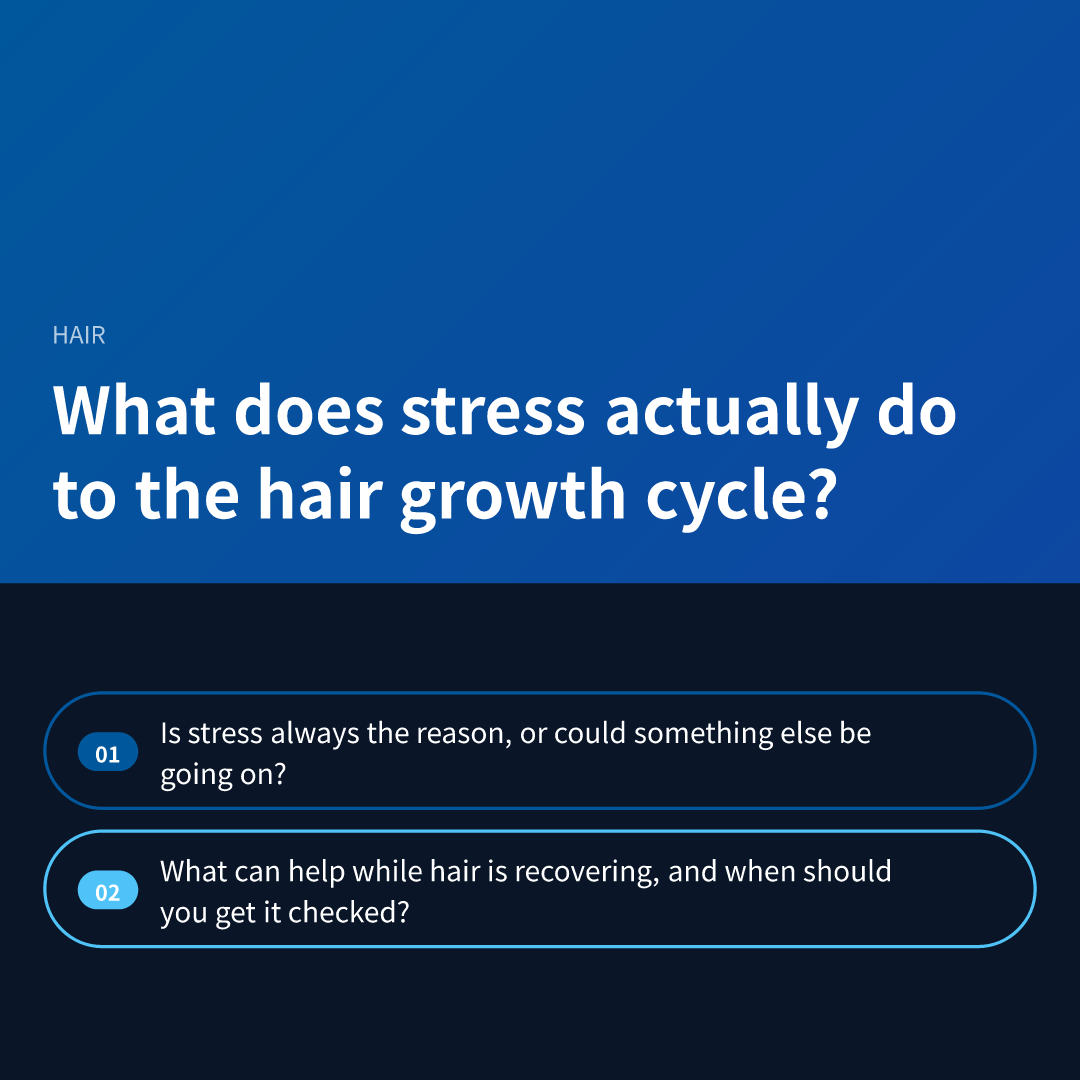
What does stress actually do to the hair growth cycle?
Stress can push more hairs than normal into the resting phase of the growth cycle, and those hairs are shed later. Each hair follicle moves through stages: an active growing phase, a short transition phase, and a resting phase before the hair falls out and a new one begins. Under typical conditions, only a modest share of scalp hairs are resting at any moment.
When the body goes through a major physical or emotional strain, a larger group of follicles may shift into rest at the same time. Dermatology organizations such as the American Academy of Dermatology describe this pattern as telogen effluvium, a common form of temporary, diffuse shedding. Because the hairs fall out about a few months after the trigger, people often struggle to connect the two events.
Why the delay makes it confusing
The lag is the part that surprises most readers. By the time the hair is coming out in handfuls, the stressful period may already feel over. That gap can make the shedding seem random or even frightening.
It can also lead people to blame whatever they changed most recently, such as a new shampoo or a haircut. Those are rarely the cause of this type of shedding, though individual situations differ.
What the shedding usually looks like
Stress-related shedding is typically described as widespread thinning across the scalp rather than a single bald patch. Many people notice more hair on pillows, in brushes, or in the shower. The hairline and overall scalp are usually still present, and hair often looks thinner rather than absent in one spot.
- Hair coming out more than usual during washing or brushing
- A ponytail that feels thinner than it used to
- General thinning rather than distinct bald spots
- Shedding that began some weeks or months after a difficult period
These signs are not a diagnosis. Several other conditions can look similar, which is why the next section matters.
Is stress always the reason, or could something else be going on?
Stress is only one of several possible triggers, and it is often not the only one. The National Institutes of Health and MedlinePlus note that hair loss can be linked to many factors, including hormonal changes, thyroid conditions, nutritional gaps, certain medications, illness, and family history. Because these overlap, it can be hard to tell from the mirror alone what is driving the change.
Physical stressors count too, not just emotional ones. A high fever, surgery, a significant illness, rapid weight loss, or childbirth are commonly listed as triggers for temporary shedding. Someone can feel emotionally calm and still experience shedding because the body went through a physical strain a few months earlier.
Other common contributors worth knowing about
- Hormonal shifts: Changes after pregnancy, around menopause, or related to thyroid function may affect hair.
- Nutrition: Very restrictive eating or low intake of certain nutrients is often discussed in connection with shedding.
- Medications: Some prescription drugs list hair changes as a possible effect, so it helps to review any recent changes with a pharmacist or prescriber.
- Inherited patterns: Gradual thinning that runs in families tends to progress differently from stress-related shedding.
- Hair styling habits: Constant tight styles or harsh treatments may cause breakage or tension-related loss, which is different from shedding at the root.
Shedding versus breakage
It helps to separate hairs that fall out from the root from hairs that snap partway down the strand. Shed hairs often have a small whitish bulb at one end, while broken hairs look shorter and uneven. Breakage is usually tied to heat, chemical processing, or rough handling, and it points toward a different set of questions than stress does.
If you cannot tell which one you are seeing, that is a reasonable thing to bring up with a professional who can look at your scalp directly.
What can help while hair is recovering, and when should you get it checked?
Stress-related shedding is generally described as temporary, and many people see regrowth gradually once the trigger has eased. Recovery tends to be slow, because new hairs need time to grow in before the change is visible. Timelines vary a lot from person to person, so patience is often part of the picture, though it is understandably hard when the shedding feels sudden.
Gentle everyday habits people commonly consider
There is no routine that guarantees faster regrowth, and results vary. Still, general habits often discussed for overall hair and scalp comfort include handling hair gently, limiting tight styles and heavy heat, and eating a varied, balanced diet. Many people also find that sleep, movement, and stress-management practices support overall well-being, even if their direct effect on hair is hard to measure.
Products marketed for hair growth deserve some skepticism. Supplements and topical treatments are not all the same, and some can interact with medications or cause reactions in certain people. Before starting any supplement or hair treatment, it is sensible to talk with a pharmacist or doctor about whether it fits your situation.
Signs that a professional visit is worthwhile
Getting checked is a good idea whenever the cause is unclear or the shedding does not settle. The American Academy of Dermatology and similar organizations generally encourage seeing a clinician, such as a primary care provider or dermatologist, when hair loss is persistent or comes with other symptoms.
- Shedding that continues for many months without easing
- Distinct bald patches, or hair loss that seems to be getting worse
- An itchy, painful, red, scaly, or inflamed scalp
- Hair loss together with unexplained fatigue, weight changes, or other new symptoms
- Hair loss that began after starting a new medication
- Significant emotional distress about the change
A professional can examine the scalp, ask about your health history, and decide whether any tests are appropriate. That step helps rule out other causes and avoids guessing, which matters because the right approach depends on what is actually happening.
Looking after your mood, too
Noticing hair loss can itself feel stressful, which sometimes creates a loop of worry. It is okay to acknowledge that, and talking with a trusted person or a mental health professional can be worthwhile if the distress feels heavy. Understanding that stress-linked shedding is often temporary can take some of the fear out of it, even while you wait for the cycle to settle.
Frequently asked questions
Can a single stressful event cause noticeable shedding?
Yes, a single major event can be enough for some people. A serious illness, surgery, or a sudden emotional shock is often cited as a trigger for temporary shedding. Whether it happens varies widely, and many people go through hard events without noticing any change in their hair.
Will my hair grow back to how it was before?
In stress-related shedding, regrowth is generally expected once the trigger has resolved, though the pace differs between individuals. Hair density may take a good while to look familiar again. If it does not seem to be recovering, a professional can help check for other contributors.
Does washing or brushing hair make stress-related shedding worse?
Washing and brushing do not usually cause the shedding itself; they simply bring out hairs that were already ready to fall. Because those hairs would have been shed anyway, gentle handling mainly helps avoid adding breakage on top. Anyone concerned about their scalp or technique can ask a hair care professional or clinician for guidance suited to their hair type.
Disclaimer: This article is for informational purposes only and is not a substitute for professional medical advice, diagnosis, or treatment. Please consult a licensed professional for personal health decisions.
Related reading: How Diet Relates to Healthy Hair: What Food Can and Can't Do