How Diet Relates to Healthy Hair: What Food Can and Can't Do
How diet relates to healthy hair is mostly a question of supply: hair follicles are active, fast-working structures, and they depend on the body having enough energy, protein, vitamins, and minerals to keep building each strand. Food does not directly "repair" hair that has already grown out of the scalp, but eating patterns can influence how well new hair is made. Below, you will find what that connection really means, when it matters most, which ideas people commonly mix up, and how to think about your own situation without overpromising what a plate of food can do.
What the Diet and Hair Connection Actually Means
Each hair strand grows from a follicle, a tiny pocket in the skin of the scalp. The visible part of the hair is made of keratin, a protein, and the cells that produce it are among the more metabolically active in the body. Because of that, hair growth needs a steady supply of building materials and fuel.
Think of a follicle like a small workshop that runs on deliveries. If the trucks arrive on time with protein, iron, zinc, and other inputs, the workshop keeps its production line moving. If deliveries run short for a long stretch, the body may quietly deprioritize non-essential projects, and hair is often one of them. This is the one comparison worth keeping in mind: hair is a "nice to have" for survival, so it can show strain early.
It is important to be careful here. According to the National Institutes of Health (NIH) Office of Dietary Supplements, nutrition is one of several factors that relate to hair, and the evidence for specific nutrients improving hair in people who are not deficient is limited. In other words, food supports the process, but it is rarely the only lever.
Nutrients commonly discussed in relation to hair
- Protein: Hair is largely protein, so overall intake and amino acid availability matter for normal growth.
- Iron: Low iron stores are often discussed in connection with increased shedding, especially among people who menstruate or follow restrictive diets.
- Zinc: This mineral takes part in cell growth and repair, including in the scalp.
- Vitamin D: It appears to play a role in the hair follicle cycle, though the details are still being studied.
- B vitamins, including biotin: Biotin is a B vitamin involved in energy metabolism; true deficiency is uncommon in people eating varied diets.
- Essential fatty acids: These fats are part of healthy skin structure, including the scalp.
Getting these from ordinary foods such as eggs, fish, legumes, nuts, leafy greens, dairy or fortified alternatives, and whole grains is a common approach. Variety tends to matter more than any single "hair food."
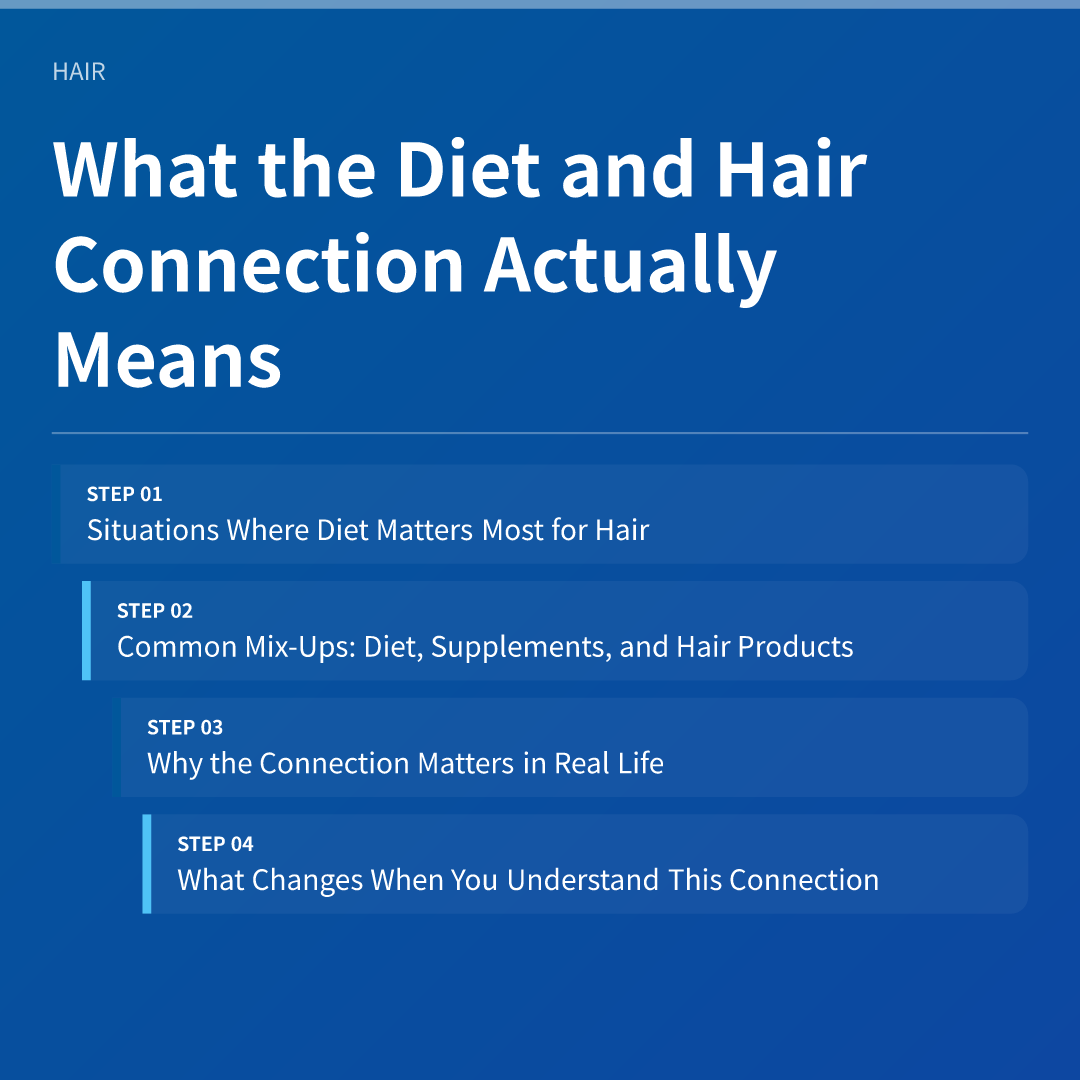
Situations Where Diet Matters Most for Hair
For many people with a reasonably balanced diet, hair changes are driven more by genetics, hormones, stress, styling habits, or health conditions than by what they ate last week. Diet tends to become more relevant in a handful of specific situations.
Rapid weight loss or very restrictive eating
When calories or protein drop sharply, the body may push more follicles into a resting phase. A few months later, some people notice noticeably more shedding. This pattern is often called telogen effluvium, which simply means a temporary increase in hair shedding after a body stressor. The American Academy of Dermatology (AAD) describes diet changes, illness, and major stress among the commonly recognized triggers, and says shedding often settles once the trigger is addressed, though timelines vary.
Low iron or other deficiencies
Plant-forward, vegetarian, and vegan eating patterns can absolutely support healthy hair, but they may require more attention to iron, zinc, vitamin B12, and protein variety. Heavy periods, digestive conditions that limit absorption, and some medications can also change nutrient status. Only a blood test ordered by a clinician can show whether a deficiency is actually present, so guessing is not a reliable strategy.
Pregnancy, postpartum, and other life stages
Hormonal shifts around pregnancy and after delivery are commonly linked with changes in hair density and shedding. Nutrition is one part of overall care during these stages, but the shedding itself is often hormonal and not a sign that someone ate "wrong." A prenatal or postpartum care provider is the right person to ask about specific nutrient needs.
Chronic conditions and medications
Thyroid conditions, autoimmune conditions, and certain medications can all affect hair. In these cases, adjusting food alone is unlikely to resolve the change, and sorting out the cause requires a professional evaluation.
Common Mix-Ups: Diet, Supplements, and Hair Products
A lot of confusion comes from lumping several different ideas together. Separating them makes it easier to judge claims you see online.
Food versus supplements
Eating nutrient-rich foods is not the same as taking concentrated supplements. Hair supplements are widely marketed, but the NIH Office of Dietary Supplements notes that extra amounts of a nutrient are not clearly helpful for hair in people who already get enough, and some nutrients can cause problems in excess. Biotin in particular can interfere with certain lab tests, according to the U.S. Food and Drug Administration (FDA), which is why it is worth telling any clinician or lab about supplements you use. Whether a supplement makes sense for you is a question for a pharmacist or doctor, not something a general article can settle.
Hair growth versus hair appearance
Diet relates mainly to growth from the follicle. Shine, softness, frizz, and breakage along the length are heavily influenced by heat styling, bleaching, brushing habits, and weather. A person can eat very well and still see damaged ends if the hair is chemically processed often. Likewise, topical conditioners change how hair feels but do not change how it grows.
Shedding versus thinning versus breakage
These look similar in the shower drain but are different. Shedding means whole hairs fall out from the root. Thinning means density gradually decreases. Breakage means strands snap partway along their length. Food-related causes are usually discussed for shedding, while genetic patterns of thinning and mechanical breakage have different explanations.
"Superfoods" versus overall eating patterns
No single ingredient, whether avocado, collagen powder, or a particular juice, has been established to transform hair. A steady, varied pattern that covers energy, protein, and micronutrients is what is generally described as supportive. Many people find that framing less stressful than chasing a perfect list.
Why the Connection Matters in Real Life
Knowing how diet relates to healthy hair helps you spend your effort and money wisely. It also helps you notice when hair is acting like an early signal rather than the main problem.
Hair changes can be one of the first visible hints that something else is going on, whether that is under-eating, a nutrient gap, a thyroid issue, or significant stress. Because hair cycles are slow, the cause often occurred weeks or months before the change you notice now. That delay can make it hard to connect the dots on your own, which is one reason a professional's help is useful.
Limits worth keeping in mind
- Results vary from person to person, and genetics strongly shape hair density and pattern.
- Improving food intake may support hair over time, but changes tend to be gradual, and some situations will not respond to diet alone.
- Cutting out whole food groups in the name of hair health can backfire if it reduces nutrient variety.
- Reactions to dietary changes and supplements differ between individuals, especially for people with allergies, medical conditions, or those taking medications.
When to talk with a professional
Consider booking time with a primary care clinician or a dermatologist if shedding is sudden or heavy, if bald patches appear, if the scalp is painful, itchy, or inflamed, or if hair changes arrive alongside fatigue, unexplained weight changes, or irregular periods. The AAD generally encourages people with persistent or unexplained hair loss to get evaluated, since early identification of the cause can open more options. A registered dietitian can also help if you are unsure whether your eating pattern covers your needs.
What Changes When You Understand This Connection
Once the relationship between diet and healthy hair is clear, two judgments tend to shift. First, you are less likely to rely on a single product or "miracle" food, and more likely to look at the whole picture: how consistently you eat, whether intake has dropped recently, and whether other health factors might be involved. Second, you are better able to tell when a hair concern calls for a professional's evaluation instead of another round of supplement shopping, because the signal may be pointing beyond the kitchen.
Disclaimer: This article is for informational purposes only and is not a substitute for professional medical advice, diagnosis, or treatment. Please consult a licensed professional for personal health decisions.
Related reading: How Humidity Affects Hair: Frizz, Flatness and Static