How to Brush a Toddler's Hair Without Tears
The most common mistake is holding a toddler still and pulling a brush straight through tangles from the roots down. If you want to know how to brush a toddler's hair without tears, the short answer is to work from the ends upward, use a gentle tool, and keep the mood calm and playful. Pulling from the top drags every knot across the scalp, which hurts, and a toddler who has been hurt once will often resist the next session before it even begins.
This guide is written from an editor's point of view, pulling together widely shared hair care habits rather than personal clinical experience. Every child's hair and temperament are different, so treat the ideas below as options to try, not a fixed formula.
Common mistakes that lead to tears
Mistake one: starting at the scalp
It feels logical to begin at the top and brush down, since that is how most adults brush their own hair. The trouble is that a tangle near the ends gets pulled tighter with every stroke that starts above it, and the scalp takes the tug. Toddlers have fine, sometimes delicate hair, and they feel that pulling sharply.
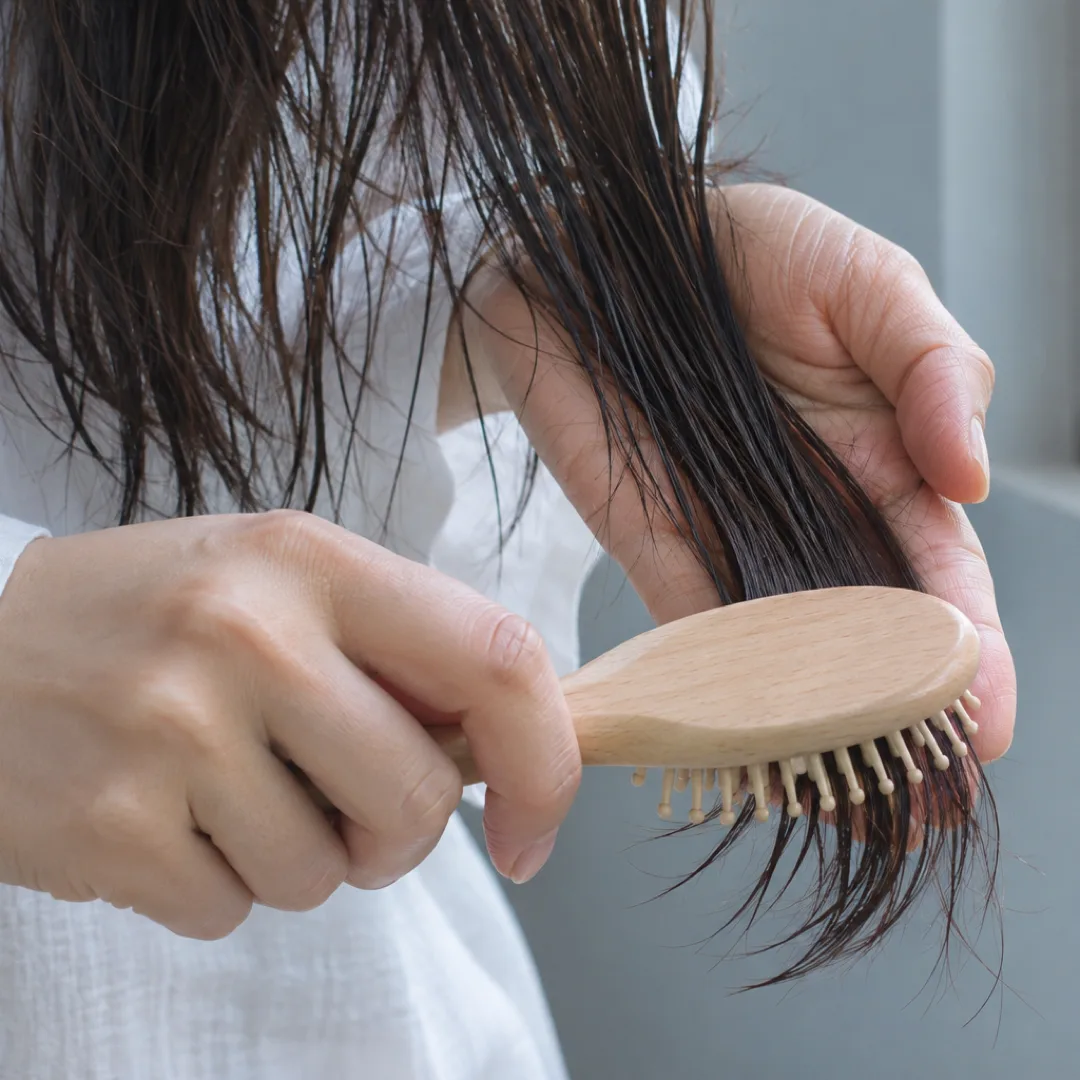
The alternative is to begin at the very ends and work upward in small sections. Once the bottom few inches are smooth, move a little higher, then a little higher again, until the brush glides from roots to tips without catching. It takes a minute longer, but it spares the scalp.
Mistake two: brushing bone-dry hair
Dry hair has more friction, so knots grip each other and snap or pull. Many parents reach for the brush first thing in the morning when hair is at its most tangled from sleep, which makes the session harder than it needs to be.
A light misting of plain water, or a leave-in detangling product made for children, can add slip. If your child has a sensitive scalp, eczema, or any history of reacting to products, ask a pharmacist or pediatric professional before introducing a new leave-in, since reactions vary from person to person.
Mistake three: using the wrong tool
A stiff, tightly packed brush or a fine-toothed comb can catch on every knot. Hard plastic bristles may also feel scratchy on a small head. Reaching for whatever is nearest in the bathroom drawer is understandable, but it is often the source of the protest.
Many families find that a wide-tooth comb or a soft, flexible-bristle detangling brush is easier on young hair. Hair texture matters here: straight, fine hair, wavy hair, and tightly coiled hair each respond differently, so it is worth trying a couple of tools before settling on one.
Mistake four: forcing it when the child is upset
Holding a toddler in place while they cry teaches them that hair time means distress. Even if the tangles do get cleared that day, the next session starts with a child who is already braced for a fight. Rushing when you are late for the door makes this worse.
Choosing a calmer moment, such as after a bath when hair is soft, or during a favorite show, often changes the whole feel of it. If a session is going badly, stopping and trying again later is usually better than pushing through.
Mistake five: skipping the maintenance
Brushing only when hair has become a matted mess guarantees a painful session. Tangles grow when they are left alone, and the longer they sit, the tighter they get. Waiting until it is unavoidable tends to turn a small job into a big one.
Short, regular, gentle brushing keeps tangles from building up. How often that is depends on hair length, texture, and how much your child rolls around during sleep and play.
What to do instead
Set up a calmer routine
Toddlers respond well to predictability. A routine with the same place, the same order, and a familiar song or phrase can make hair time feel less like a surprise. Letting your child hold their own brush or a toy to brush first gives them a sense of control, which can lower resistance.
Keep your own tone relaxed. Young children pick up on tension quickly, so a hurried or frustrated mood often shows up as squirming and tears.
Work in small sections
Instead of tackling the whole head, divide the hair into a few loose sections and clip the rest out of the way. Holding the hair just above the section you are brushing, near the scalp, acts as a buffer so any tugging does not pull on the roots. This is a widely used technique for gentle detangling.
Start at the ends of one section, work upward in short strokes, and release it before moving on. Smaller sections mean less pulling and a faster sense of progress, which keeps a short attention span engaged.
Add slip and softness
Brushing after a bath, when hair is damp and soft, can be easier than brushing dry hair. A child-friendly conditioner or leave-in product may add slip for some hair types, though results differ between children. For any product, follow the label and talk with a pharmacist or pediatric professional if your child has skin conditions or allergies.
According to the American Academy of Dermatology general guidance on hair care, gentle handling and avoiding excess pulling are commonly recommended to reduce breakage. That fits the same idea: slower and softer usually beats faster and firmer.
Use distraction and play
A short book, a song, a mirror to watch, or a stuffed animal getting its own "hair day" can shift attention away from the brush. Some children enjoy brushing a doll's hair first. Others do better with a snack or a quiet video. There is no single trick that works for every child, so it helps to rotate options.
Keep sessions short. A calm few minutes that ends on a positive note is more useful than a long fight that ends in tears.
Adjusting for different situations
Fine or straight hair
Fine hair tangles easily, especially at the nape and behind the ears where it rubs against clothing or a car seat. These spots deserve extra patience. A soft brush and a light misting of water are often enough, and working from the ends upward remains the key habit.
Curly or coily hair
Curly and coily textures tend to be drier and more prone to tangling, and they often do best when handled while damp with a wide-tooth comb. Brushing completely dry curls may cause breakage and discomfort. Many families with textured hair build detangling into wash day, when hair is softer and easier to separate. Because textures vary widely, it can help to learn from resources that focus on your child's specific hair type.
Wiggly toddlers who will not sit still
If your child cannot stay seated, try brushing while they are doing something that holds their focus, or break the job into two or three tiny sessions across the day. A few strokes now and a few later can still add up. Standing at a mirror together sometimes works better than a chair.
Stubborn knots and mats
A small knot can often be loosened by holding the hair above it and gently teasing it apart with fingers or the tip of a wide-tooth comb. If hair has become tightly matted, pulling harder is likely to hurt and may break hair. Many people find that patience over a few sessions works better than a single marathon attempt.
If a mat is close to the scalp, very tight, or your child's scalp looks red, sore, or irritated, it is reasonable to ask a pediatric professional or an experienced hair stylist for guidance rather than cutting or pulling at it at home.
Sensitive scalps and skin conditions
If your child has eczema, cradle cap, dandruff-like flaking, or a scalp that seems tender, brushing may feel more uncomfortable than usual. Scalp conditions are best discussed with a pediatrician or dermatology professional, who can explain what is going on and what products suit your child. Brushing guidance on its own cannot replace that assessment.
When hair care is a sensory issue
Some toddlers are very sensitive to touch, sound, or texture, and hair brushing can feel overwhelming even when you are being gentle. If distress seems out of proportion, or the same sensitivity shows up with clothing, bathing, or other routines, it may be worth mentioning to your child's pediatrician. They can suggest whether further support makes sense.
Frequently asked questions
Should I just cut my toddler's hair short to avoid the fight?
If the daily struggle is wearing everyone down, a shorter cut is a reasonable choice, since shorter hair generally tangles less and is quicker to brush. It is a practical option, not a requirement, and many families manage longer styles with gentler technique. A stylist who works with children can talk through what suits your child's hair texture.
Is it normal for my toddler to cry even when I am being gentle?
If your child cries despite a soft touch and a good tool, the reaction may come from past discomfort, tiredness, or simply not wanting to stop playing. Toddlers often protest transitions as much as the brushing itself. Calmer timing, distraction, and short sessions can help over time, though results vary between children.
Do I need special products, or is water enough?
If your child's hair tangles only mildly, a light misting of water and a wide-tooth comb or soft brush may be enough. Hair that knots more easily, especially curly or fine hair, sometimes benefits from a child-friendly conditioner or leave-in. Check with a pharmacist or pediatric professional before trying a new product, particularly if your child has sensitive skin or allergies.
Disclaimer: This article is for informational purposes only and is not a substitute for professional medical advice, diagnosis, or treatment. Please consult a licensed professional for personal health decisions.
Related reading: How to Change Your Hair Part Without Fighting Your Hair