How to Patch Test Hair Dye at Home
Here's a scenario that plays out in bathrooms everywhere: someone mixes their dye, dabs a bit on the back of their hand, waits ten minutes while they finish getting ready, sees nothing alarming, and goes ahead with the full application. A day later, their scalp is itching, red, and swollen along the hairline. This isn't bad luck — it's a patch test that was never actually a patch test. Knowing how to patch test hair dye at home means understanding that a quick swipe-and-wait isn't the same as the real thing, and the difference between those two approaches is exactly what causes so many avoidable reactions.
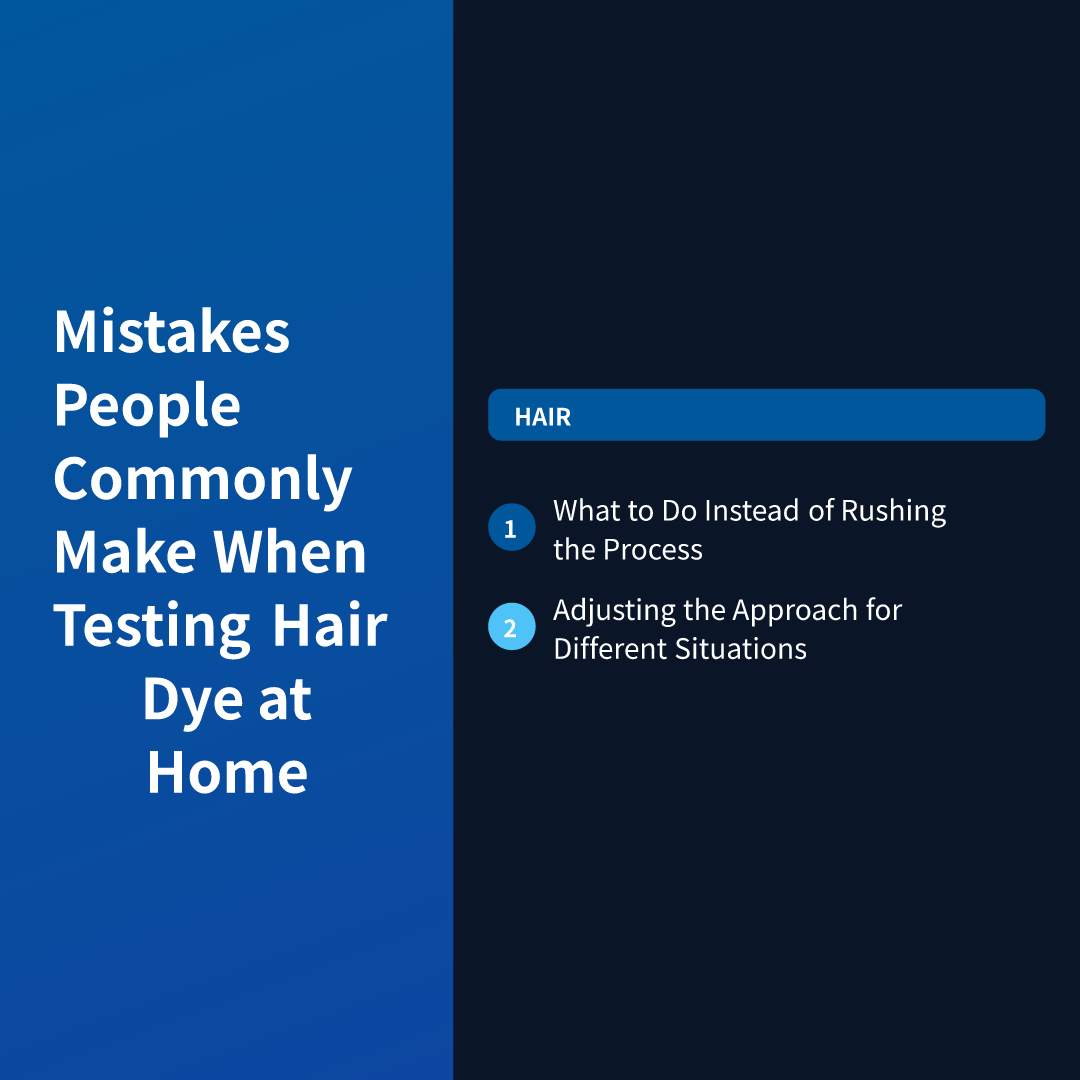
Mistakes People Commonly Make When Testing Hair Dye at Home
Most reactions don't happen because someone skipped testing entirely — they happen because the test itself was done in a way that couldn't catch a problem even if one existed. These are the patterns worth recognizing in yourself before your next color day.
- Mistake: testing for a few minutes instead of a full 48 hours. A short wait only catches immediate irritant reactions, not the delayed allergic responses that para-phenylenediamine (PPD) and similar ingredients can trigger. The FDA's guidance on hair dyes points out that sensitization can develop over time, meaning the reaction you're checking for might simply not show up yet at the ten-minute mark.
- Mistake: assuming past use means the dye is automatically safe. Skin sensitivity to hair dye chemicals can develop even after years of trouble-free use, so "I've used this before" isn't protection against a reaction happening this time. Allergies build up through repeated exposure — they don't necessarily show up the first time.
- Mistake: testing an old box or a different product than the one you'll actually use. Formulations shift between batches, and even the same shade name can contain different concentrations of active ingredients from one production run to the next. A test on last year's leftover dye tells you nothing reliable about this year's bottle.
- Mistake: washing, covering, or disturbing the test spot before the waiting period ends. Rinsing the area early, layering on lotion nearby, or letting a sleeve rub against it can mask a reaction that would otherwise have appeared, giving a false all-clear.
- Mistake: testing only on the arm and assuming the scalp will respond the same way. Scalp skin is thinner, warmer, and surrounded by follicles, which makes it behave differently than the inner elbow or the skin behind the ear. A clean result on your arm doesn't guarantee the same result on your scalp.
What to Do Instead of Rushing the Process
Once you can spot the shortcuts that undermine a patch test, the fix is mostly about slowing down and following a few concrete steps in order.
- Start 48 hours before your actual color day, not the same morning. Mix a small amount of the exact dye and developer combination you plan to use, following the product's included instructions rather than improvising the ratio.
- A patch test is usually carried out on a discreet, sensitive area of skin, such as the inner elbow or just behind the ear, left uncovered and untouched for the full window the manufacturer specifies.
- Resist the urge to wash, cover, or apply anything else near the spot during that waiting period. Interference at this stage is one of the most common reasons people miss a real reaction.
- Check the spot periodically, not just at the very end. Some reactions appear within an hour; others take a day or two. If you notice burning, itching, swelling, or spreading redness at any point, treat that as your answer immediately rather than waiting for the full 48 hours to elapse.
- Test a second spot closer to where the dye will actually sit. A small, diluted application along the hairline — following the same waiting rules — gives you a more realistic read on how your scalp specifically will react, since it doesn't always behave like the skin on your arm.
- Retest every time the product changes, even if it's the same brand and shade you've used before. A new box counts as a new formula until proven otherwise.
This is the core of how to patch test hair dye at home correctly — not a single clever trick, but a sequence of small, unglamorous steps done in the right order and given enough time to actually work.
Adjusting the Approach for Different Situations
The basic process stays the same, but a few situations call for extra caution or a slightly different plan.
- If you color your hair frequently: build testing into your routine rather than treating it as a one-off chore. Keep a simple note of which products and batches you've tested and how your skin responded, since sensitivities can develop gradually and you won't necessarily notice the shift without a record to compare against.
- If you have eczema, psoriasis, or generally reactive skin: be more cautious about both frequency and product choice, since these conditions can make the scalp more prone to irritation even when no true allergy is involved. Ask a pharmacist about lower-ammonia or PPD-free options before you even get to the testing stage.
- If you're going to a salon instead of coloring at home: ask directly whether they patch test their color line before applying it. Don't assume this is automatically part of the service — practices vary considerably between salons, and the responsibility often falls on the client to ask.
- If you've had a confirmed reaction to hair dye before: don't rely on a home patch test alone before trying again. Talk to an allergist first, since more detailed testing under supervision can offer a clearer picture than repeating a home test and hoping for a different outcome.
- If your test result is genuinely hard to read — mild pinkness that might just be from rubbing, or itchiness that could be dry skin rather than a reaction — repeat the test on a fresh patch of skin rather than guessing and moving forward with full application anyway.
- If swelling appears around the eyes or face, breathing feels difficult, or a rash spreads quickly across the body at any point, this moves beyond a wait-and-see situation and calls for urgent medical attention rather than continued home testing.
Frequently Asked Questions
I've used this exact dye brand for years without any problem — do I really need to test it again?
Yes, and this is worth taking seriously even though it feels unnecessary. Sensitization to PPD and related ingredients can build up gradually with repeated exposure, so a product that's always been fine can still trigger a reaction now, and skipping the test because of past experience is one of the most common reasons people get caught off guard.
How long does a proper patch test actually need to sit before I can trust the result?
Most manufacturers recommend around 48 hours of uninterrupted, uncovered time on the skin. Shorter windows can miss delayed allergic reactions entirely, so if you're checking after just 20 or 30 minutes, you're not getting a reliable answer either way.
What should I do if I see slight redness but I'm not sure if it's an actual reaction?
Treat ambiguous results with caution rather than optimism. Repeat the test on a different patch of skin, and if the second result is just as unclear, it's reasonable to check with a pharmacist or allergist before applying the dye to your whole head, rather than assuming it's probably fine.
Is a home patch test enough, or should I see a doctor before coloring my hair?
For most people with no history of reactions, a careful home patch test is a reasonable screening step. But if you've reacted to hair dye before, have very reactive skin, or a home test result seems more serious than mild redness, a doctor or allergist can run more detailed testing that gives a clearer answer than a home test alone.
Disclaimer: This article is for informational purposes only and is not a substitute for professional medical advice, diagnosis, or treatment. Please consult a licensed professional for personal health decisions.
Related reading: How to Prevent Hair Breakage: Match the Fix to the Real Cause