Simple Scalp Care Routine Basics for Morning, Day, and Night
Grand plans for scalp care rarely survive more than a week or two, but simple scalp care routine basics that hook onto moments you already move through in a day tend to stick around. Instead of designing a full new regimen, the more durable approach is dropping one or two small actions into the morning, the middle of the day, and the evening — the three points most days already have in common, whether you're rushing out the door or winding down at night. Nothing here requires a separate block of time; it's about noticing what you're already doing and adding a beat to it.
The scalp is skin, and like facial skin, it responds to things like product buildup, dryness, oil imbalance, heat, and friction from styling. Routines fail less because people don't know what helps and more because the steps don't have a fixed place in the day. Tying small actions to specific times — not just "sometime today" — is what makes a scalp habit last past the first week.
Morning: A Few Seconds Before You Walk Out the Door
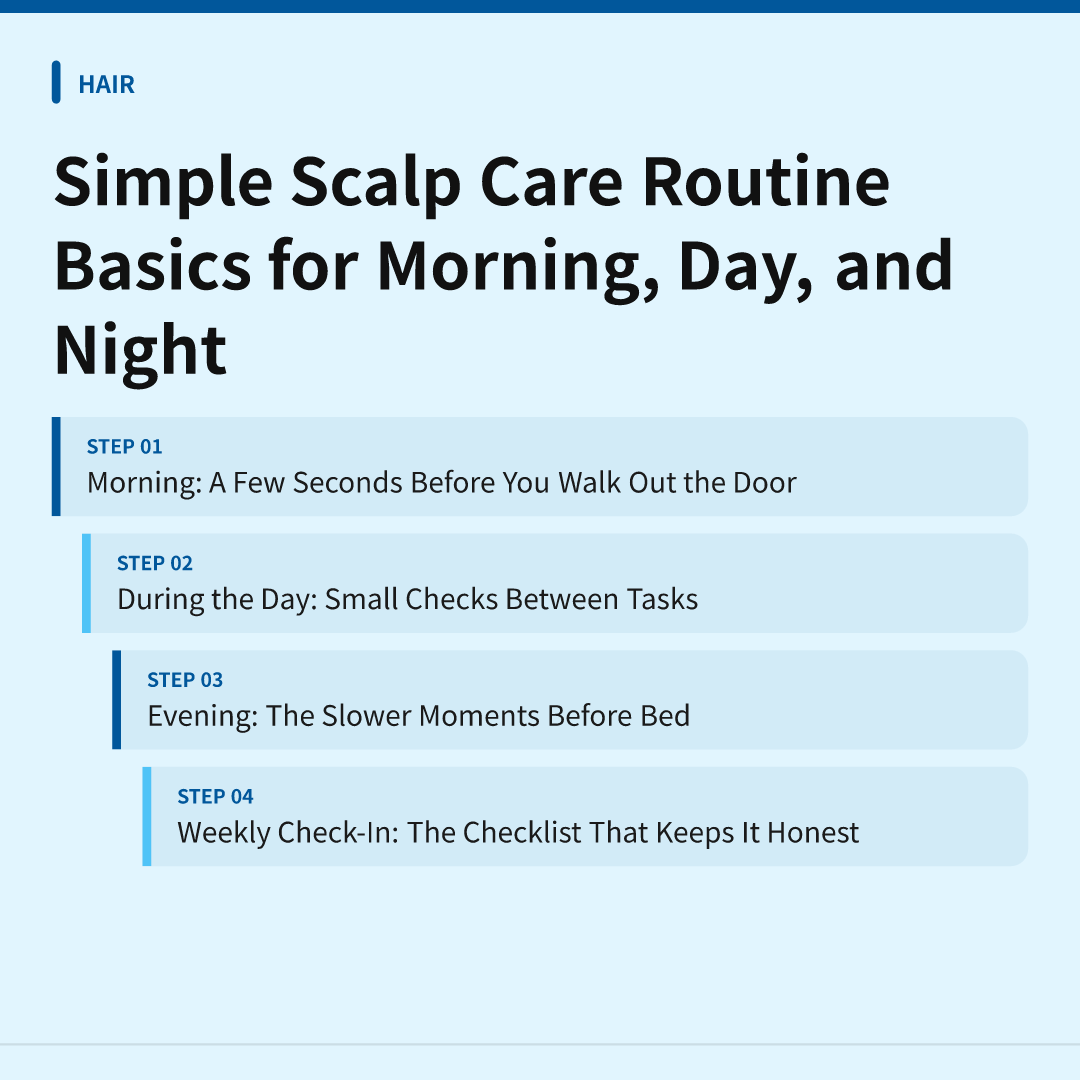
Mornings already involve water, a mirror, or both for most people, which makes them a natural first checkpoint for the scalp before the day's dirt, sweat, and product layer on top of everything.
- If you shower in the morning: spend a few extra seconds using fingertips, not nails, to massage the scalp itself while shampooing, rather than just running suds through the hair strands. This is the one moment your hands are already on your scalp with cleanser in place, so it costs almost nothing extra.
- Watch the water temperature: a quick mental check that it isn't uncomfortably hot matters here specifically, since hot water first thing in the morning is an easy habit to fall into and can strip natural oils, contributing to dryness or irritation for some people over time.
- At the mirror while parting or styling: take a quick visual glance at the scalp for flaking, redness, or oiliness that looks different from usual. Morning light and a still-damp or freshly brushed scalp make small changes easier to spot than they will be later in the day.
- When applying product: aim it at the mid-lengths and ends rather than piling it onto the scalp, since scalp-level buildup is easier to prevent in the morning than to undo by evening.
Why the Morning Slot Matters
Whatever happened overnight — oil production, sweat, contact with a pillowcase — is at its most visible right after waking, before styling products, hats, or a full day of touching your hair add more variables. Catching something at this point is simpler than trying to untangle it later.
During the Day: Small Checks Between Tasks
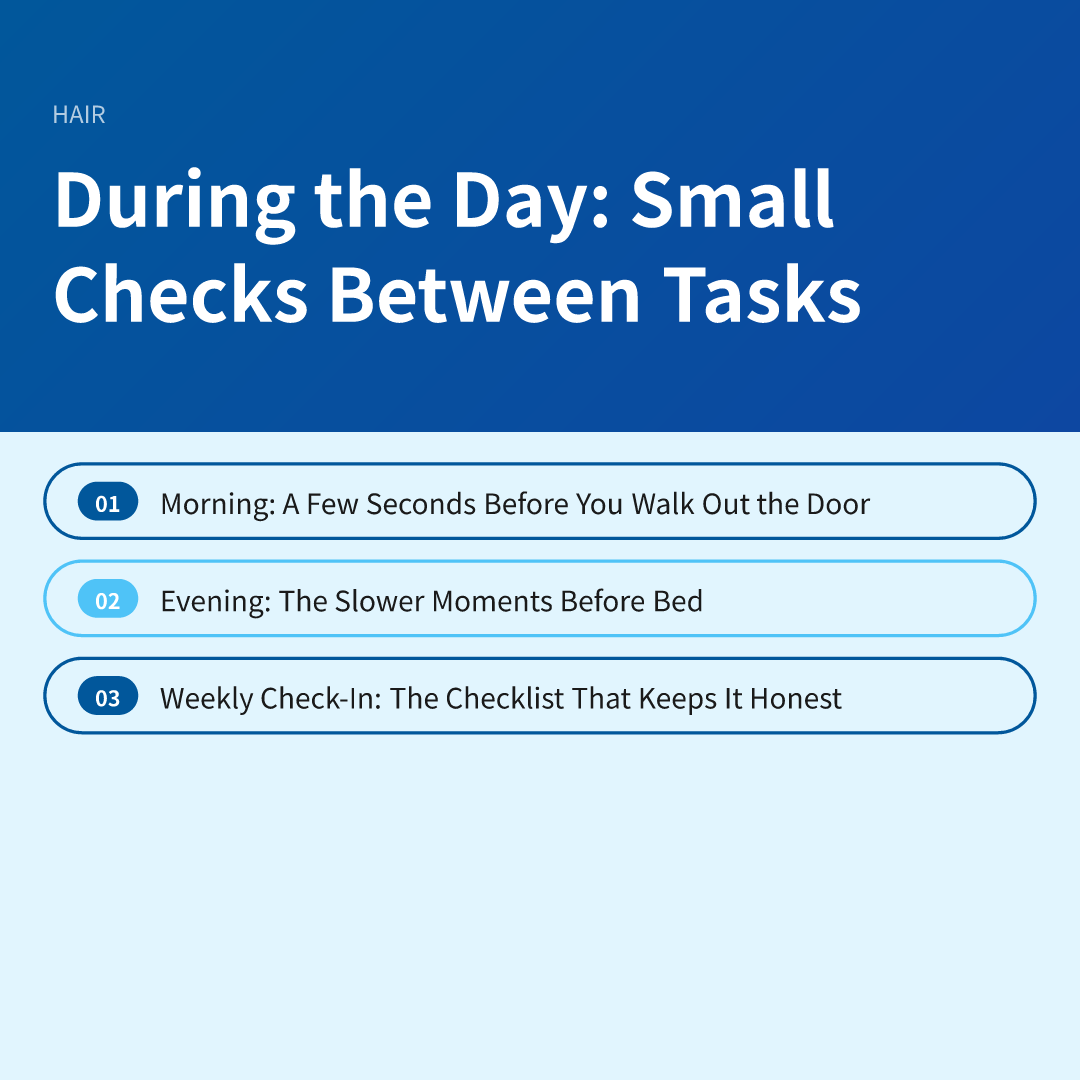
The middle of the day rarely gets treated as a scalp care moment, but it's when a lot of the actual stress on the scalp happens — sweat, hats, headphones, repeated touching, and hours of product sitting in place.
- Notice how often you're touching your hair or scalp without thinking about it. Frequent touching during the day can transfer oil and product residue and contribute to buildup, so simply becoming aware of the habit is often enough to reduce it.
- Check in briefly on how the scalp feels by midday, especially if the day is hot, humid, or active. Noticing oiliness, itchiness, or tightness while it's still mild gives you a chance to adjust — for example, loosening a tight hat or hairstyle — before it turns into irritation by evening.
- If you're wearing a hat, helmet, or headphones for long stretches, a short break to let the scalp breathe partway through the day can reduce trapped heat and moisture that some people find worsens itchiness or oiliness.
Why Midday Is a Useful Checkpoint
By midday, you've had enough hours awake to notice real changes, but there's still time left in the day to adjust something small rather than discovering an issue only once you're back in front of a mirror at night. It's a checkpoint, not a chore — often just a few seconds of noticing.
Evening: The Slower Moments Before Bed
Evenings tend to already involve sitting still, watching something, or a wind-down shower, which makes this the natural slot for anything that takes a little longer or doesn't need water at all.
- If you shower at night, pat the scalp area gently with a towel afterward instead of rubbing aggressively, since wet hair and skin are more prone to friction stress, and evenings are when people are often tired enough to towel-dry more roughly than usual.
- During TV time or scrolling before bed, a short, gentle scalp massage using just the fingers is something many people find relaxing, and it fits naturally into time that's already unstructured.
- If you brush your hair before bed, use a clean brush and go gently near the scalp, particularly on days when it's felt sensitive, since a tired end-of-day brushing session is an easy place for extra pressure to sneak in.
- Pillowcases and hats hold onto oil and product residue that transfers back to the scalp overnight, so washing them more often than you might think to is a habit that pairs naturally with an evening or bedtime routine.
The evening slot works because it's already slower — the goal is to use that slowness, not add more to it.
Why Evening Fits Longer or No-Water Steps
Anything that takes more than a few seconds, or doesn't involve a shower at all, tends to get skipped during a rushed morning. Evenings, with their built-in stillness, are where those steps have the best chance of actually happening.
Weekly Check-In: The Checklist That Keeps It Honest
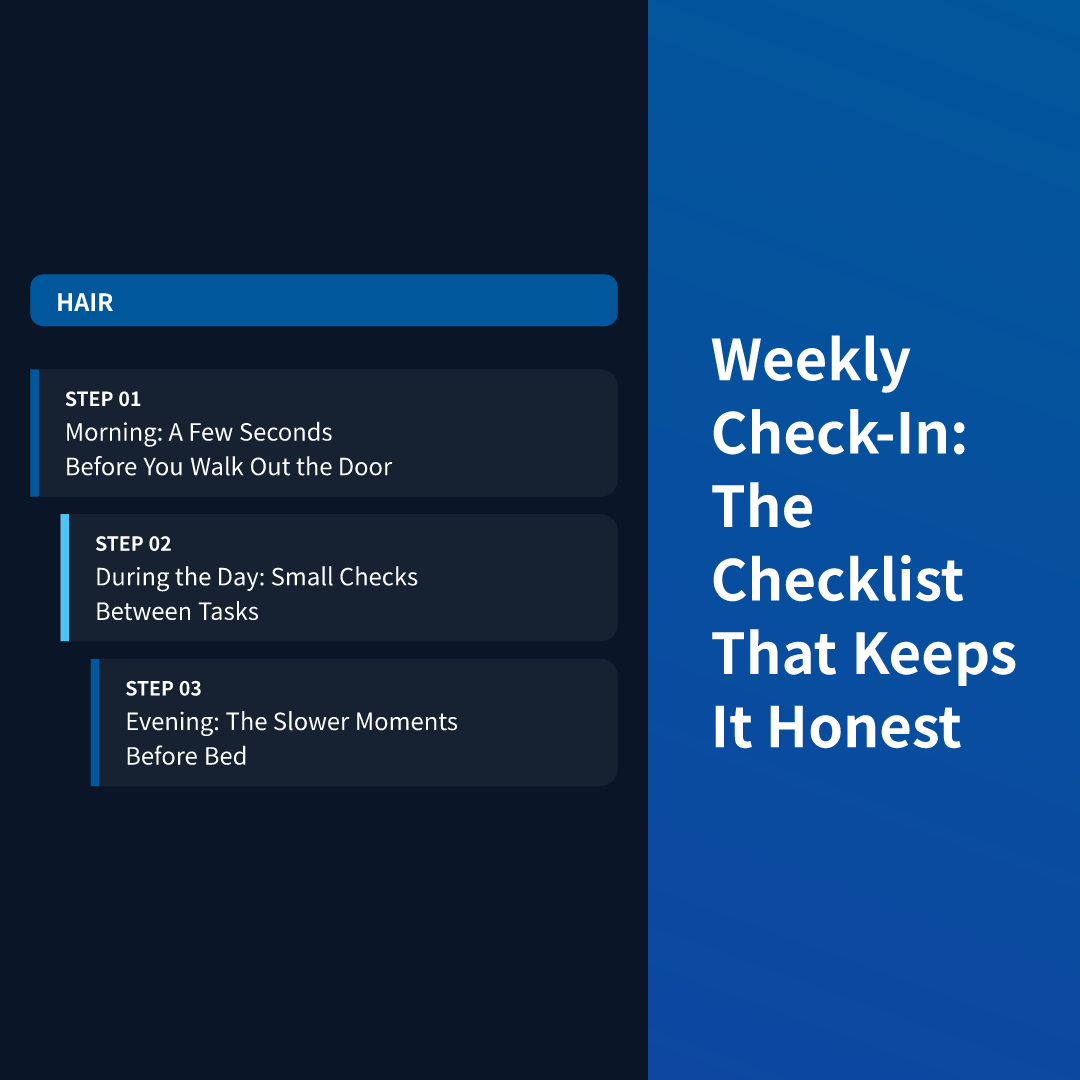
Daily actions matter, but a weekly pause is what catches whether the routine is actually working or just running on autopilot. This is also where it's worth being honest that not every scalp needs the same level of attention — some stay balanced with minimal intervention, while others deal with ongoing dryness, oiliness, or sensitivity that daily habits alone won't fully resolve.
- Think back over the week: has the scalp felt oilier, drier, itchier, or more sensitive than usual, and if so, on which days?
- Wash pillowcases and any frequently worn hats, since these touch the scalp directly and repeatedly.
- Confirm you've only added one new scalp action to one existing habit — if you've quietly stacked three new steps onto the same moment, scale back to one.
- If a day or two got missed, resume at the normal pace rather than doubling up on massage or washing to "catch up," which can irritate the scalp rather than help it.
- Note any flaking, redness, itching that isn't settling, or hair thinning that concerns you — these are signs worth raising with a dermatologist rather than managing through routine tweaks alone.
- Consider whether season, stress, hormonal shifts, or a recent hair treatment like coloring might mean the routine needs adjusting, since scalp needs aren't fixed year-round.
These simple scalp care routine basics work best when the week is used to check whether the habits are actually holding, not just whether they were technically followed. A routine built around your real day — morning, midday, evening, and a weekly look-back — tends to outlast one built around an idealized version of your schedule, and a dermatologist is worth involving anytime something about the scalp feels persistent, painful, or out of the ordinary.
Disclaimer: This article is for informational purposes only and is not a substitute for professional medical advice, diagnosis, or treatment. Please consult a licensed professional for personal health decisions.