How to Care for Curly Hair Day to Day
Learning how to care for curly hair day to day usually comes down to protecting moisture, handling strands gently, and keeping a routine simple enough to repeat. Curls tend to run drier than straighter hair, and they can frizz, tangle, or lose shape when the routine is rushed or too harsh. Individual results vary a lot, depending on curl pattern, hair thickness, climate, and past styling or coloring.
Anyone with curls knows the pattern: the hair looks defined one day, puffy the next, and by midweek it feels dry, knotted, or flat at the roots. It is easy to respond by piling on more products or switching shampoos constantly, which often makes things more confusing. With curly hair, the order of the fixes matters more than the number of them, so the sections below move from the quick wins to the habits that build over time.
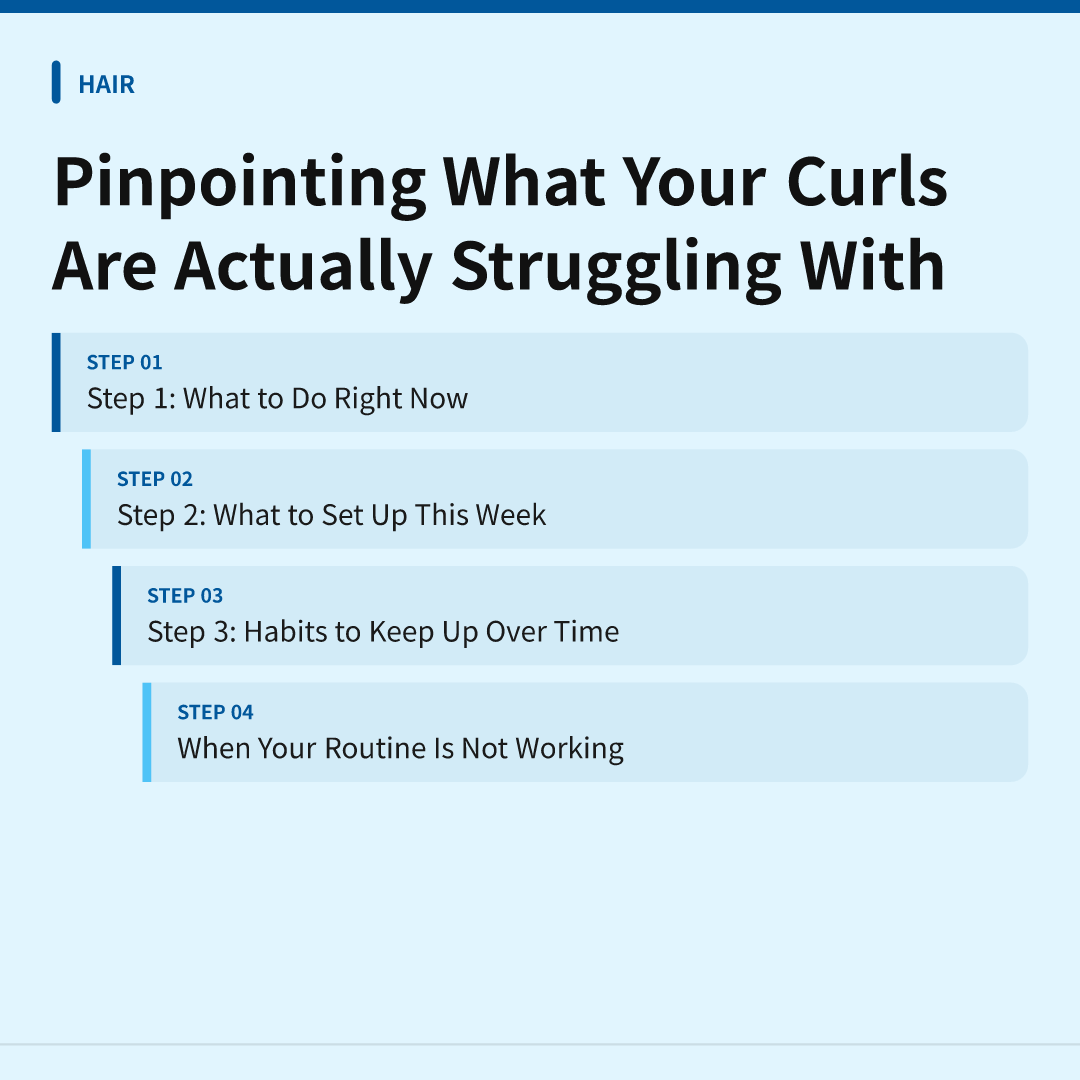
Pinpointing What Your Curls Are Actually Struggling With
Before changing anything, it helps to name the problem. Different complaints often have different causes, and a fix aimed at the wrong one can make the hair feel worse. This is an information guide, not a diagnosis, so treat the notes below as starting points for observation.
Common signs and what they often point to
- Frizz that shows up quickly: Often linked to dryness, humidity, rough towel drying, or a raised outer hair surface.
- Tangles and knots: Commonly tied to dryness, friction while sleeping, or detangling when the hair is not slippery enough.
- Limp or undefined curls: Sometimes caused by product buildup, heavy ingredients, or too little cleansing.
- Brittle ends or breakage: Frequently associated with heat styling, chemical treatments, or repeated tugging.
- Itchy or flaky scalp: Can have several causes, and persistent symptoms are worth raising with a professional.
It also helps to notice how your hair behaves, not just how it looks. Does it soak up water quickly and dry fast, or does water seem to bead on the surface? Many people describe these differences as porosity, though there is no single perfect at-home test, so think of it as a rough observation rather than a label.
Curly hair is not a single category. Waves, loose curls, tight coils, and mixed patterns on one head can each respond differently to the same routine.
Step 1: What to Do Right Now
If your hair feels dry, tangled, or frizzy today, a few gentle adjustments can make a noticeable difference without a full overhaul. These are habits, not product prescriptions, and they apply whatever brands you already own.
- Stop rough handling. Avoid brushing dry curls vigorously or pulling through knots. Why: Curly strands bend and twist, so they catch on each other and can snap when forced apart.
- Swap the towel method. Many people find that pressing or scrunching water out with a soft cotton shirt or microfiber cloth is gentler than rubbing with a standard terry towel. Why: Rubbing roughens the hair surface and tends to break up curl clumps, which can add frizz.
- Check your water temperature. Very hot water can feel drying on both scalp and strands. Why: Lukewarm water is generally considered gentler for hair that already runs dry.
- Read your product labels. Look at whether a product is meant for rinsing out or leaving in, and follow the manufacturer's directions. Why: Mixing up the two can lead to buildup or weighed-down curls. For specifics on any product, the label is the right reference.
- Protect the hair tonight. A silky or satin pillowcase, or a loose satin covering, is a common choice for reducing friction. Why: Cotton can pull moisture and cause rubbing while you sleep, which may show up as morning frizz.
None of these require buying anything new, and that is intentional. When hair is already stressed, the first goal is simply to stop adding friction and dryness.
Step 2: What to Set Up This Week
Once the immediate irritation is calmer, use the next several days to build a basic wash-day structure. Curly hair routines usually include cleansing, conditioning, detangling, and styling, and the details are where personal preference comes in.
Build a wash-day order that makes sense
- Cleanse the scalp, not the whole length. Shampoo is mainly meant for the scalp, where oil and buildup collect. Why: The lengths of curly hair are typically drier, and suds rinsing down them is usually enough. How often to wash varies widely by person, scalp oiliness, and lifestyle.
- Condition generously and detangle while it is slippery. Many people use a wide-tooth comb or their fingers while conditioner is still in the hair, working gently from the ends upward. Why: Detangling dry or barely damp curls tends to cause more snapping and frizz.
- Style while the hair is still wet. Many routines apply a leave-in product or styling product to soaking-wet hair so curls can clump together. Why: Wet hair holds its curl shape better, and touching it repeatedly while it dries can disturb that pattern.
- Let it dry with minimal interference. Air drying, or a diffuser on a low setting if you use one, is a common approach. Why: Constant touching and high direct heat are widely associated with frizz and dryness.
If you are unsure how a certain product fits into your routine, such as a leave-in conditioner, gel, or oil, the product instructions are the best guide. A stylist who works with curly hair can also explain how to pair products with your texture.
Think about what you are layering
More products do not always mean more definition. Heavy butters and oils can weigh down finer curls, while lightweight formulas may not be enough for thick, coarse coils. A simple approach is to change one thing at a time and give it a while before judging, so you can tell what is actually helping.
Related reading: What Does Hair Conditioner Actually Do to Your Hair?
Be careful with new products
Any new hair or scalp product can irritate some people. According to the U.S. Food and Drug Administration's general guidance on cosmetics, reactions to cosmetic products can happen and vary from person to person. If you have a history of sensitivity, reading ingredient lists and checking with a pharmacist or clinician before trying something new is reasonable. Stop using a product if your scalp becomes red, burning, or very itchy.
Step 3: Habits to Keep Up Over Time
Curl care tends to pay off gradually rather than all at once. The aim of this stage is to make good habits automatic, so that day-to-day maintenance takes little effort.
- Refresh instead of restarting. On non-wash days, some people lightly dampen curls with water and smooth in a small amount of a styling product, using the directions on the label. Why: Reviving the existing curl pattern can be gentler than a full wash every time.
- Sleep with protection. Loosely gathered hair on top of the head, sometimes called a pineapple, or a satin bonnet or pillowcase, is a popular way to limit friction. Why: Less rubbing overnight usually means fewer tangles and less frizz by morning.
- Go easy on heat and chemicals. Frequent flat-ironing, bleaching, relaxers, and strong coloring are commonly linked with weaker, drier hair. Why: Curls rely on an intact structure to keep their shape, and repeated stress can loosen the pattern over time. If you want any of these services, a licensed stylist can discuss the trade-offs.
- Schedule regular trims. Removing split or fraying ends is a common maintenance step. Why: Split ends can travel up the strand and cause more tangling, and they make curls look less defined. How often depends on your hair and goals, so ask your stylist.
- Support the basics. General sleep, nutrition, and hydration habits tend to matter for overall wellbeing, including hair. Why: No single supplement or food should be expected to transform curls, and anyone considering supplements is best off talking to a pharmacist or clinician first.
Adjust for seasons and environment
Your hair may behave differently as conditions change. Humid weather can cause frizz in some people, while dry indoor air or cold winters can leave hair feeling parched. Rather than switching everything, small tweaks, such as a different styling product weight or more attention to protecting hair from wind, are often enough.
Be patient with the process
If your hair has been damaged by heat or chemicals, it may take time and trimming before curls look and feel different. Damaged sections generally cannot be fully repaired, only protected from further harm, while new growth comes in. Progress is usually gradual, and it varies from person to person.
When Your Routine Is Not Working
Sometimes careful routines still leave hair dry, thinning, or irritated. That does not necessarily mean you are doing something wrong, but it can be a sign that a professional's input would help.
When a stylist can help
- Your curls look uneven or shapeless even with a consistent routine, and you would like a cut designed for your pattern.
- You are unsure how to pair products with your texture and want hands-on guidance.
- You want to change color or texture and would like to talk through the risks to your hair first.
When to consider medical advice
Hair and scalp issues can sometimes have underlying causes that products cannot solve. The American Academy of Dermatology's general public guidance notes that hair loss and scalp conditions can have a range of causes, and that a dermatologist can evaluate them. Consider contacting a licensed healthcare professional if you notice any of the following:
- Noticeable thinning, bald patches, or hair shedding that seems unusual for you.
- A scalp that stays painful, very itchy, flaky, red, or sore despite gentle care.
- Sores, crusting, swelling, or signs of a reaction after using a hair product or treatment.
- Breakage or changes in hair texture that came on suddenly, especially alongside other health changes.
A clinician can look at your scalp, ask about your history and any medications, and tell you what is going on, which is something no article can do. If you are in doubt, it is reasonable to ask sooner rather than later.
Day-to-day curly hair care works best when it stays gentle, consistent, and tuned to your own texture, and when it is paired with professional input if the hair or scalp keeps struggling. Results differ for everyone, so giving each change some time and noting what your hair responds to will serve you better than chasing every new trend.
Disclaimer: This article is for informational purposes only and is not a substitute for professional medical advice, diagnosis, or treatment. Please consult a licensed professional for personal health decisions.