What Does Hair Conditioner Actually Do to Your Hair?
Picture stepping out of the shower, running fingers through wet hair, and noticing it suddenly glides smoothly instead of catching on every knot. That shift usually happens right after applying conditioner, not shampoo. In short, what does hair conditioner actually do? It coats the hair shaft, smooths the outer cuticle layer, and temporarily reduces friction so strands detangle more easily and look shinier.
That simple explanation, though, only scratches the surface. Understanding the actual mechanics behind conditioner can help you choose the right formula, avoid buildup, and figure out whether your hair needs something more than a basic rinse-out product.
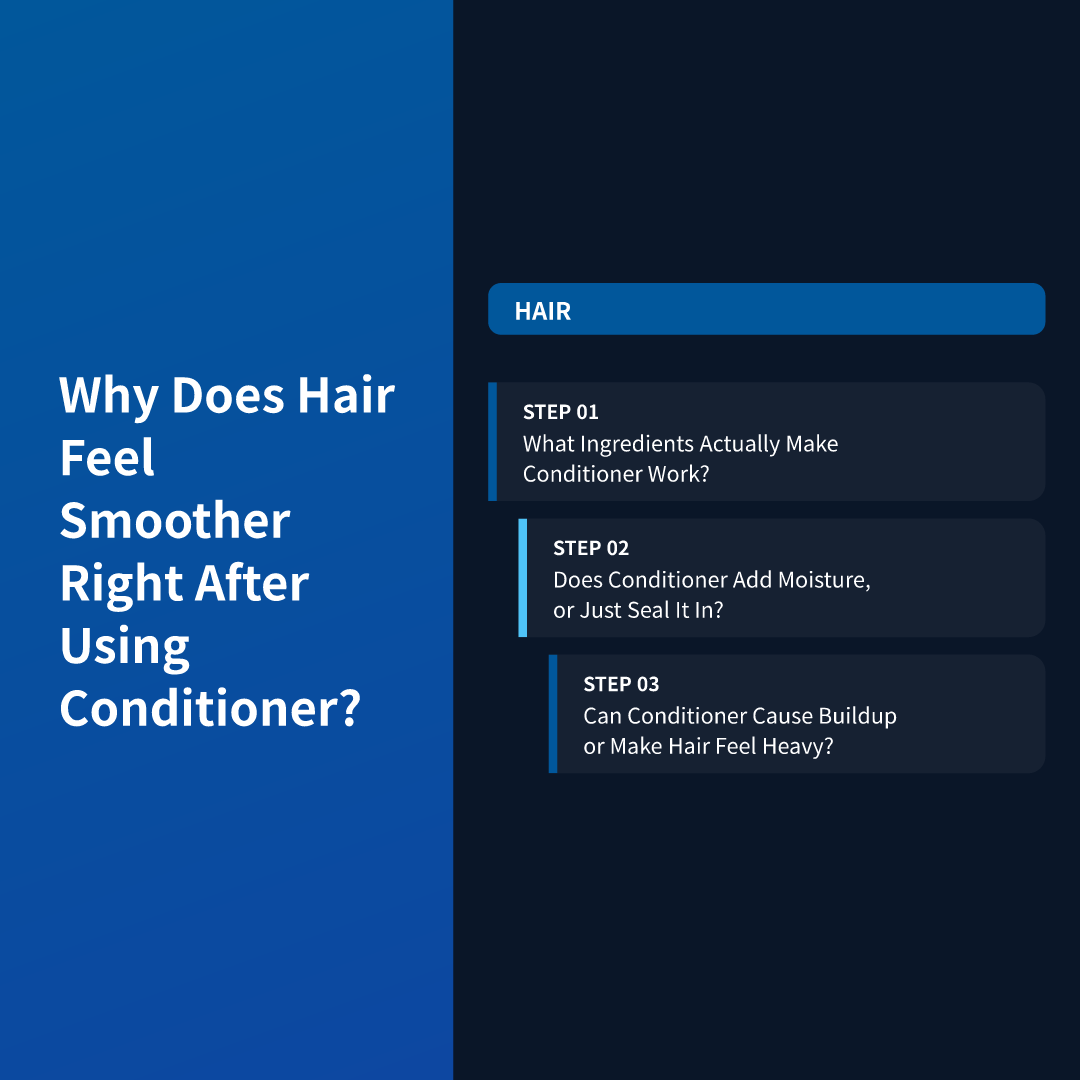
Why Does Hair Feel Smoother Right After Using Conditioner?
Hair feels smoother because conditioner temporarily flattens the cuticle, which is the outermost layer of the hair shaft made of overlapping scale-like cells. When those cuticle scales lie flat, light reflects more evenly and strands rub against each other with less friction.
Shampoo tends to lift these cuticle scales slightly while cleaning away oil and dirt, which is part of why hair can feel rough or tangled right after washing. Conditioner works almost like a corrective step, smoothing that texture back down so hair feels softer to the touch.
This smoothing effect is temporary rather than permanent. It fades as the day goes on, especially if hair is exposed to humidity, friction from clothing, or repeated brushing.
What Ingredients Actually Make Conditioner Work?
Most conditioners rely on cationic surfactants, silicones, and fatty alcohols to do their job. These ingredients are generally positively charged, which matters because hair itself tends to carry a slightly negative charge after washing.
Because opposite charges attract, these conditioning agents cling to the hair shaft instead of rinsing away completely. This is part of why conditioner leaves a light, smoothing film even after it is washed out in the shower.
- Cationic surfactants: help reduce static and detangle strands
- Silicones (like dimethicone): add slip, shine, and a smoothing sensation
- Fatty alcohols: contribute softness without stripping natural oils
Some formulas also include humectants such as glycerin, which attract moisture to the hair surface. However, according to general dermatology guidance on hair care, no topical product can fully repair hair that is already structurally damaged; it can only improve how it looks and feels temporarily.
Does Conditioner Add Moisture, or Just Seal It In?
Conditioner mainly works by sealing in moisture rather than deeply hydrating the hair from within. Once the cuticle is smoothed and coated, it becomes harder for existing moisture to escape, which is why hair often feels softer and less brittle afterward.
This distinction matters for people with very dry or porous hair, since a lightweight rinse-out conditioner alone may not be enough. In those cases, a deep conditioning treatment or leave-in product is sometimes layered on top for extra support.
Hair porosity, meaning how easily hair absorbs and retains moisture, plays a role here too. Highly porous hair may need richer formulas, while low-porosity hair can feel weighed down by the same product.
Can Conditioner Cause Buildup or Make Hair Feel Heavy?
Yes, conditioner can contribute to product buildup, especially on fine or low-porosity hair. Because certain silicones and conditioning agents are designed to stick to the hair shaft, repeated use without a clarifying wash can leave a residue that makes strands look flat or feel greasy.
This doesn't mean conditioner is inherently bad for these hair types; it usually means the formula or amount needs adjusting. Lightweight, silicone-free conditioners or occasional clarifying shampoo sessions are common ways people manage this issue.
If hair consistently feels dull or heavy a day or two after washing, it may be worth reviewing how much conditioner is used and where it's applied, rather than assuming the product itself is the problem.
How Does Conditioner Work Differently for Different Hair Types?
Conditioner needs shift quite a bit depending on hair texture, thickness, and scalp sensitivity. Curly and coily hair types often benefit from richer, cream-based conditioners because their structure makes it harder for natural oils to travel down the length of each strand.
Fine, straight hair usually does better with lighter, water-based formulas applied mainly to the mid-lengths and ends, avoiding the scalp area to prevent excess oiliness. Color-treated or chemically processed hair may also need conditioners formulated to reduce protein loss and fading, since these hair types tend to have more porous, damaged cuticles.
People with sensitive or irritation-prone scalps sometimes find that switching to a sulfate-free shampoo alongside a gentle conditioner reduces overall irritation. Individual reactions vary, so patch-testing a new product on a small area first is a reasonable precaution.
When Might Conditioner Not Be Enough?
Conditioner is a cosmetic, surface-level product, not a treatment for underlying scalp conditions or significant hair damage. If someone is dealing with persistent scalp itching, flaking, unusual hair thinning, or breakage that doesn't improve with routine changes, that generally falls outside what a store-bought conditioner can address.
In those situations, it's reasonable to consult a dermatologist or licensed hair care professional rather than relying on trial and error with different products. They can help determine whether the issue is related to the scalp, hair structure, a health condition, or product buildup, and recommend next steps accordingly.
Frequently Asked Questions
Is it necessary to use conditioner every time hair is washed?
Not necessarily. Some people, especially those with very oily scalps or fine hair, prefer conditioning only on the lengths and ends, or skipping it every other wash. What works best really depends on hair type and personal preference.
Can leave-in conditioner replace a rinse-out conditioner?
They tend to serve slightly different purposes. Rinse-out conditioner is generally meant to smooth and detangle right after washing, while leave-in conditioner offers longer, lighter ongoing protection throughout the day; many people use both depending on their hair's needs.
Does conditioner help with hair growth?
Conditioner primarily affects the visible, already-grown parts of the hair shaft rather than what happens at the scalp or follicle level. Questions about hair growth or thinning are generally better directed to a healthcare provider or dermatologist.
Why does hair sometimes feel tangled even after conditioning?
This can happen with very dry, damaged, or highly textured hair that needs a richer formula or additional deep conditioning. It may also relate to how the product is applied, since conditioner distributed unevenly won't smooth every section equally.
Altogether, the core answer to what does hair conditioner actually do comes down to smoothing the cuticle, reducing friction, and helping seal in moisture rather than deeply repairing hair. Choosing the right type for your specific hair texture, and recognizing when a concern needs professional attention, makes the most of what this everyday product can offer.
Disclaimer: This article is for informational purposes only and is not a substitute for professional medical advice, diagnosis, or treatment. Please consult a licensed professional for personal health decisions.
Related reading: How Often Should You Wash Your Hair, Really?