How to Care for Hair Extensions Day to Day
Knowing how to care for hair extensions day to day starts with one habit that backfires for many people: dragging a regular brush through the hair from the roots down, especially when it is damp or tangled. That pulls on the attachment points and works knots into the wefts, tape, or bonds, which can loosen the install and strain your natural hair. Extensions do not receive natural scalp oils the way your own hair does, so they tend to tangle and dry out faster when handled roughly. The sections below walk through common mistakes, the reasons they cause trouble, and gentler habits to try instead.
Extension types vary a lot, including clip-ins, tape-ins, sew-in wefts, fusion bonds, and others. The fiber also matters, since human hair and synthetic fiber behave differently. Because of that, your stylist or the product maker is the best source for rules that fit your exact set. What follows is general information, not personalized advice.
Common Mistakes That Shorten the Life of Extensions

Most day-to-day damage comes from small, repeated habits rather than one dramatic event. Here are the ones that come up most often, each paired with why it causes trouble.
Brushing from the roots down
Starting at the scalp and pulling downward forces every tangle to travel through the full length of the hair. The tension lands right on the bonds, tape, or wefts. Over time this can lead to slipping, shedding at the attachment points, and discomfort at the scalp.
Going to bed with wet hair
Damp hair is more fragile, and tossing and turning on a pillow creates friction that matts the lengths. Moisture trapped near the attachment points can also be a problem for some installation methods. Many stylists advise that the base area be fully dry before bed, though the specifics depend on the method used.
Using regular shampoo and conditioner without checking labels
Some formulas are heavy, oily, or strongly clarifying. Certain bonded or taped installs can be sensitive to rich oils and silicone-heavy products near the attachment area, since those may weaken the hold. Synthetic fiber can also react differently to products than human hair does.
Applying high heat to everything
Human hair extensions can often tolerate heat styling with care, but they cannot repair themselves the way a healthy scalp supports growing hair. Synthetic fibers may melt or frizz if they are not heat-friendly. Checking the manufacturer's guidance before any hot tool touches the hair avoids permanent damage.
Washing too rarely, or scrubbing too hard
Product buildup, sweat, and dust can sit at the roots if the hair is rarely cleaned, and that may irritate the scalp. On the other side, vigorous scrubbing and piling the hair on top of the head creates tangles. Neither extreme tends to help the hair last.
Ignoring tightness or discomfort
It is tempting to wait out soreness and hope it fades. Persistent pulling, itching, or pain can signal that the install is too tight or that the scalp is reacting to something. That is a reason to contact the stylist rather than push through.
What to Do Instead
The fixes below are small habit changes. None of them promise a particular outcome, and how long extensions last depends on the type, the quality, and how your own hair grows.
Detangle gently, from the ends upward
A common recommendation is to hold the hair near the attachment point with one hand so the pull does not reach the scalp, and to work through the ends first before moving higher. Brushes and combs made for extensions, often with soft or loop-style bristles, are widely used for this. Detangling before washing and again after drying keeps knots from setting in.
Wash with a gentle routine that suits your install
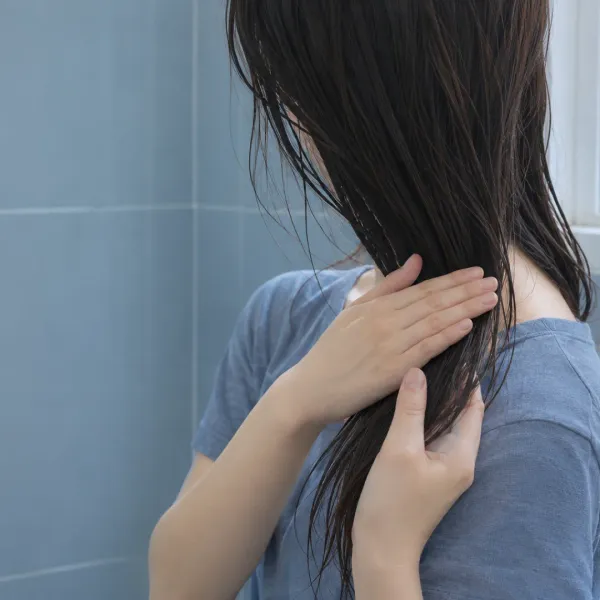
Many people use a mild, sulfate-free shampoo and focus cleansing on the scalp, letting the suds rinse down the lengths rather than scrubbing the extension hair itself. Conditioner is commonly kept toward the mid-lengths and ends, away from the bonds or tape. Exact product choices and how often to wash vary, so it is worth asking your stylist what suits your method. For product-specific use, follow the label and talk with your stylist.
Related reading: What Purple Shampoo Does for Blonde Hair
Dry thoroughly before sleeping or styling
Letting the hair air-dry most of the way, or using a low-heat setting on a blow dryer, helps protect the fibers. Keep the base area especially dry since moisture there can interfere with some attachment types. A cool setting is generally gentler than a hot one.
Protect the hair overnight
Friction while you sleep is a big source of matting. Many people loosely braid or gather the hair and use a silk or satin pillowcase or bonnet to reduce rubbing. The goal is to keep the hair loose enough that it does not pull at the roots.
Use heat only when the fiber allows it
If your extensions are human hair, a heat protectant and a lower temperature are common precautions. If they are synthetic, look for the manufacturer's note on whether the fiber is heat-friendly, and avoid heat if there is no information. When unsure, skip the tool and ask the seller or stylist.
Schedule maintenance visits
Most semi-permanent installs need periodic adjustment, since your natural hair grows and the attachment points shift away from the scalp. A stylist can check tension, reposition or reinstall the hair, and spot early problems. How often depends on the method and on how fast your hair grows.
Related reading: What a Hair Primer Is and How It Fits Your Routine
Adjusting Your Routine for Different Situations
Clip-ins you wear occasionally
Clip-ins come out each night, so the care is simpler. Gently detangle them, store them flat or hanging in a way that avoids bends, and wash them only when they are visibly dirty or product-laden. Because they are removable, you can keep them away from the scalp oils and sweat that build up on longer-wear installs.
Tape-ins, wefts, and bonded styles
These installs sit close to the scalp for weeks, so the main concerns are keeping the attachment area clean, avoiding heavy or oily products near it, and not tugging. Many people notice that rough towel-drying and tight ponytails shift the hold faster. Check in with the stylist who did the install about product choices and the right schedule for adjustments.
Swimming, sweating, and workouts
Chlorine, salt water, and sweat can dry out fibers and leave residue. Rinsing with fresh water after swimming and gathering the hair loosely before exercise are common precautions. Whether it is fine to be in a pool or ocean with your particular install is a question for the stylist or the manufacturer, since methods differ.
Synthetic versus human hair
Human hair extensions can usually be washed and, with care, styled in ways close to natural hair, though they will not regain moisture on their own. Synthetic fibers tend to be more limited with heat and certain products. The product tag or the seller's guidance is the most reliable reference.
Sensitive scalps and thinning hair
If your scalp is easily irritated, or your own hair is fragile or thinning, extensions can add tension that may not suit you. Redness, bumps, flaking, itching, or noticeable shedding around the attachment points are worth discussing with a licensed professional, such as a dermatologist, before continuing. The American Academy of Dermatology notes that hairstyles which pull on the hair for long periods can contribute to a type of hair loss called traction alopecia, so persistent tension is not something to ignore.
When to get professional help
See a stylist if an install feels too tight, slips, or tangles badly near the roots. See a healthcare professional if you have ongoing pain, scalp sores, significant redness or swelling, or hair loss near the attachment areas. Avoid trying to cut out bonds or pull out stubborn tangles forcefully at home, since that can take your own hair with it.
Frequently asked questions
Can I use my normal shampoo and conditioner on extensions?
If your regular products are mild and the label does not warn against use on extensions, many people use them without trouble. If you have a bonded or taped install, heavy oils and silicone-rich formulas near the attachment area may weaken the hold, so a lighter, extension-friendly option is often preferred. Check with your stylist about the best match for your method.
Isn't it easier to just skip brushing so I don't pull on the extensions?
Skipping brushing usually leads to more tangling and matting, which then needs rougher handling to fix. Gentle, regular detangling from the ends upward while supporting the hair near the roots tends to put less stress on the attachment points. If a knot is stubborn, a stylist can help instead of forcing it out.
How do I know if my extensions are too tight?
If you feel persistent pulling, soreness, headaches, or notice redness or bumps near the attachment points, the install may be causing too much tension. That is a reason to contact the stylist for adjustment or removal rather than waiting it out. If symptoms continue or you notice hair loss, a healthcare professional can take a closer look.
Disclaimer: This article is for informational purposes only and is not a substitute for professional medical advice, diagnosis, or treatment. Please consult a licensed professional for personal health decisions.