How to Choose Hair Ties That Reduce Breakage
Learning how to choose hair ties that reduce breakage starts with dropping one common habit: grabbing a thin, tight elastic with a metal clasp and cinching it hard around the same spot every day. That kind of band tends to grip, pinch, and snag, and hair under repeated tension is more likely to snap or fray. A softer, wider, seamless tie that holds without squeezing is generally the gentler direction, though results vary from person to person. This article walks through the usual mistakes, what to do instead, and how to adapt your choices to your hair and your day.
Common mistakes people make with hair ties
Most breakage around the ponytail line is not caused by one dramatic event. It builds up from small, repeated habits. Below are the mistakes that come up most often, each paired with the reason it matters and a more practical alternative.
Mistake one: using thin elastic bands with metal joins
Why it backfires: Thin rubber bands concentrate pressure on a very narrow strip of hair. Many of them also have a small metal connector that can catch strands when the tie is pulled on or off. Strands that get caught and tugged are the ones that often snap near the surface.
What to do instead: Look for ties with no exposed metal and no visible glued join. Run your fingertip around the inside of the tie before you buy it. If you feel a ridge, a crimp, or a rough spot, your hair will probably feel it too.
Mistake two: twisting the tie tightly around the ponytail several times
Why it backfires: Wrapping a small tie around the base again and again is a quick way to make it hold, but it multiplies the tension on the same strands. Hair at the root can also be pulled upward for hours, which may be uncomfortable on the scalp.
What to do instead: Choose a tie that is the right size for your hair volume so it only needs one or two loops. If a tie needs to be wrapped many times to stay put, it is usually too small or too worn out for the job. Wide, stretchy styles often hold with less squeeze.
Mistake three: ignoring the fabric
Why it backfires: Rough or heavily textured materials create friction against the hair surface. Friction lifts the outer layer of the strand, and hair that looks dull or frizzy near the ponytail can be a sign of that wear.
What to do instead: Smooth materials such as silk, satin, and soft microfiber-style fabrics are widely used because they tend to glide rather than grab. Soft cotton jersey is another common option. Whatever the material, the surface should feel smooth when you slide hair across it.
Mistake four: pulling the tie out instead of unwinding it
Why it backfires: Yanking a tie out of a ponytail drags it across the hair in the direction that causes the most friction. Strands can get caught in the band and be pulled free or broken.
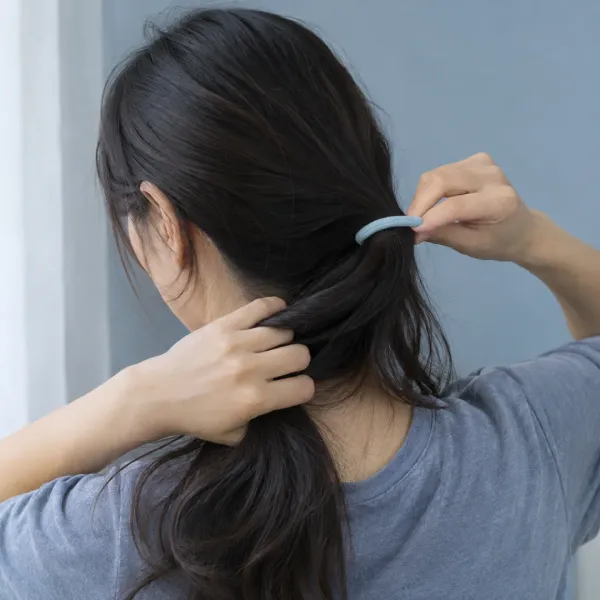
What to do instead: Slide the tie gently down and loosen the hair with your fingers first, then ease it out. If a tie is stuck, many people find it easier to open the ponytail section by section than to force the band off. Cutting through a very stuck elastic with blunt-tipped scissors, carefully and away from the hair, is another option some people use.
Mistake five: wearing the same style in the same spot every day
Why it backfires: Even a gentle tie can wear on hair when it sits on the same section day after day. Repeated stress in one place is a familiar reason for a visible break line.
What to do instead: Vary the height and position of your ponytail, bun, or braid. Switching between a low and a mid placement gives each area a break.
Mistake six: keeping stretched-out or old ties
Why it backfires: An overstretched tie loses its elasticity, so people compensate by wrapping it tighter. Old elastics can also become brittle, sticky, or frayed on the edges.
What to do instead: Retire ties that look stretched, cracked, or rough. A tie that holds hair comfortably in one loop is usually doing its job well.
What to look for when you shop
Once you know what to avoid, choosing becomes simpler. A few features tend to separate gentler ties from rougher ones. None of these is a guarantee, and how your hair responds depends on its texture, length, and condition.
Seamless construction
Seamless ties have no join, clasp, or glued spot that can pull strands. They are usually a single continuous band of fabric-covered elastic or a loop of soft material. Because there is nothing to snag, they are often recommended in general hair-care advice for people who see breakage near the band.
A wider, softer band
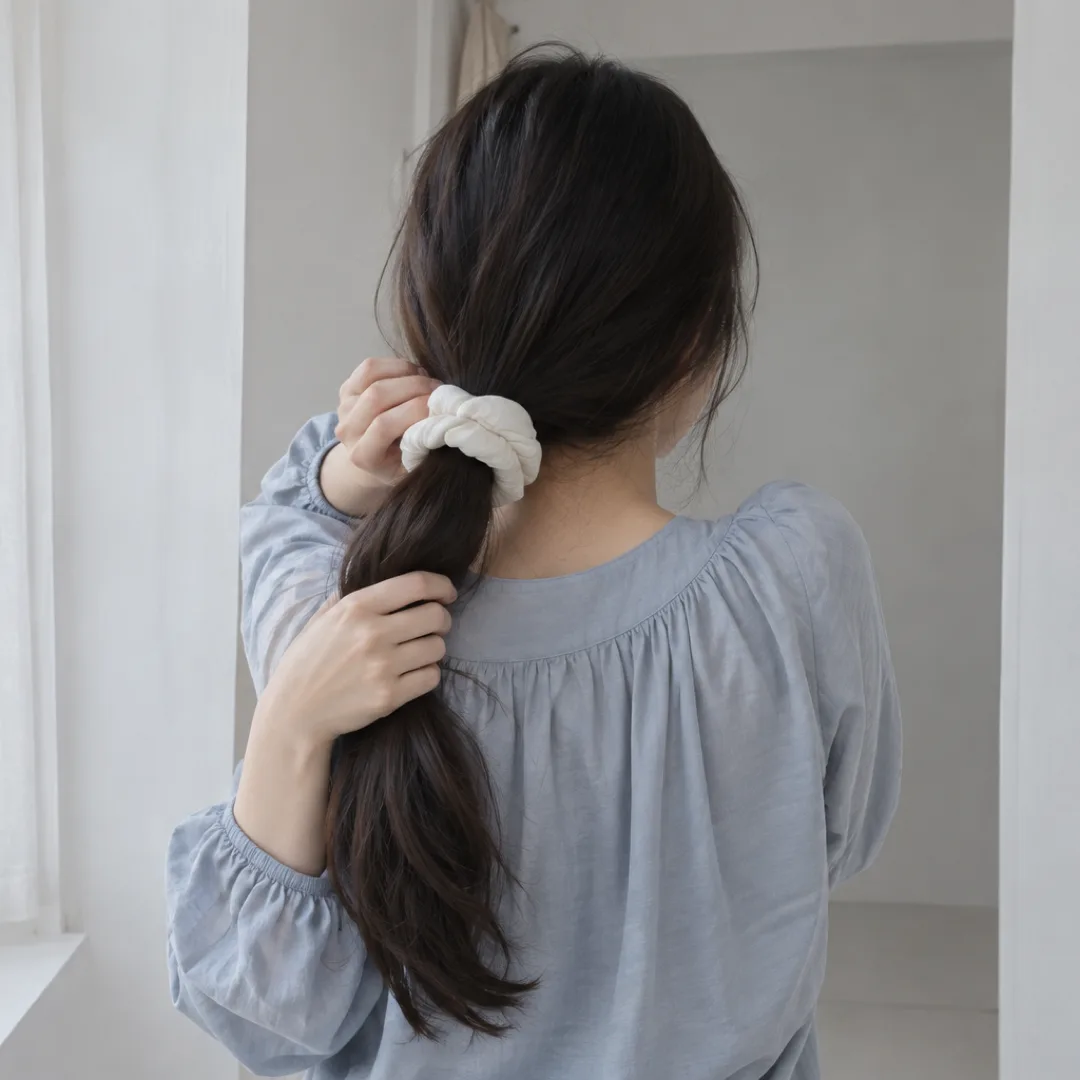
Wider ties spread pressure across more hair rather than concentrating it on a thin line. Fabric-covered scrunchies, thick elastic with a soft cover, and spiral-shaped ties are common examples. Spiral ties distribute tension along a coil, and many people find they leave fewer dents in the ponytail.
Stretch that matches your hair
You want enough stretch to hold the hair without squeezing it hard. Thick, dense hair often needs a larger or sturdier tie, while fine or fragile hair tends to do better with a lighter, softer one. If you press a tie around your hair and it leaves a deep groove, it may be too snug.
Smooth surface texture
Check the cover material. Silk-like and satin-like fabrics are popular for reducing friction, and soft knit covers can also be gentle. Avoid anything scratchy, beaded, or decorated with hard edges that touch the hair.
Hardware-free design
Decorative charms, metal rings, and plastic beads can look nice but may rub or tangle. If you like decorated ties, choose designs where the decoration sits away from the hair, and save them for occasions rather than everyday wear.
Related reading: How to Care for Bleached Hair, Step by Step
Adapting your choice to your hair and your day
The right tie depends on what your hair is like and what you are doing. Here is how the same principles shift in different situations.
Fine or thin hair
Fine strands can be more fragile, so a tie that grips strongly may leave a crease or cause snapping. Soft, lightweight, seamless ties are commonly chosen for this hair type. A looser hold is often enough because fine hair has less weight to keep up.
Thick or coarse hair
Dense hair usually needs a tie that can handle volume without being wrapped repeatedly. Wider, sturdier fabric-covered bands or large scrunchies are common picks. The goal is the same: a secure hold with as little squeeze as possible.
Curly and coily hair
Curly and coily textures are often described as more prone to dryness and tangling, and friction from rough ties can make that worse. Many people with these textures favor large, soft scrunchies or smooth fabric ties that do not pull on the curl pattern. Styles that keep curls loosely gathered, such as a high loose puff, may put less stress on delicate strands than a tight, low ponytail.
Chemically treated or color-treated hair
Hair that has been lightened, relaxed, or otherwise processed is often more delicate. Gentle, seamless ties and varied styling positions are sensible habits here. If you notice significant breakage, a licensed stylist can look at your hair directly and talk through what may be contributing.
Workouts and sleep
During exercise, many people want a firmer hold, but it is still worth choosing a soft, hardware-free tie instead of tightening a thin band. For sleep, a loose, smooth tie such as a silk-style scrunchie is a common choice because it keeps hair out of the way without pulling. Some people prefer a loose braid, which can reduce tangling overnight.
Wet hair
Hair is often described as more fragile when wet, so tying it up tightly right after washing may increase stress on the strands. Letting hair dry a little or using a gentler, looser hold is a common approach.
Protective styles and braids
If you wear braids, twists, or other protective styles, the finishing tie matters too. Smooth, wide, seamless options are generally better than thin elastics, and a style that feels painful or pulls at the scalp is worth loosening or discussing with the stylist who did it.
When breakage may be more than a hair tie problem
Hair ties are only one possible factor. Breakage can also relate to heat styling, bleaching, rough towel drying, brushing habits, and the overall condition of the hair. According to the American Academy of Dermatology Association's general guidance, hairstyles that pull tightly on the hair can contribute to hair loss over time, and tension from tight styles is a commonly discussed concern.
If you notice patches of thinning, a sore or tender scalp, redness, bumps, or hair that keeps falling out even after you change your habits, it makes sense to talk with a dermatologist or another licensed professional. Changing your hair tie is a reasonable first step for ordinary wear and tear, but it is not a substitute for an evaluation when something seems off. Sudden or unexplained shedding in particular is worth having looked at, since many different things can be involved.
Frequently asked questions
Are scrunchies always better than other hair ties?
Not necessarily, because the fabric, size, and fit matter more than the shape. A scrunchie with a rough cover or a very tight inner elastic can still pull, while a smooth seamless tie or a spiral style may be gentler for some people. If a tie leaves a deep groove or tugs when you remove it, it is probably worth swapping, whatever its shape.
Is it okay to use ordinary elastic bands if I'm careful?
If you only use them occasionally and the band has no metal join, it may be less of a concern. The trouble tends to come from repeated daily use, thin bands that concentrate pressure, and wrapping them several times. Choosing a softer option for everyday wear and saving thin elastics for short-term use is a practical compromise.
Will switching my hair tie stop my breakage?
If friction and tension at the ponytail are the main cause, a gentler tie and a varied style may help over time, though results differ from person to person. Breakage can also come from heat styling, chemical treatments, or a scalp or health issue, which a tie will not address. If breakage continues or you see thinning, a licensed professional can help sort out the cause.
To sum up, how to choose hair ties that reduce breakage comes down to a few repeatable habits: pick smooth, seamless, wider ties, avoid wrapping them tightly, change your hair placement, and replace worn-out bands. Pay attention to how your hair responds, and seek professional advice if breakage or scalp symptoms persist.
Disclaimer: This article is for informational purposes only and is not a substitute for professional medical advice, diagnosis, or treatment. Please consult a licensed professional for personal health decisions.