How Often to Replace a Hairbrush: What Really Matters
How often to replace a hairbrush has no single fixed answer, because the right timing depends on the brush's materials, how it is cared for, and how much wear it shows. In general, a hairbrush is ready for replacement when its bristles bend, split, or fall out, when the cushion or handle is damaged, or when buildup will not come off with regular cleaning. Here you will find what that guidance actually means, the situations where it applies, how it differs from related ideas like cleaning, and why it matters for your hair and scalp.
The Real Meaning of Replacing a Hairbrush
Replacing a hairbrush means retiring a tool that no longer does its job well, rather than following a set calendar date. Think of it as a condition-based decision. A brush that is in good shape and kept clean can stay in use for a long time, while one that is worn or damaged may need to go sooner.
Many beauty articles offer a rough schedule, but those numbers are usually rules of thumb, not tested standards. Nothing in public health guidance from agencies like the FDA sets an official replacement interval for hairbrushes. That is worth knowing, because it means your own observations count for more than any generic timeline.
What "wear" looks like
Wear shows up in a few predictable ways. Knowing them makes the decision much easier.
- Bent, frayed, or splitting bristles: Bristles that no longer spring back may tug at hair instead of gliding through it.
- Missing or loose bristles: Gaps can make brushing uneven and may signal the base is deteriorating.
- Cracked or sticky cushion: On a cushioned brush, the rubber pad can crack, harden, or separate from the base. Moisture can then collect underneath.
- Rough or chipped edges: Tips that are snapped, sharp, or rough can catch on strands or irritate the scalp.
- Persistent residue or odor: If a brush still looks grimy or smells off after thorough cleaning, that is a common sign it has run its course.
Situations Where the Timing Question Comes Up
The question usually arises in a handful of everyday moments. Maybe you noticed your brush looks gray and matted, or your hair seems to snag more than it used to. Perhaps you are moving, cleaning out a bathroom drawer, or recovering from a scalp issue and wondering whether your tools could be part of the picture.
Different brushes age differently
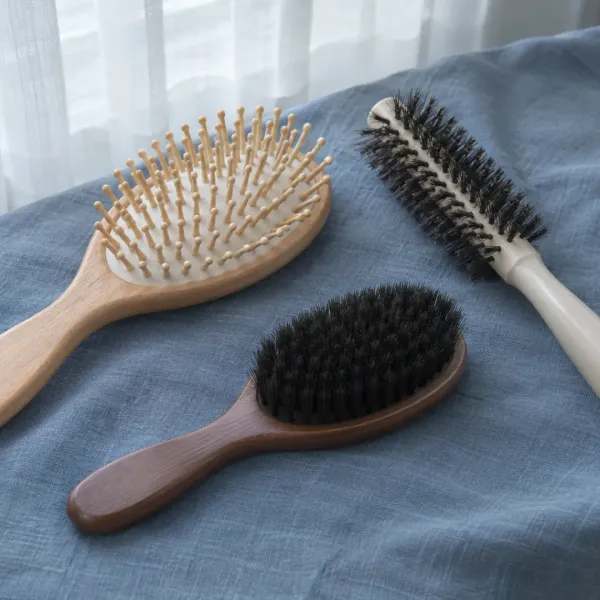
Material matters quite a bit. Boar bristle brushes use natural fibers that can soften, flatten, or shed with time, and they often need gentler cleaning because soaking may loosen them. Nylon and synthetic bristle brushes tend to hold their shape for a while but can bend or melt if exposed to high heat from styling tools. Wooden handles can crack or warp when they stay wet, and plastic bases can become brittle.
Detangling brushes, paddle brushes, and round brushes also face different stresses. A round brush used with a blow dryer is exposed to heat repeatedly, so its bristles and barrel may show damage sooner than a brush used only on dry hair. Because of these differences, comparing your brush to its own earlier condition is more reliable than comparing it to someone else's.
Hair type and habits change the picture
People with long, thick, or curly hair often notice buildup sooner because more hair and product contact the brush. Those who use oils, leave-in conditioners, or styling sprays regularly may find residue accumulates faster. Shared brushes in a household can also wear and collect debris more quickly. None of this sets a precise timeline, but it explains why one person's brush looks tired long before another's.
Related reading: How to Clean a Hairbrush Without Damaging It
Replacement Versus Cleaning: Where People Get Confused
Cleaning and replacing are related, but they are not the same thing. Cleaning removes removable buildup, such as shed hair, dust, oil, and product film. Replacing is for when the tool itself has changed, so cleaning can no longer restore it.
A helpful comparison is a kitchen sponge versus a cutting board. A sponge is expected to be swapped out because it wears and holds residue, while a sturdy board can be scrubbed and reused for years. Most hairbrushes sit somewhere in between: they respond well to regular cleaning, but they still have a limit.
Cleaning does not fix damage
Washing a brush will not straighten bent bristles, repair a cracked cushion, or rebuild a loosened base. If damage is the problem, a thorough cleaning will only give you a cleaner worn-out brush. This is the most common mix-up, and it leads some people to keep using a brush that is actively snagging their hair.
Removing hair is not the same as cleaning
Pulling trapped hair from the bristles is a quick maintenance step, but it does not address oils and product that cling to the base of the bristles. Those can build up in layers over time. A brush that looks hair-free may still carry residue, which is one reason regular washing is often discussed alongside replacement.
Other concepts that get lumped in
- Sanitizing: This usually refers to reducing germs on a surface, and it is different from simply removing visible dirt.
- Detangling tools versus styling tools: Their wear patterns differ, so the same signs may show up in different ways.
- Combs versus brushes: Combs have no cushion or dense bristle bed, so they often hold up differently, though cracked or chipped teeth still call for replacement.
Related reading: How to Pick a Brush for Your Hair Type
Why the Timing Is Worth Paying Attention To
A worn or dirty brush can affect your hair and scalp experience in small but noticeable ways. Rough or damaged bristles may snag and pull on strands, which can add to breakage for some people. Residue on a brush can transfer back onto freshly washed hair, which may leave it looking flat or dull.
The scalp is another consideration. According to the American Academy of Dermatology's general guidance on scalp care, keeping hair tools clean is a common part of looking after the scalp, especially for people prone to flaking or irritation. That guidance does not say a specific replacement date is required, so it is best read as a reminder to keep tools in good condition rather than a rule.
When a scalp concern changes the plan
If you have an itchy, flaky, inflamed, or painful scalp, or you notice patchy hair loss, a brush is unlikely to be the whole story. Those symptoms can have many causes, and it is worth talking with a dermatologist or other qualified professional rather than guessing. Some people choose to swap in a fresh brush during a flare-up, but whether that helps varies from person to person, and it should not replace proper evaluation.
Cost and practicality
Brushes range from inexpensive drugstore options to higher-priced premium ones. A pricier brush may last longer if it is well made and well cared for, though a higher price does not guarantee durability. It is reasonable to weigh the cost against how often you use the brush and how much you rely on it for your routine.
Judgments This Understanding Changes
Once you see that replacement is driven by condition and not by a calendar, two decisions become simpler.
- You stop guessing by date and start checking the brush itself. Instead of wondering whether it has been long enough, you look at the bristles, cushion, and buildup. If the tool is bent, cracked, or stubbornly grimy, it is time to consider a new one, and if it is intact and cleans up well, there is no pressing reason to toss it.
- You separate cleaning problems from replacement problems. A brush that is simply dirty can often be refreshed, while one that is damaged cannot. Knowing the difference keeps you from discarding a good brush too early or holding onto a worn one for too long, and it helps you decide how often to replace a hairbrush based on what you actually see.
Disclaimer: This article is for informational purposes only and is not a substitute for professional medical advice, diagnosis, or treatment. Please consult a licensed professional for personal health decisions.