How to Massage Your Scalp Without Irritating It
Learning how to massage your scalp usually starts with one correction: pressing hard and scrubbing with your fingernails is the most common habit, and it tends to backfire. Nails can scratch the skin, and rough circular scrubbing can leave the scalp sore, red, and tangled in the hair above it. A gentler approach, using the pads of your fingers with moderate pressure, is generally the more comfortable way to go. Below, the common mistakes are paired with practical alternatives, followed by adjustments for different situations.
A quick note on scope: this is general cosmetic and self-care information from an editor's point of view, not medical advice. Scalp massage is widely enjoyed as a relaxing part of hair care, but results vary from person to person, and it is not a treatment for any scalp or hair condition.
Common mistakes people make with scalp massage
Most problems come from enthusiasm rather than bad intentions. People hear that a massage feels good or supports a healthy-looking scalp, then overdo it. Each mistake below comes with the reason it causes trouble and a simple alternative.
Mistake one: using fingernails instead of fingertips
Digging in with nails feels satisfying, especially when the scalp itches. The trouble is that nails can create tiny scratches, and broken skin is more likely to sting, flake, or react to shampoo and styling products. Scratching can also feed an itch-scratch cycle where the scalp feels worse the more it is scratched.
The alternative is to use the soft pads of your fingers, keeping nails out of contact with the skin entirely. If your nails are long, a gentle pass with the pads still works, and you can shorten the session rather than force it.
Mistake two: pressing too hard
More pressure does not equal more benefit. Heavy pressure can leave the scalp tender, and some people notice a headache or tightness afterward. The scalp is thin skin over bone, so it does not need deep tissue work.
A better guide is comfort. Pressure that feels pleasant and lets you keep breathing normally is usually enough. If you find yourself wincing, ease off.
Mistake three: scrubbing in fast, rough circles
Vigorous back-and-forth scrubbing, particularly on wet or long hair, can rough up the hair cuticle and create knots. Over time that friction may contribute to breakage, which is the opposite of what most people want.
Instead, let your fingertips move the skin of the scalp slowly over the bone beneath, rather than dragging across the hair. Think of it as moving the scalp, not the strands.
Mistake four: massaging a scalp that is already irritated
When the scalp is sunburned, broken out, raw, or covered in sores, adding friction can make things worse. Massaging over irritated or inflamed areas can aggravate them, and rubbing in products over damaged skin may increase the chance of a reaction.
If the skin is visibly irritated, pausing the massage is the more sensible choice. A scalp that is red, painful, oozing, or crusted is worth having looked at by a qualified professional rather than massaged.
Mistake five: piling on products or heavy oils
It is tempting to combine a massage with a thick oil or a stack of leave-in products. Heavy products can build up, make hair look greasy, and for some people clog follicles or trigger irritation. Fragrance and essential oils are a frequent source of reactions for people with sensitive skin.
Many people simply massage dry scalp, or do it during a regular shampoo, with no extra product. If you want to use an oil or treatment, check the label, patch test on a small area first, and ask a pharmacist or dermatology professional if you are unsure whether it suits you.
What to do instead: a gentle, repeatable method
Once the common errors are out of the way, the method itself is simple. The goal is comfort and relaxation, not forcing a result.
Set up for comfort
Start with clean hands and trimmed or soft nails. Sit or stand somewhere relaxed, and consider detangling long hair first so your fingers do not catch. Many people find the shower convenient because shampoo provides slip, though dry-scalp massage works too.
Move through the scalp in stages
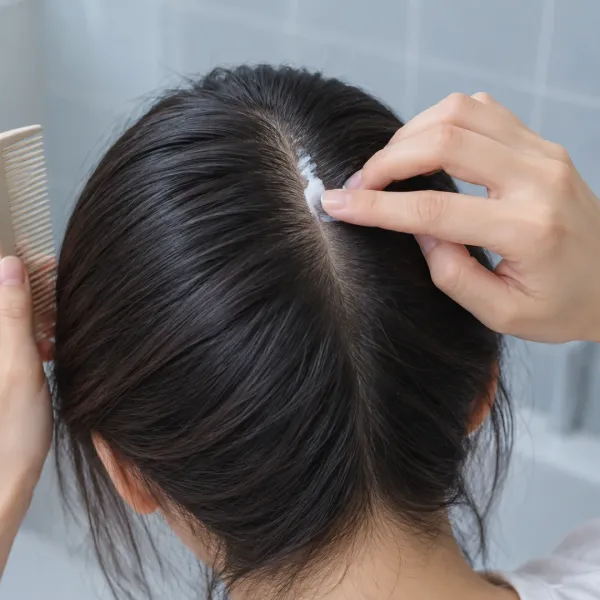
- Hairline and temples: Place your fingertip pads near the hairline and make small, slow circles with light pressure.
- Crown: Spread your fingers across the top of your head and gently move the skin in small circles rather than sliding over the hair.
- Sides and behind the ears: Work slowly outward and downward, keeping the touch soft around the ears.
- Back of the head and base of the skull: Use slightly firmer, steady pressure with your fingertips, only as much as feels comfortable.
- Finish with a light pass: Sweep your fingers gently from the front toward the back to end the session calmly.
How long and how often you do this is a personal choice. There is no single correct schedule, and a short, relaxed session is perfectly reasonable. Stop if anything stings, burns, or feels painful.
Consider a tool, with realistic expectations
Soft silicone scalp massagers are widely sold, and some people prefer them to using their hands. They are generally intended to be used with gentle pressure. Because tools can scratch if pressed hard or if the bristles are stiff, check the manufacturer's instructions for use and care. Cleaning the tool regularly is also a sensible habit so it does not carry buildup back onto your scalp.
What massage can and cannot do
People often turn to scalp massage hoping it will change hair growth. Some small studies have explored the idea, but the evidence is limited, and it is not an established way to regrow hair or treat hair loss. The National Institutes of Health and the American Academy of Dermatology both describe hair loss as having many possible causes, which is why a professional evaluation matters if shedding concerns you. Massage is better thought of as a relaxing habit that may help you feel more at ease and help you notice how your scalp looks and feels.
Adjusting the approach for different situations
A single routine does not fit everyone. Scalp type, hair texture, and current skin condition all change what makes sense.
Oily scalp
If your scalp gets oily quickly, heavy oils are usually not a good match. Massaging during shampooing, with light pressure, lets you distribute cleanser without adding more product. Overly aggressive scrubbing can leave the scalp feeling irritated, so keep the touch soft even when the scalp feels greasy.
Dry or flaky scalp
Flaking has several possible causes, including dryness, product reactions, and common scalp conditions. Rubbing hard to remove flakes can inflame the skin further. A gentle touch is the safer choice, and if flaking is persistent or itchy, a pharmacist or dermatology professional can help you work out what is going on instead of guessing.
Curly, coily, or textured hair
Textured hair can be more prone to dryness and tangling, so friction matters. Massaging the scalp itself with slow movements, rather than pulling through the lengths, helps avoid knots. Many people with textured hair prefer to massage on stretched or sectioned hair so fingers move more freely.
Long or fine hair
Long or fine strands tangle easily. Detangling before you start and moving your fingertips in place, instead of sweeping across the hair, tends to reduce snagging. Fine hair can also look flat quickly with extra product, so keeping things simple is often best.
Sensitive skin or known allergies
If your skin reacts easily, try the massage dry and without added products first. When introducing a new oil or serum, patch testing on a small area is a commonly suggested precaution, and reactions vary from person to person. Anything that causes burning, swelling, or a rash is a reason to stop and seek advice.
Tension headaches and neck tightness
Many people use gentle scalp and neck massage as a way to unwind after a stressful day. That can feel good, but it should not replace medical attention for frequent, severe, or unusual headaches. The CDC and other public health agencies encourage people to seek care for sudden, severe, or worsening headaches.
When to hold off and see a professional
- Open sores, crusting, oozing, or intense pain on the scalp
- Patches of hair loss, sudden shedding, or noticeable thinning
- Persistent itching, redness, or scaling that does not settle
- Swelling, a spreading rash, or signs of infection
- Any scalp reaction after a new product or tool
A licensed dermatology professional can look at your scalp and discuss what is happening, which is something no article can do.
Related reading: Normal Daily Hair Shedding Explained, Hour by Hour
Frequently asked questions
Will scalp massage make my hair grow faster?
There is no reliable guarantee that it will. Research on the topic is limited, and hair growth depends on many factors such as genetics, hormones, nutrition, and health conditions. Many people still enjoy massage as a relaxing part of their routine, and anyone worried about hair loss may want to speak with a qualified professional.
Is it okay to massage my scalp every day?
Some people do it often and feel fine, while others find their scalp gets tender or irritated with frequent sessions. Tolerance differs between individuals, so comfort is a better guide than a fixed schedule. If you notice soreness, redness, or itching, scaling back or pausing is reasonable.
Should I massage with oil or without it?
Either approach is common, and neither is required. Oils can add slip but may leave buildup or trigger reactions in people with sensitive or oily scalps, so many prefer going without. If you are curious about a particular product, check its label and ask a pharmacist or skin professional whether it suits your scalp.
In short, how to massage your scalp comes down to a few gentle habits: fingertip pads instead of nails, moderate pressure, slow movements, and minimal product. Adjust for your scalp type, stop when something feels wrong, and seek professional care if you notice persistent irritation or hair changes.
Disclaimer: This article is for informational purposes only and is not a substitute for professional medical advice, diagnosis, or treatment. Please consult a licensed professional for personal health decisions.