How to Protect Hair While You Sleep: A Step-by-Step Fix
To protect hair while you sleep, the usual approach is to reduce friction, keep strands contained, and avoid going to bed with damp or heavily tangled hair. Many people notice that morning frizz, knots, and breakage seem to appear overnight, and the pillow is often the first suspect. This article is written from an editor's perspective, not a clinician's, and it organizes commonly shared beauty-care ideas rather than offering personal medical advice.
If you wake up with a bird's nest, a flattened style, or ends that feel rougher than they did the night before, you are in very familiar company. Hours of tossing, turning, and rubbing against fabric can leave hair snagged, dry, and frizzy, especially if it is long, curly, color-treated, or fine. The good news is that the fix is rarely one magic product. Solving it works best in the right order: start with what you can change tonight, build a few habits this week, and then keep things steady over the long run.
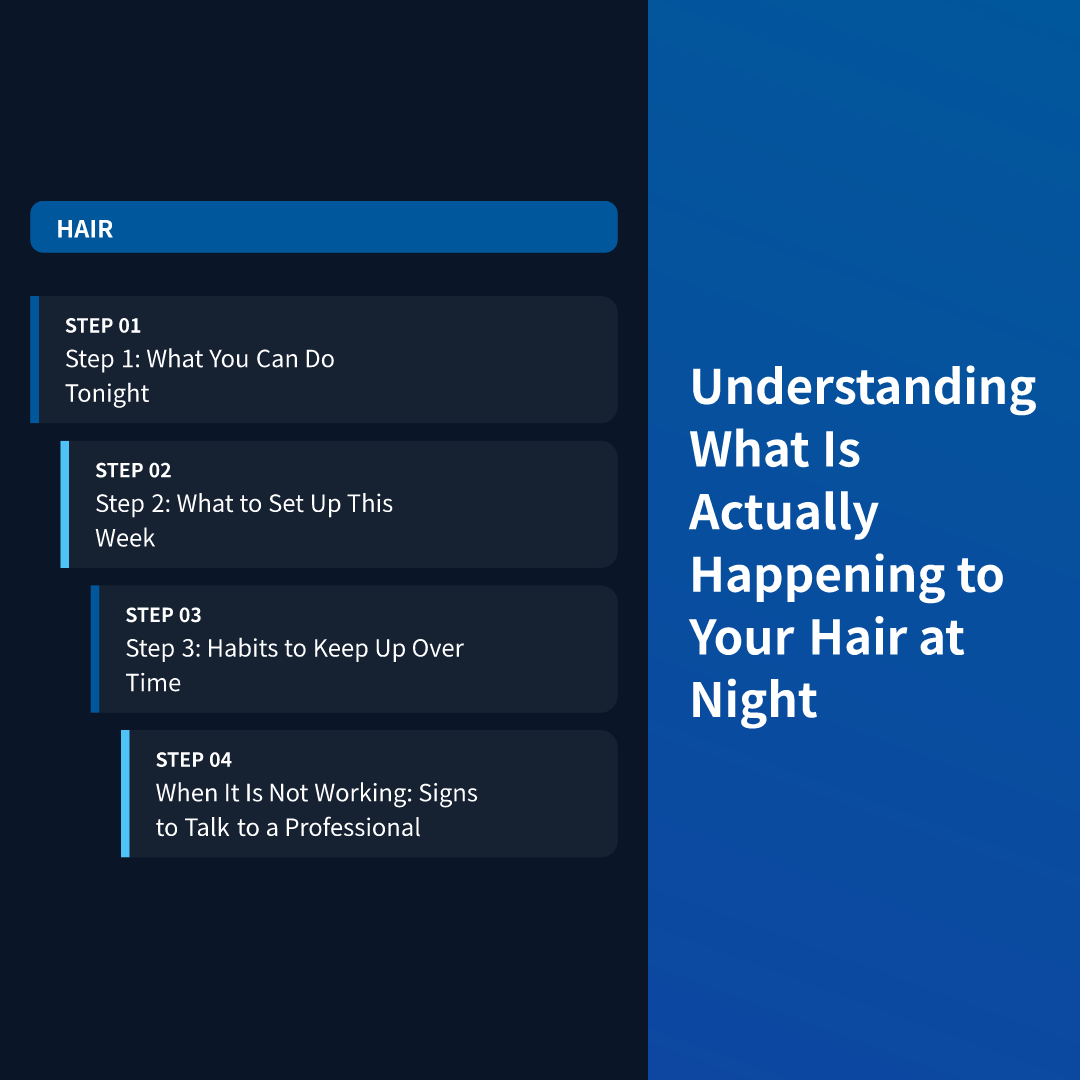
Understanding What Is Actually Happening to Your Hair at Night
Before changing anything, it helps to know what you are trying to solve. Overnight hair trouble usually comes from a handful of sources, and they overlap more often than not.
Friction against the pillowcase
Hair moves against fabric every time you shift position. Rougher textures can catch on the outer surface of the strand, which may lead to frizz and, over time, a rougher feel. Smoother fabrics tend to let hair glide more easily, though how much difference this makes varies from person to person.
Tangling and tension
Loose, long hair can wrap around itself or get trapped under your shoulders. Tight styles create the opposite problem: pulling at the roots and creating pressure points. Both can contribute to breakage for some people.
Moisture and wet hair
Hair is generally considered more fragile when it is wet, so going to bed with soaked strands can make tangles and stretching more likely. Damp hair against a pillow can also leave you with a frizzy, misshapen result by morning.
Your hair type changes the answer
- Straight and fine hair: often tangles less but may flatten or get oily-looking against bedding.
- Wavy and curly hair: tends to be drier and more prone to frizz, so moisture retention and curl protection matter more.
- Coily and textured hair: can be especially prone to dryness and tangling, and many people in this group favor protective coverings.
- Color-treated or heat-styled hair: may feel more fragile, so gentle handling matters.
Worth saying plainly: if your concern is heavy shedding, patchy thinning, or a painful scalp rather than frizz and knots, that is a different problem. Nighttime habits mostly address mechanical stress, not underlying scalp or hair-loss conditions. More on that at the end.
Step 1: What You Can Do Tonight
You do not need to buy anything new to start. These changes are small and can be tried before bed this evening.
- Make sure your hair is dry or nearly dry. How: let it air-dry fully before lying down, or allow extra time after washing in the evening. Why: wet strands are generally considered more vulnerable to stretching and snapping, and they tangle easily against bedding.
- Gently detangle before bed. How: work from the ends upward with a wide-tooth comb or a brush designed for your hair type, going slowly instead of yanking. Why: a smoother starting point means fewer knots forming overnight, and you avoid pulling harder on tangles in the morning.
- Loosely contain your hair. How: a soft, loose braid, a gentle twist, or a loose low bun can keep lengths together. Why: containing hair reduces how much of it rubs across the pillow, while looseness avoids tension at the roots.
- Choose a soft hair tie. How: pick a fabric-covered scrunchie or a gentle, snag-free tie rather than a thin elastic with exposed metal. Why: thin or rough bands can catch and create pressure points or dents.
A quick, honest caveat: there is no single position or style that works for everyone. A braid that feels great on thick, long hair might feel uncomfortable on short or very fine hair. Treat these as starting points and adjust to what feels comfortable.
Step 2: What to Set Up This Week
Once you have tried the basics, a few low-cost swaps can make the routine easier to stick with. Give yourself several nights to see how each one feels, since hair behavior changes with weather, washing schedule, and styling.
Consider a smoother sleep surface
What: a silk or satin pillowcase, or a satin-lined cover. How: swap your regular pillowcase for a smoother option and see whether your hair feels less rough in the morning. Why: smoother fabrics create less drag, so strands may glide instead of catch. Satin refers to a weave and silk is a natural fiber, so labels and prices vary widely; the feel and care instructions are worth checking before you buy.
Some people find it helpful to know that results here are personal. Plenty of people report softer-feeling hair mornings, while others notice little change, and I would not promise a specific outcome. If you tend to run warm at night, also pay attention to how breathable the fabric feels.
Try a sleep bonnet, scarf, or wrap
What: a soft bonnet or scarf designed for sleeping. How: choose one with a comfortable, non-tight band and a smooth interior, and check that it stays on without pressing on your forehead or hairline. Why: it keeps hair covered and reduces contact with bedding. Bonnets and wraps have long been part of care routines for many textured and curly hair types, though anyone may find them useful.
Watch the fit. A band that is too tight can cause discomfort or pull at the edges of your hairline, which is exactly the opposite of protective. If anything feels tight or leaves marks, size up or choose a softer style.
Think about leave-in products carefully
Some people use a lightweight leave-in conditioner, a hair oil, or a similar product on dry hair before bed to help ends feel softer and reduce friction. If you go this route, remember that product directions differ, so follow the label and the instructions on the packaging. Heavier products can transfer to pillowcases and may feel greasy on fine or oily hair, and scalp-sensitive people may want to keep products toward the lengths and away from the roots.
If you have a known allergy, a sensitive scalp, or a history of reactions to cosmetic ingredients, a patch-test approach or a conversation with a pharmacist or dermatologist can help you avoid surprises. Ingredient lists matter, and fragrance in particular is a common irritant trigger for some people.
Step 3: Habits to Keep Up Over Time
Overnight protection works best as part of a broader pattern of gentle care. The following habits are less exciting than a new product, but they tend to matter more over months than any single trick.
- Keep your bedding clean. How: wash pillowcases and sleep wraps on a regular schedule following the care labels. Why: oils, product residue, and sweat can build up on fabric and transfer back to hair and skin.
- Be mindful of heat styling. How: consider giving hair rest days from hot tools and using heat protection when you do style. Why: hair that is already dry or damaged is generally more likely to tangle and break at night, so reducing daytime stress can make the nighttime routine more effective.
- Trim ends when they start to split. How: book regular trims with a stylist based on how your ends look and feel. Why: split ends can travel up the strand and snag on other hairs, which may make overnight tangling worse.
- Rotate hairstyles. How: vary where your braid, twist, or bun sits and avoid always pulling from the same spot. Why: repeated tension on the same area may stress the hair and scalp over time.
- Match your routine to the season. How: notice whether hair feels drier in colder months or frizzier in humid ones and adjust moisture products accordingly. Why: environmental conditions change how hair behaves, so a routine that works in one season may need a tweak in another.
A note on tight styles and traction
Very tight braids, ponytails, or buns can pull on the hair follicles, and the American Academy of Dermatology describes traction alopecia as hair loss that can develop from repeated pulling on the hair. You can read their overview here: American Academy of Dermatology on traction alopecia. For sleep, that is one reason many people choose loose styles instead of tight ones.
When It Is Not Working: Signs to Talk to a Professional
If you have tried a calmer routine for a reasonable stretch and your hair still feels like a constant struggle, it may be worth stepping back. Nighttime habits can reduce mechanical stress, but they cannot address every cause of breakage, dryness, or shedding.
Consider reaching out to a licensed professional, such as a dermatologist or your primary care provider, if you notice any of the following:
- Noticeable or sudden thinning, bald patches, or hair coming out in clumps
- An itchy, painful, flaky, red, or inflamed scalp that does not settle down
- Hair loss along the hairline or in areas where you often wear tight styles
- Breakage that continues despite gentle handling and moisture care
- Hair or scalp changes alongside other symptoms such as fatigue, major stress, recent illness, or changes in medication
A professional can look at your scalp, ask about your history, and discuss possible causes and next steps. A hairstylist who understands your hair type can also be a helpful resource for questions about trims, cuts, and styling choices that suit your texture. If a product seems to be causing irritation, stop and ask a pharmacist or clinician for guidance, and follow the instructions on the product label rather than guessing.
To bring it back to the original question, the way to protect hair while you sleep is rarely about one perfect item. It is usually a mix of going to bed with hair that is dry and detangled, keeping strands loosely contained, choosing smoother surfaces, and caring for your hair gently through the day. Results differ between people, so treat this as a set of options to test, and bring persistent or worrying changes to a qualified professional.
Disclaimer: This article is for informational purposes only and is not a substitute for professional medical advice, diagnosis, or treatment. Please consult a licensed professional for personal health decisions.
Related reading: How Often Should You Wash Your Hair, Really?