How to Tell Good From Bad Hair Advice Online
Learning how to tell good from bad hair advice online comes down to a few habits: check who is speaking, look at what they are selling, notice whether they promise results, and see whether the advice fits your own hair type. Nobody is born knowing this, and it is completely normal to feel lost when every video, forum post, and product page seems to contradict the last one. This article walks through the process in order, from what to understand before you start, to the things you will actually do, to the worries first-timers tend to have, and finally one small step you can take today.
What to Know Before You Start

Before you judge any single tip, it helps to understand why hair advice online is so uneven. Anyone can post about hair, and many people share what happened on their own head as if it applies to everyone. That is not dishonest, but it is a very small sample of one.
Why the same tip works for one person and not another
Hair differs in thickness, curl pattern, porosity (how easily strands take in and release moisture), scalp oiliness, and chemical history such as bleaching or relaxing. A routine that suits fine, straight, oily-scalp hair may leave thick, coily, dry hair feeling brittle. When a post says "this works for everyone," that wording alone is a reason to slow down.
Cosmetic care versus a medical concern
Most online hair content is about cosmetic care: cleansing, conditioning, styling, and appearance. Hair shedding, patchy loss, a painful or very itchy scalp, or flaking that does not settle can sometimes involve a medical cause, and those questions are better handled by a licensed professional than by a comment section. The American Academy of Dermatology offers plain-language patient information on hair and scalp concerns at aad.org, which is a reasonable place to see how a professional organization describes these topics.
Some words worth decoding
- Sulfates: cleansing agents that create lather. Some people with sensitive or dry scalps find them stripping, while others have no trouble.
- Clarifying shampoo: a stronger cleanser intended to remove product buildup.
- Protein treatment: a product meant to temporarily reinforce the hair strand. It can feel stiff on some hair types.
- Detox: a marketing word, not a technical one. It rarely has a single agreed meaning.
Knowing that a term like "detox" is loosely defined makes it easier to spot when a post leans on vocabulary instead of explanation.
The First Things You Will Actually Do
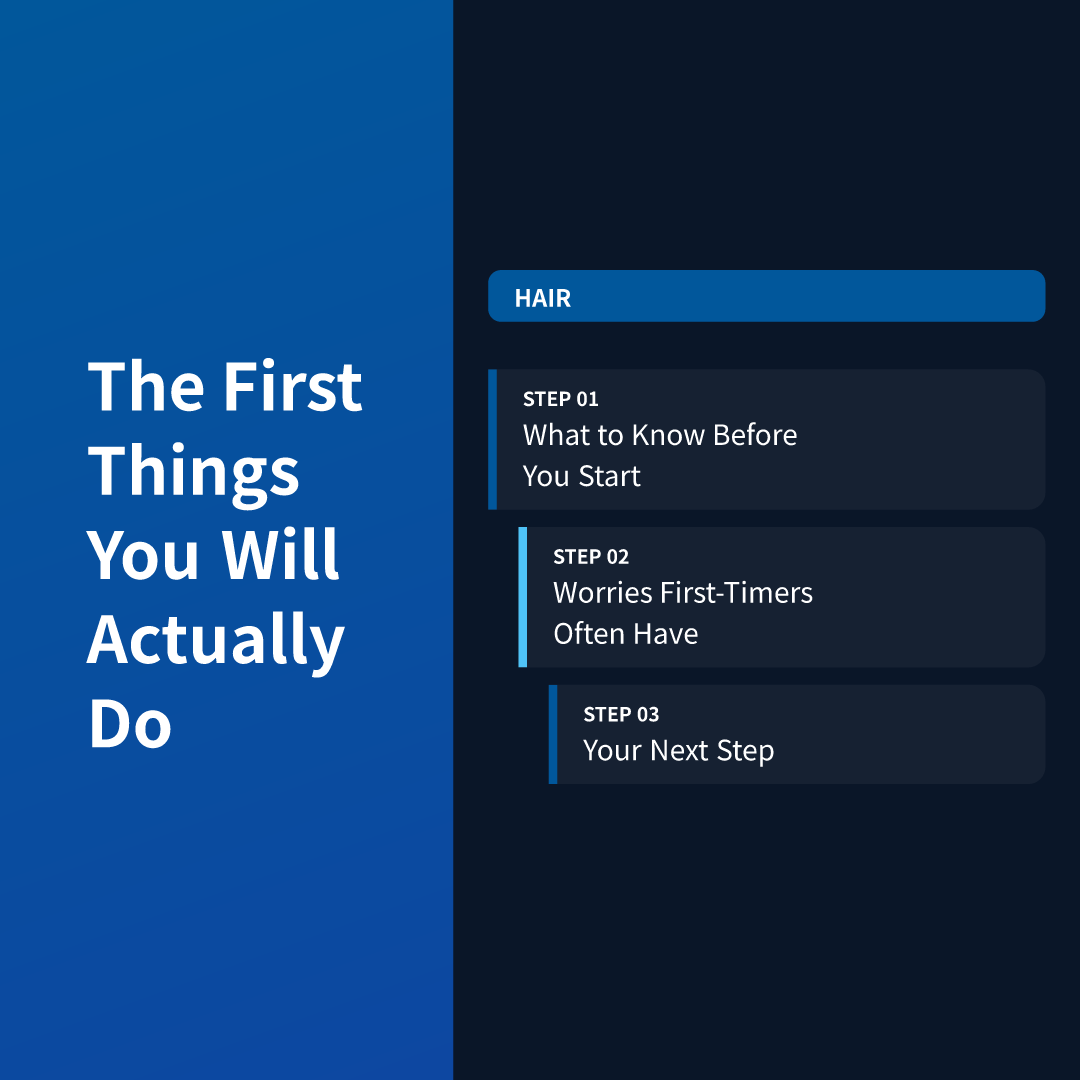
Once the background makes sense, the practical part is a short set of checks you can run on any post, video, or product page. None of them require special training.
Check who is giving the advice
Look for a clear identity and a clear role. A person describing their own experience is different from a licensed professional explaining a topic, and both are different from a brand writing about its own product. Credentials are worth confirming independently, not just accepting because they appear in a caption. If a creator claims a title, see whether a professional board, school, or clinic page backs it up.
Follow the money
Ask whether the person earns something when you buy. Affiliate links, discount codes, and sponsored posts are common and not automatically bad, but they do shape what gets recommended. Advice that always ends in one specific product deserves a little more caution than advice that explains the principle and lets you choose.
Watch for promise language
Good hair information tends to sound modest. It uses phrases like "some people find" or "results vary." Be wary of words such as "miracle," "guaranteed," "cures," or "works overnight." Hair grows slowly and responds differently from person to person, so any source promising fast, certain change is describing marketing rather than biology.
See whether the explanation holds together
A useful tip comes with a reason. If someone says to skip a certain ingredient, do they explain what it does and who might be affected? If the answer is only "it's toxic" or "it's bad for you" with no detail, the claim is hard to evaluate. Fear-based language is a common feature of weak advice.
Compare more than one source
When two or three independent, reasonable sources broadly agree, that is a better sign than one persuasive video. When a claim appears only in posts that all link to the same product, treat it as unconfirmed. Official health organizations, professional associations, and reputable medical centers usually describe hair topics more cautiously, and that caution is a feature rather than a flaw.
Be careful with home remedies
Kitchen ingredients, essential oils, and DIY mixes are popular online. Because the scalp can react to substances that seem gentle, an at-home mixture can sometimes cause irritation or an allergic reaction. If a post tells you to put something strong on your scalp, it is sensible to read the product's own label guidance where one exists, and to ask a pharmacist or a licensed professional if you are unsure or have sensitive skin.
A good rule of thumb: the more a post sounds like a rescue story and the less it sounds like an explanation, the more carefully it deserves to be read.
Worries First-Timers Often Have
Almost everyone who starts sorting through hair advice runs into the same few concerns. Here they are, with some reassurance, though not a promise.
"I already tried a bad tip. Did I ruin my hair?"
This is the most common worry. In many cases, a single misguided product or technique leads to temporary dryness, buildup, or a rough texture rather than lasting change, though individual experiences differ. If you notice irritation, stinging, redness, or unusual shedding after trying something, stopping the product and getting advice from a licensed professional is a reasonable step.
"Everyone online disagrees. Am I doing this wrong?"
Disagreement is normal. Hair care is full of trade-offs: more frequent washing suits some scalps and bothers others, and heavy oils help some textures while weighing down others. Conflicting advice usually means different hair types and different goals, not that you are failing.
"Expensive products must be better, right?"
Price and quality do not always move together. A higher price can reflect packaging, branding, or marketing as much as formulation. Many people are happy with simple, affordable basics, while others prefer a pricier option for scent or texture. What matters is how your own hair and scalp respond.
"What if the advice came from a licensed professional online?"
That is a good starting point, but general content still cannot account for your personal history. A stylist or clinician posting a tip for a wide audience is not examining your scalp. Think of it as general education rather than a personal recommendation.
"How do I know when it is more than a cosmetic issue?"
Certain signs are worth taking to a licensed professional rather than the internet. These include noticeable or sudden thinning, bald patches, a scalp that is painful, burning, or persistently inflamed, sores or crusting, or flaking that does not improve with ordinary care. Those can have many possible causes, and sorting them out requires an in-person look, not a guess from a video.
"Will I feel silly asking a professional?"
Not at all. Stylists, pharmacists, and clinicians field hair questions all the time. Bringing a screenshot of the advice you saw, or the name of a product you used, can actually make the conversation easier.
Your Next Step
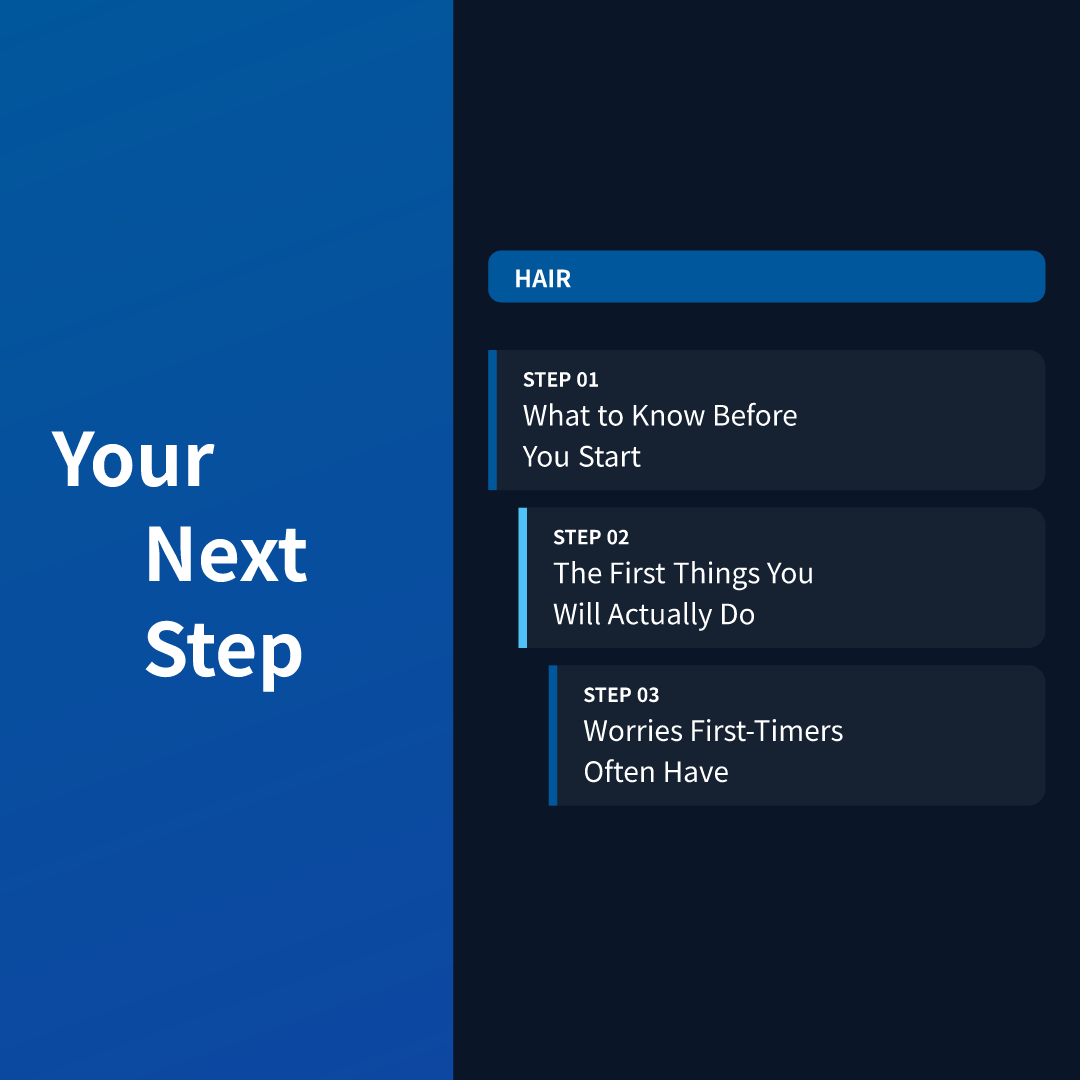
You now have a simple way to approach how to tell good from bad hair advice online: check the source, notice the incentives, listen for modest language, and look for reasons rather than fear. You do not need to master all of it at once.
Here is one small thing to do today. Pick one hair tip you have been wondering about, and before trying it, ask yourself two questions: who is saying this, and what do they gain if I believe it? Writing the answers in your phone's notes takes about a minute, and it is often enough to show you whether the advice deserves a closer look.
Disclaimer: This article is for informational purposes only and is not a substitute for professional medical advice, diagnosis, or treatment. Please consult a licensed professional for personal health decisions.
Related reading: How to Wash Your Hair Without Stripping It