How to Wash Your Hair Without Stripping It
A very common reaction to a greasy scalp is to lather up twice with the hottest water you can stand and scrub until the shampoo squeaks. It feels thorough, but it is one of the quickest ways to leave hair rough, tight, and oddly oily again by the next day. Learning how to wash your hair without stripping it mostly comes down to gentler water, smarter product choices, and a lighter touch, and the sections below walk through each mistake, the reason it backfires, and a more practical swap.
Keep in mind that hair and scalps vary a lot. Texture, climate, styling habits, and scalp conditions all change what feels "clean but comfortable." Treat what follows as general beauty information, not a prescription for your particular head.
Common Mistakes That Leave Hair Stripped
Mistake 1: Washing with very hot water
Hot water feels like it cleans better, especially when your scalp feels greasy. In practice, heat can leave skin feeling dry and irritated, and many people notice their hair feels coarser and duller after a steaming shower. Hair that has been colored or heat-styled often feels the difference even more.
A better move: Keep the water comfortably warm for the wash itself, and finish the rinse with cooler water if you can tolerate it. You do not need to shock yourself with an icy blast. The goal is simply to avoid the "red-faced, tight-scalp" temperature.
Mistake 2: Piling shampoo onto the lengths
Shampoo is designed mainly to cleanse the scalp, where oil and product build up. When the lather is worked through long ends, those older, more fragile sections of hair lose moisture they have little ability to replace. That is often why ends feel straw-like even when the scalp feels fine.
A better move: Concentrate shampoo at the roots and use fingertips (not nails) to massage gently. As you rinse, the suds that run down the lengths are usually enough to freshen them. If your ends feel especially dry, a conditioner-focused approach for the lengths is a common preference.
Mistake 3: Scrubbing hard and piling hair on top of your head
Vigorous scrubbing and twisting hair into a knot while it lathers can rough up the cuticle and create tangles. Tangled, wet hair is more fragile, so breakage tends to show up when you start combing.
A better move: Use slow, circular motions with the pads of your fingers. Let the shampoo foam run down on its own rather than rubbing it into the ends. Think of it more like a scalp massage than a laundry cycle.
Mistake 4: Choosing the harshest "deep clean" formula for everyday use
Products marketed as clarifying or "extra deep cleansing" can be useful for removing heavy buildup, but using them as the default may leave some people with a dry-feeling scalp and hair that tangles easily. Labels like "sulfate-free" or "gentle" are not regulated promises of mildness, so the name on the bottle does not always tell you how it will feel on your hair.
A better move: Pair your everyday shampoo to how your scalp actually behaves, and keep stronger clarifying products for occasional use when hair feels coated or heavy. Patch-testing new products and reading the ingredient list can help if you have a history of sensitivity.
Mistake 5: Washing too often, or not often enough, because of a rigid rule
There is no universal schedule. Some people with oily scalps feel best washing frequently, while others with dry or coily hair prefer longer gaps. Following a rule you read online instead of paying attention to your own scalp is how people end up either stripped or weighed down.
A better move: Notice how your hair behaves over a couple of weeks. If it feels itchy, tight, or overly dry, you may be washing more harshly than you need. If it feels coated, flaky from buildup, or smells stale, it may be time to wash a bit more often.
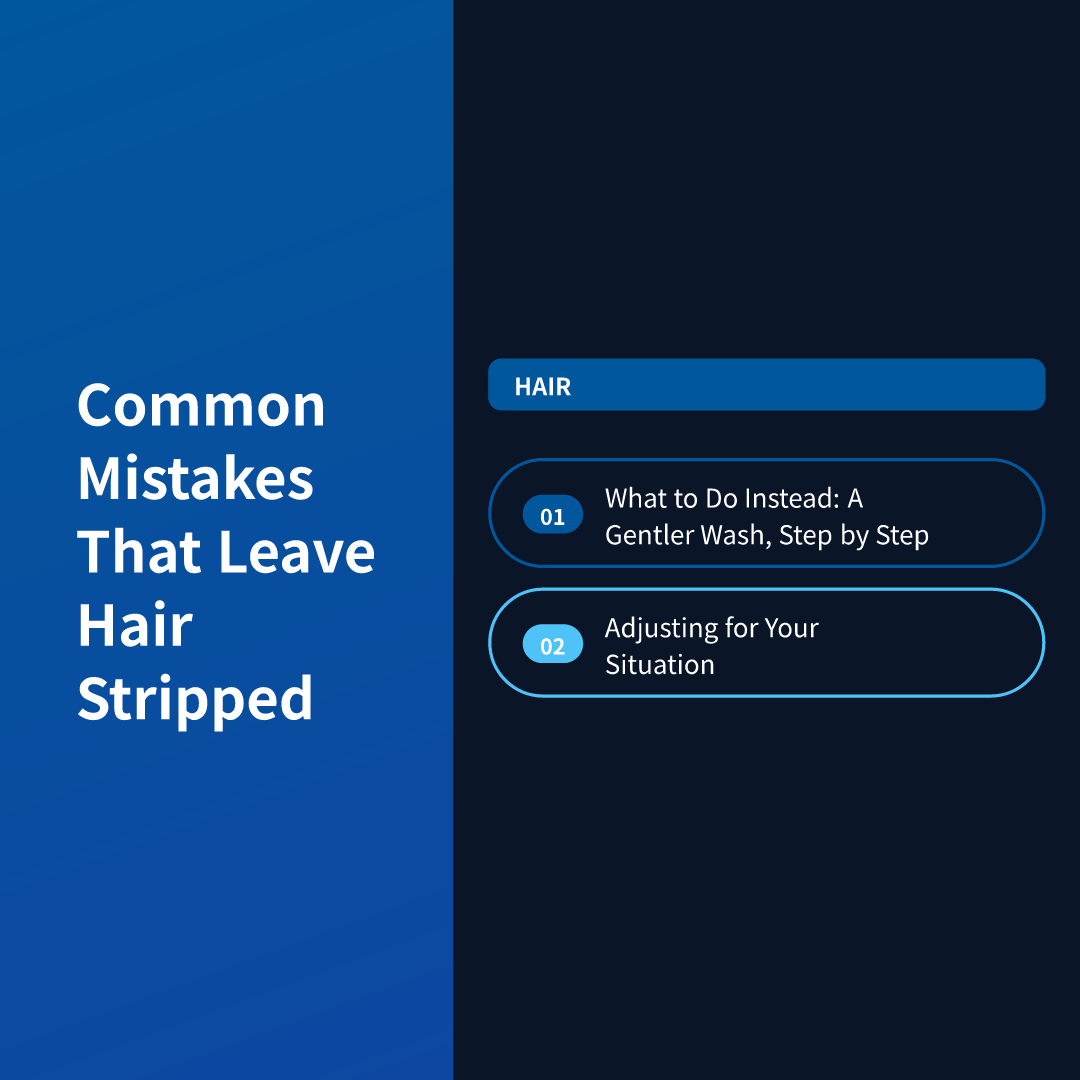
What to Do Instead: A Gentler Wash, Step by Step
None of this needs fancy products. It is mostly about sequence and gentleness, and you can adjust each step to fit your hair type.
Start by thoroughly wetting your hair
Many people rush this part. Hair that is fully saturated needs less shampoo to lather and spreads product more evenly, which means less friction and less product overall. Take a little extra time under the water before reaching for the bottle.
Dilute and aim at the scalp
Some people like to lather shampoo in their hands with a little water first, so it spreads without a concentrated blob landing in one spot. Focus on the scalp, behind the ears, and the nape of the neck, where oil and styling product tend to collect.
Rinse longer than feels necessary
Leftover shampoo or conditioner can cause itchiness or a dull, heavy look. A slow, thorough rinse often does more for how your hair feels than switching products does. Pay attention to the hairline and behind the ears, which are easy to miss.
Condition the lengths, not the roots
Conditioner is generally aimed at mid-lengths and ends, where hair is driest and oldest. Applying a rich formula heavily at the scalp can make fine hair look limp. If you have very curly or coily hair, you may prefer to condition more generously, and that is a reasonable personal preference.
Dry gently
Rough toweling can undo a careful wash. Pressing and squeezing water out with a soft towel or old cotton T-shirt is a commonly preferred alternative to rubbing. Detangle with a wide-tooth comb, starting at the ends and working up, while hair is coated in conditioner or leave-in product.
A gentle wash is less about a special trick and more about doing fewer harsh things at once: cooler water, less scrubbing, and shampoo only where it is needed.
Related reading: What Does Hair Conditioner Actually Do to Your Hair?
Adjusting for Your Situation
If your hair is dry, curly, or coily
Curlier textures tend to feel dry more easily because natural scalp oils travel down coiled strands less readily. Many people with these textures choose milder, moisturizing cleansers, wash on a more spaced-out schedule, and focus on detangling with conditioner in the shower. Some use a co-wash (a conditioning cleanser) between regular shampoo days, though how well it works varies by person and product.
If your hair is fine or oily
Fine hair can look flat quickly, and an oily scalp may call for more frequent washing. Washing more often does not automatically mean stripping, as long as the shampoo is mild enough for you and the water is not scorching. Lightweight conditioner on the ends only is a common approach.
If your hair is color-treated or heat-styled
Color-treated and heat-styled hair is often more porous, so it can feel dry sooner. Many brands market "color-safe" formulas, but results differ, and the claim is not a guarantee. A stylist who knows your hair can recommend a routine that matches your color service and styling habits.
If you swim, sweat a lot, or use lots of styling products
Chlorine, salt, sweat, and heavy styling products can all build up on hair. Rinsing with plain water right after swimming can help, and an occasional clarifying wash is a common approach for product buildup. Follow that with a conditioning step, since clarifying formulas can leave hair feeling dry.
If your scalp is itchy, flaky, or painful
Itching, persistent flaking, redness, burning, or patches of hair loss are not always solved by changing how you wash. They can have many causes, including dandruff-type conditions, product reactions, and other skin issues. This is a good moment to check in with a dermatologist or another licensed professional rather than experimenting on your own. The American Academy of Dermatology offers general hair and scalp information at aad.org.
Frequently Asked Questions
Isn't hair supposed to feel "squeaky clean" after washing?
Not necessarily. A squeaky or tight feeling is often a sign that the wash was harsh for your hair, not that it is healthier. Hair that feels soft but not greasy, with a scalp that is comfortable rather than itchy, is a more useful target for many people. Preferences differ, so go by how your own hair and scalp feel over a few washes.
If I wash less often, won't my hair just get greasier?
There is a popular idea that scalps "adjust" to washing less, but how much this happens, if at all, seems to vary between people, and the evidence is not clear-cut. Some people with oily scalps feel more comfortable washing often, and that is fine. If you want to stretch the time between washes, try it gradually and see how your hair responds rather than expecting a specific result.
Do I really need to switch shampoos to stop stripping my hair?
Sometimes, but not always. Water temperature, how much product you use, how hard you scrub, and how well you rinse can matter as much as the formula. Try adjusting technique first, then consider a milder product if hair still feels dry. If you have a scalp condition or a history of irritation, a licensed professional can help you choose what suits you, and the instructions on the product label are worth reading before you make changes.
Washing hair without stripping it is mostly a matter of small, repeatable habits rather than a single perfect product. Keep the water comfortable, focus cleansing on the scalp, rinse thoroughly, and be flexible about how often you wash. If something still feels off, a hair professional or dermatologist can take a closer look at your situation.
Disclaimer: This article is for informational purposes only and is not a substitute for professional medical advice, diagnosis, or treatment. Please consult a licensed professional for personal health decisions.