How to Wash Thick Hair Thoroughly: Fix Common Mistakes
Many people with dense hair wash it the way they would wash fine hair: a quick scrub on top, a fast rinse, and out of the shower. That habit is the most common reason thick hair ends up feeling greasy at the roots, flaky on the scalp, or weighed down by leftover product. Learning how to wash thick hair thoroughly mostly comes down to reaching the scalp underneath all that hair and rinsing out what you worked in. This article walks through the usual mistakes, why they backfire, and what to do instead.
A quick note before we start: hair and scalp needs vary a lot between people. Texture, curl pattern, scalp oiliness, climate, and styling habits all change what works. Nothing here is a prescription, and if you have persistent scalp symptoms, a dermatologist is the right person to ask.
Common mistakes that leave thick hair feeling unclean
Mistake one: scrubbing only the top layer
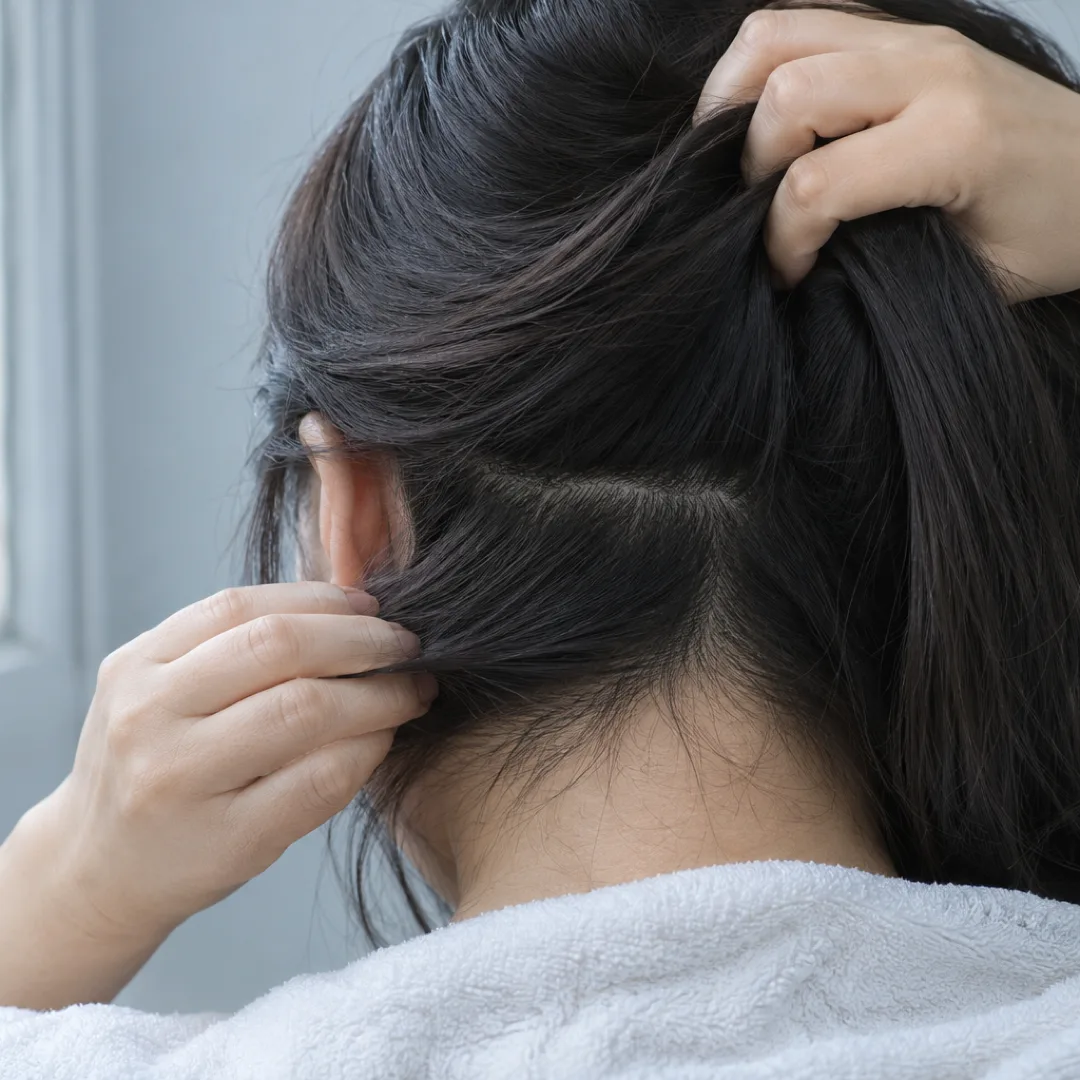
With dense hair, the top layer acts like a lid. Shampoo lathers on the outer strands, the water runs over them, and the hair closest to the scalp, especially at the nape and behind the ears, barely gets touched. Because shampoo is meant mainly for the scalp and roots, missing those zones means oil, sweat, and product can build up where they matter most.
The alternative is to work in sections. Before wetting your hair fully, you can part it into a few zones, such as the crown, the sides, and the back. Then you work through one zone at a time so the shampoo actually contacts the scalp in each area. It takes a little longer, but it is the single biggest change many people with thick hair notice.
Mistake two: piling shampoo onto the lengths
It is tempting to rub a large amount of shampoo through the whole head, lengths and ends included, because thick hair seems to need more of everything. The problem is that the ends are typically the driest and oldest part of the hair. Heavy scrubbing there can add to dryness and tangling, especially for wavy, curly, or coily textures.
A gentler approach is to focus the shampoo on the scalp and roots, then let the suds that rinse down the lengths do the light cleansing for the rest. Product amounts vary by brand and formula, so the instructions on the bottle are the place to look, and a stylist can help you judge what suits your hair.
Mistake three: using fingernails or rough scrubbing
When hair feels dense and stubborn, people often dig in with their nails or scrub hard in circles. That can irritate the scalp, and vigorous rubbing on wet hair may also tangle strands and cause breakage. Irritation can sometimes make a scalp feel itchy or tender, which then gets mistaken for a sign that more scrubbing is needed.
The alternative is to use the pads of your fingertips and make small, slow motions across the scalp. The goal is to loosen buildup and move shampoo around, not to scour. If your scalp stings or feels raw after washing, that is a cue to ease up and, if it continues, to check in with a dermatologist.
Mistake four: rinsing too quickly
Rinsing is where thick hair gets shortchanged most often. Water has a harder time moving through a dense mass, so shampoo and conditioner can linger near the scalp. Leftover residue may leave hair looking dull or limp, and on some scalps it can feel itchy or flaky. Many people mistake that flaky feeling for dryness and reach for heavier products, which can make the cycle worse.
Rinsing in sections works better than rinsing the whole head at once. Tilt your head, lift the hair with your hands, and let water run through to the roots from different angles. Give the nape and behind the ears extra attention, since those are easy to miss. A common sign of a decent rinse is that the hair feels clean and squeaks slightly between your fingers when it is wet, though this can differ by hair type.
Mistake five: conditioning right at the scalp
Because thick hair can feel dry and tangled, many people smooth conditioner all the way up to the roots. Conditioners are generally designed for the lengths and ends, and putting them close to the scalp may contribute to a coated, heavy feeling for some people, particularly those with naturally oily scalps.
The usual alternative is to start conditioner from the mid-lengths and move down. If your scalp tends to be dry, you may find a bit closer to the roots is comfortable, so it is worth adjusting based on how your hair behaves after drying.
What to do instead: a thorough wash, step by step
Once the mistakes are clear, the corrections fit together into one routine. Think of it as a method rather than a rigid recipe. You can adapt the pacing to your schedule, your water, and your hair type.
Detangle before the water hits
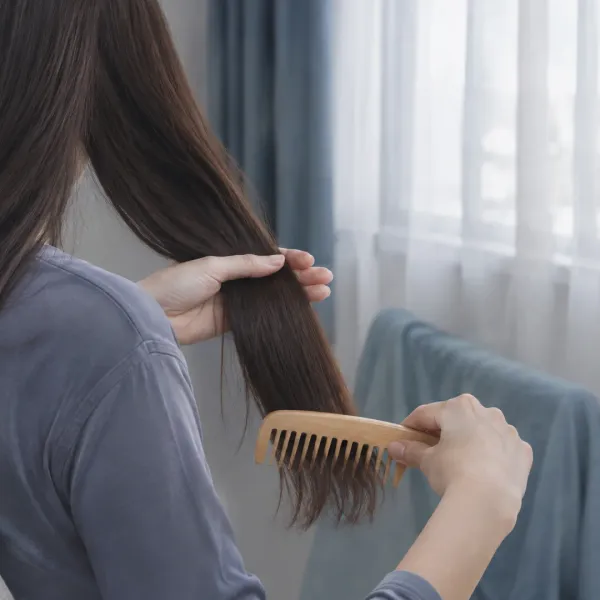
Going into the shower with knots makes everything harder, because shampoo and rinse water cannot move freely through tangled sections. Brushing or finger-detangling gently beforehand, starting at the ends and working up, can reduce breakage and make the wash more effective. Wide-tooth combs and brushes made for thick or curly hair are commonly used for this.
Wet the hair completely
Dense hair can look wet on the surface while the inner layers are still dry. Take a bit more time under the water, lifting sections so that the underside and the roots are fully saturated. Properly wet hair helps shampoo spread more evenly, which often means you need less product overall.
Section, then cleanse the scalp
Clip the hair into a few sections, then release one section at a time. Work the shampoo into the scalp with your fingertips, using slow, firm-but-gentle motions. Move zone by zone, and let the lather run down the lengths when you rinse rather than scrubbing the ends directly.
Some people with very thick or oily hair find that washing the scalp twice feels more thorough, with the first pass breaking up oil and styling product and the second cleaning more effectively. Whether that is helpful depends on your scalp and how much product you use, and it is not necessary for everyone.
Rinse longer than feels necessary
This is the step to slow down on. Rinse in sections, lifting hair away from the scalp so water reaches the roots. Pay attention to the nape, behind the ears, and along the hairline. If you are unsure whether you have rinsed enough, a bit more time under the water rarely hurts, and many people with thick hair find that residue is the real culprit behind a lingering greasy or itchy feel.
Condition the lengths, then rinse again
Smooth conditioner through the mid-lengths and ends, and a wide-tooth comb can help distribute it through dense hair. Rinse it out in sections as you did with shampoo. If your hair feels waxy afterward, that can be a sign of too much product or too little rinsing.
Related reading: How to Change Your Hair Part Without Fighting Your Hair
Dry gently
Thick hair holds a lot of water, and rubbing it with a rough towel can create frizz and breakage. Many people prefer to squeeze or blot water out with a soft towel or a microfiber wrap. Hair that stays damp for a long time against the scalp can feel heavy, so allowing it to dry fully, whether by air or with a heat tool used carefully, is part of the process. Heat tools carry their own risks of dryness and damage, so it is worth reading the manufacturer's guidance.
Adjusting for your situation
The basic method stays the same, but small tweaks can help depending on your hair, scalp, and lifestyle.
If your scalp gets oily quickly
Thick hair can trap oil near the scalp, so roots may look greasy sooner than the ends feel dry. In that case, focusing shampoo on the scalp, rinsing very thoroughly, and keeping conditioner away from the roots are the adjustments people most often make. Washing frequency is personal, and some people with oily scalps wash more often while others find that works against them.
If your hair is thick and curly or coily
Curly and coily textures tend to be drier because natural scalp oils travel down the hair shaft less easily. Many people with these textures wash less often and rely on gentler cleansing, with extra attention to moisture in the lengths. Sectioning is especially useful here, since it limits tangling. A stylist familiar with your curl pattern can offer more tailored suggestions.
If you use a lot of styling products
Gels, creams, oils, and sprays can accumulate on dense hair, and ordinary shampoo may not always remove everything. Some people occasionally use a clarifying shampoo for buildup, but these can be drying for some hair types. Because formulas differ, check the label and consider asking a stylist or pharmacist about how often a clarifying product suits your hair.
If you exercise often or sweat heavily
Sweat and oil can sit against the scalp under a thick head of hair. Some people rinse with water between full washes to refresh the scalp without stripping the hair. Again, this is a matter of preference and scalp tendencies rather than a fixed rule.
If you have hard water
Mineral content in water varies by region, and some people feel that hard water leaves hair dull or coated. If your hair never feels fully clean despite careful washing and rinsing, water quality may be one factor among several. A stylist can talk through options, and it may be worth asking about water filters if it is a recurring frustration.
When to get professional input
Persistent itching, redness, heavy flaking, painful or crusted areas, sudden hair shedding, or patches of thinning are not things a better wash technique can sort out on its own. According to the American Academy of Dermatology general guidance, ongoing scalp problems are worth discussing with a board-certified dermatologist, who can look at the scalp and consider causes such as dandruff, seborrheic dermatitis, or other conditions. Medicated shampoos exist, but whether one is appropriate is a question for a pharmacist or physician, and instructions on the product label or from your clinician should be followed.
Frequently asked questions
Do I really need to wash twice if I have thick hair?
If your hair is oily, or you use a lot of styling products, a second wash may feel more thorough, because the first pass often just breaks up oil and product. If your scalp is dry or your hair is fairly clean, one careful wash with a good rinse may be enough. Pay attention to how your hair feels once it dries, and adjust from there.
Won't washing in sections take too much time?
Sectioning adds a minute or two at first, but many people find it quickly becomes routine. Because the shampoo reaches the scalp more directly, you may also end up using less product and spending less time re-washing or fixing residue later. If time is tight, the most useful shortcut is to keep the sectioning and rinsing and skip extra steps elsewhere.
Why does my scalp still feel itchy even after I wash carefully?
If you have been rinsing thoroughly and the itch continues, product residue is less likely to be the only cause. Itching can have several sources, including dandruff-type conditions, sensitivity to an ingredient, or dryness, and these are hard to tell apart without an exam. A dermatologist can look at your scalp and advise, and a pharmacist can help you understand what is in your current products.
Disclaimer: This article is for informational purposes only and is not a substitute for professional medical advice, diagnosis, or treatment. Please consult a licensed professional for personal health decisions.