How to Work With a Cowlick: Why Hair Grows That Way
A cowlick shows up as a patch of hair that stands up, swirls, or parts itself in a direction you never asked for, and learning how to work with a cowlick starts with understanding why it happens. In short, the hair in that spot grows out of the scalp at a different angle or direction than the hair around it, so it resists lying flat no matter how you comb it. Nothing is wrong with your hair. This is a normal feature of how hair grows, and it tends to be more noticeable on some people than on others.
Once you see the mechanics, the frustration makes more sense. The sections below follow the chain from what you see in the mirror, down to the cause, down to the underlying principle, and finally to why your cowlick may look nothing like your friend's.
What a cowlick looks like from the outside
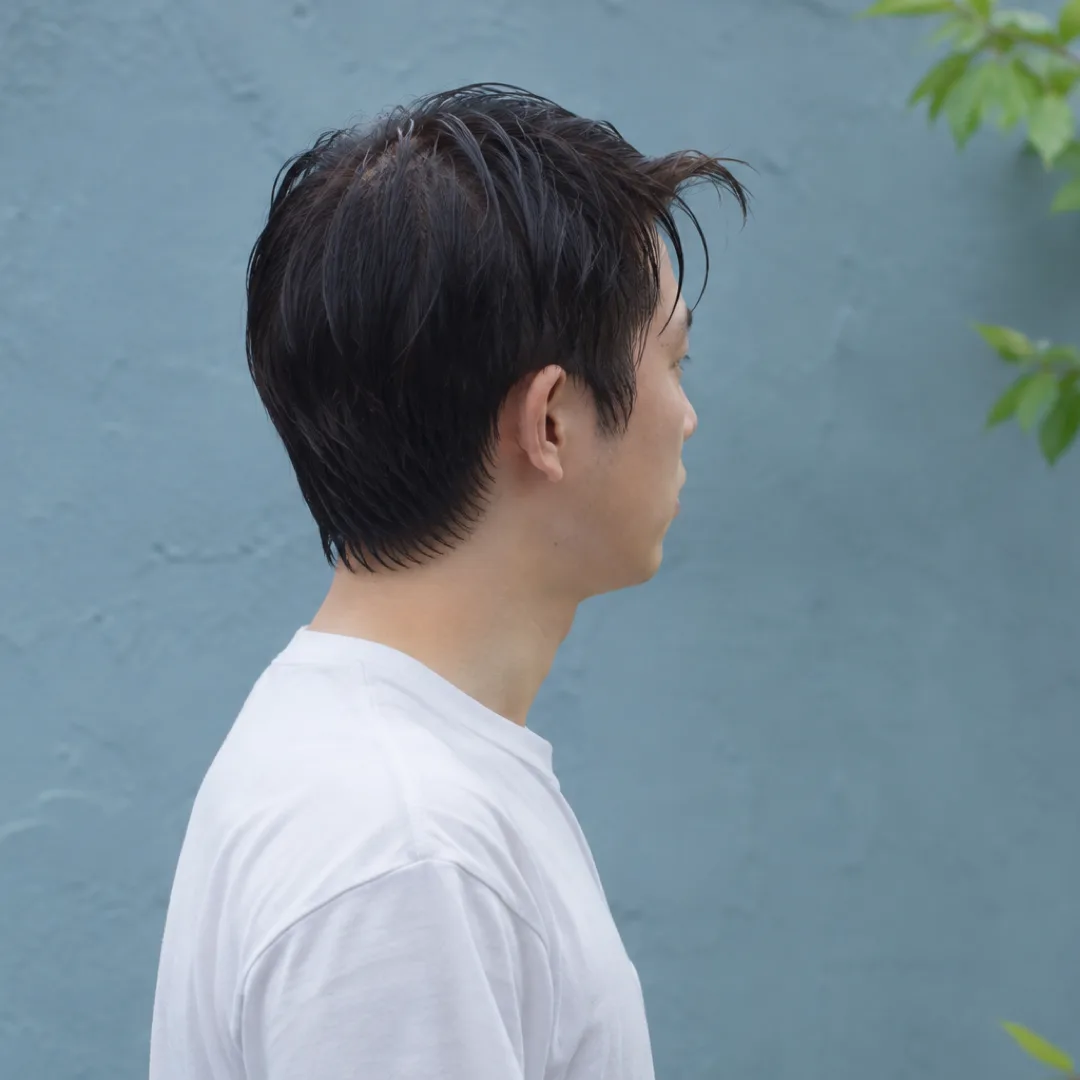
Most people notice a cowlick as a swirl, a tuft, or a stubborn part. The most common spot is the crown, toward the back of the head, where hair can spiral outward like a small whirlpool. Another familiar location is the front hairline, where a section may spring upward or sideways, making bangs or a side part misbehave.
Cowlicks can also appear at the nape of the neck, along the sides, or near the temples. Some are subtle, only visible when hair is wet or cut very short. Others are dramatic enough that a certain hairstyle simply never sits the way a photo suggests it should.
Why short hair and wet hair show it most
Short hair has little weight, so it follows its natural growth direction more readily. Longer hair is heavier and tends to be pulled downward by gravity, which can hide the underlying pattern. When hair is wet, it clings together and reveals the direction each strand wants to take, which is why many people spot their cowlick right after a shower.
Why it often seems worse in certain seasons or after a haircut
A fresh haircut can make a cowlick seem to appear out of nowhere. Cutting removes the length that was weighing the hair down, so the growth direction becomes obvious again. Humidity can also play a role, since hair texture can change with moisture in the air, making the swirl look more pronounced.
The first cause: the angle and direction of the follicle
The root of a cowlick is the follicle, the small structure in the scalp from which each hair grows. Follicles are not all aimed the same way. Across most of the scalp they point in a general, shared direction, but in certain areas the direction shifts, and where those directions meet or diverge, you get a swirl or a tuft.
Think of it as a field of grass blown by wind. Mostly it leans one way, but at certain points the blades twist around a center. Hair follows the same logic. The crown is a typical example of a spot where the growth direction turns around a center point, which is why a whorl there is so common.
How growth pattern relates to heredity
Growth patterns are often described as running in families, and many people notice that a parent or sibling has a similar swirl in a similar place. Hair-growth patterns are generally understood to be shaped by inherited traits, though the exact details differ from person to person. This is one reason a cowlick is usually not something you caused through styling habits.
Why it is not a sign of poor hair health
A cowlick is a matter of direction, not of damage. Healthy, thick hair can have one, and so can fine or thin hair. If a change in your hair's direction, density, or texture appears suddenly, that is a different situation worth bringing up with a qualified professional, such as a dermatologist.
The mechanism underneath: how direction becomes a visible swirl
Here is the chain in plain steps, from the follicle to what you see:
- The follicle sits in the scalp at a particular tilt, which sets the direction the hair emerges.
- As the hair grows out, it keeps following that initial angle, so neighboring strands that were angled differently begin to separate.
- Where growth directions meet or turn around a center, strands push against each other and fan out or twist.
- Hair that is short or light does not have the weight to override this, so the pattern holds its shape.
- Styling that conflicts with the direction, such as combing against the swirl, fights the growth angle and tends to spring back.
In other words: follicle angle leads to growth direction, which leads to a swirl, which leads to hair that resists being forced the other way. Each step follows from the one before it.
Why force tends to backfire
Because the direction is built into the follicle, a style that depends on pushing hair hard against its natural lean often does not last. Hair may look flat for a short time, then lift again as it dries or as the day goes on. Working with the direction, rather than against it, is generally the more cooperative approach.
The role of length and weight
Length is a quiet factor in how visible a cowlick is. Leaving a little more length in the problem area adds weight that can help hair lie in the intended direction. Cutting very short in a cowlick zone tends to expose the pattern, which is a common reason people feel a cowlick has suddenly worsened after a trim.
Why the same principle looks different from person to person
If everyone has the same basic mechanism, why do cowlicks look so different? Several variables interact, and each one changes how the swirl shows up.
- Hair texture: Straight hair often shows a cowlick as a clear parting or lift. Wavy and curly hair can blend the swirl into its curl pattern, so it may look like an uneven curl rather than a distinct tuft. Coily textures can make direction changes less obvious until the hair is stretched or wet.
- Thickness and density: Dense hair can look like a bold swirl, while fine or sparse hair can make the scalp visible where the direction splits.
- Location: A crown whorl behaves differently from a hairline cowlick, because gravity, parting, and bangs all interact with it differently.
- Cut and length: The same cowlick can be invisible under a long cut and prominent in a close crop.
- Number of whorls: Some people have more than one swirl, which can make styling choices feel more complicated.
This variation is why advice that worked for someone else may not translate directly to you. Your texture, density, and cowlick location together set the conditions.
How a stylist can read the pattern
A hairstylist can look at the direction your hair grows and suggest cuts that take it into account, such as leaving weight in certain areas or choosing a parting that follows the natural lean. It can help to show your stylist exactly where the cowlick is and mention what bothers you most. Experiences differ, so it is reasonable to ask questions and talk through options before a cut.
Everyday ways people tend to work with the direction
Rather than fighting growth direction, many people choose styles that cooperate with it. Common approaches include choosing a parting that matches where the hair naturally falls, keeping a bit more length around the cowlick, and styling hair while it is damp so it can settle in the chosen direction as it dries. Some people also embrace the texture, using a swirl as part of a tousled or textured look.
Styling products and heat tools are widely used for this purpose, but reactions to products differ, and heat can stress hair over time. If you are unsure whether a product suits your scalp or hair type, reading the label and asking a pharmacist or a qualified hair professional is a sensible step. For persistent scalp irritation, itching, or sudden changes in hair growth, a dermatologist is the appropriate person to consult.
heat styling and hair damage basicsWhen a hair direction change deserves professional attention
A cowlick that has been there for as long as you remember is typically just a growth pattern. Different signs call for a closer look: patchy thinning, a new bald spot, scalp redness or pain, or hair that changes direction or texture quickly. According to the American Academy of Dermatology's general guidance, hair and scalp changes that are sudden or accompanied by discomfort are worth discussing with a board-certified dermatologist. These are not features of an ordinary cowlick.
Frequently asked questions
Can a cowlick go away on its own?
If your cowlick is tied to follicle angle, it generally stays part of your growth pattern rather than disappearing. What can change is how visible it is, since length, weight, and cut all affect whether the swirl shows. A stylist can help you judge how your own pattern behaves.
Why does my cowlick look worse right after a haircut?
If the cut removed length from the cowlick area, the hair loses the weight that was holding it down, so the natural direction becomes more obvious. Short hair follows its growth angle more readily than long hair does. Letting the area grow out a little can make it less noticeable for many people.
Does having a cowlick mean my hair is unhealthy?
If the swirl has always been there, it reflects growth direction rather than hair health, and healthy hair can have one. A sudden change in direction, density, or texture is a different matter and is worth raising with a dermatologist. Hair health and cowlicks are generally separate topics.
Is a cowlick the same for curly and straight hair?
If your hair is curly or wavy, the same underlying follicle angle can be partly hidden by the curl pattern, so the swirl may look like an uneven curl. On straight hair, the same direction change tends to show up as a clearer tuft or parting. The mechanism is shared, but the look depends on texture.
Two habits worth avoiding once you understand the mechanism
First, avoid cutting the cowlick area very short in an attempt to remove it. Because the direction is built into the follicle, shortening the hair usually exposes the swirl rather than erasing it, and it can make a cowlick more obvious. Second, avoid repeatedly forcing the hair hard against its natural lean with aggressive brushing, tight pulling, or frequent high heat. Working with the direction of a cowlick is gentler on your hair and tends to give more lasting results, though outcomes differ from person to person.
Disclaimer: This article is for informational purposes only and is not a substitute for professional medical advice, diagnosis, or treatment. Please consult a licensed professional for personal health decisions.