Trimming Your Own Bangs: Who Should Wait and Who Can Go Ahead
No single choice suits everyone, and that is especially true when you pick up scissors near your eyes. If you are wondering how to trim your own bangs safely, this guide starts with the people who are better off postponing, then covers who can proceed with conditions, and finally what to do if you go ahead. It does not teach cutting technique, because hair type, fringe style and skill vary too much. Individual results differ, and no home method can be guaranteed to go smoothly.
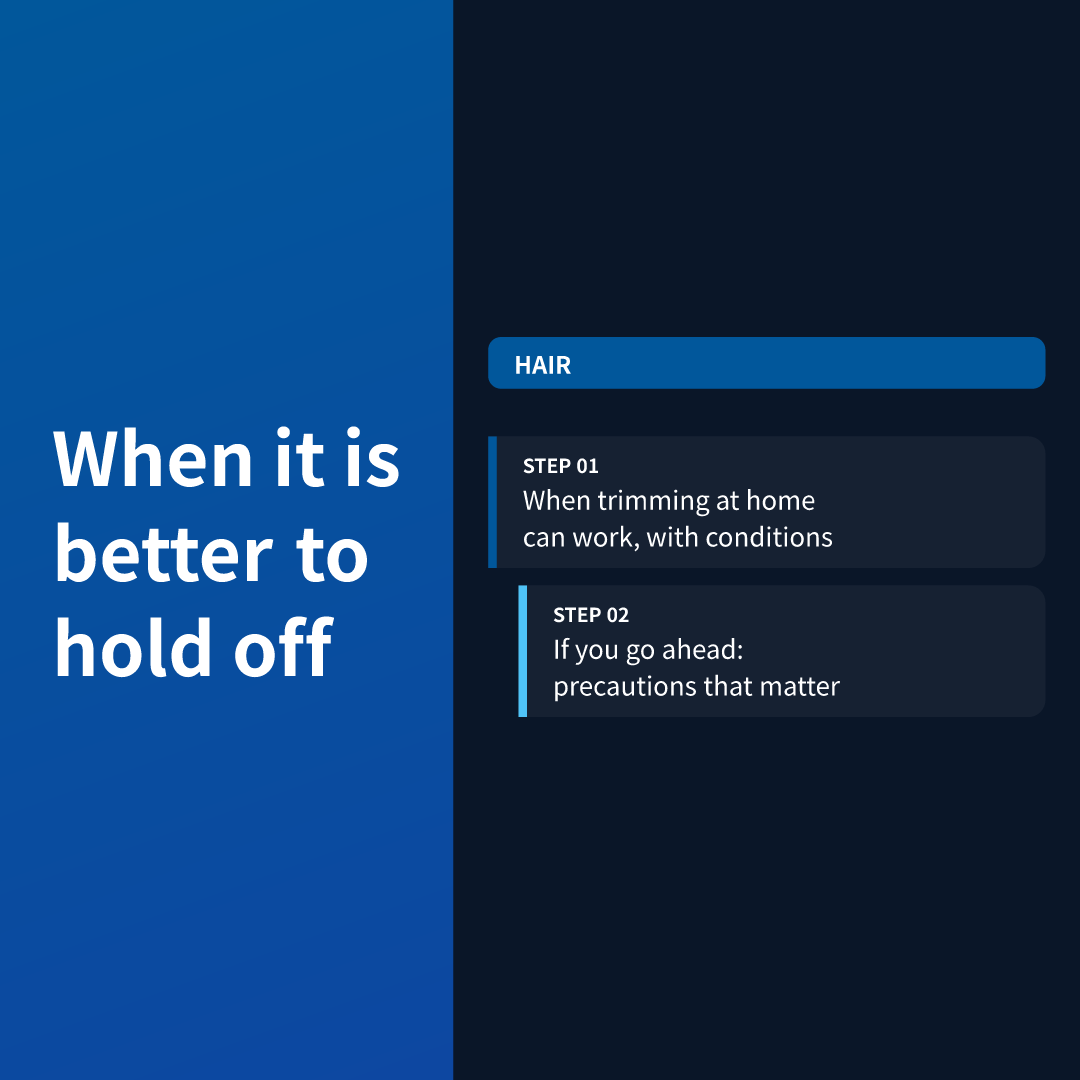
When it is better to hold off
Bangs sit close to the eyes, lashes and the delicate skin of the forehead, so a slip has different consequences than one at the back of the head. In the situations below, a stylist or a health professional is usually the wiser first stop.
You are tired, rushed or distracted
Sharp tools and haste are a poor mix. Most nicks and uneven lines happen when someone works quickly, in poor light, or at an awkward mirror angle. Postponing is a legitimate choice.
You have an active skin problem at the hairline
Eczema flares, open scratches, a fresh irritation or an unexplained rash make skin more reactive and more likely to be nicked. Sprays, wax or colour used alongside a trim can add to the irritation. If the area is sore, swollen or broken, let it settle and ask a clinician or pharmacist about it first.
You have an eye problem or wear contact lenses and are unsure how to manage them
Cut hair fragments can drift into the eye and cause watering, stinging or a gritty feeling. If you have an eye condition, a recent eye procedure or ongoing irritation, check with your eye care provider before trimming. Lens wearers often notice particles sooner and may want advice on whether to remove lenses.
You are pregnant, take regular medication or have a health condition that affects healing or bleeding
A trim is rarely a medical event, but a scratch is a skin break. If you take blood thinners, have a condition that slows healing or affects the immune system, or are pregnant and have skin sensitivity or changes, talk with your doctor or pharmacist about how cautious to be, and about any products you plan to use. Medications can also make skin more reactive, so mention them.
The trim is for a young child
Squirming makes sharp tools riskier, and a small child cannot explain what happened. Many families choose a salon for children's fringes for this reason.
The result really matters
If you have an important event coming up, a strong cowlick, very curly hair, or a hair-pulling habit, booking a stylist is probably the lower-stress option. Wet hair stretches and then bounces back, so a line that looks straight when wet can end up shorter and different once dry.
When trimming at home can work, with conditions
If none of the above applies, a home trim is often reasonable. Most end with nothing worse than a slightly uneven line. The conditions below exist because of what tends to go wrong.
- Your skin is calm and your hands are steady. Healthy, unbroken skin is far less likely to react or become a problem after a small scrape.
- You can work in bright, even light with a mirror at eye level. Poor visibility is the main reason for scratches near the brow and eyelid.
- You are comfortable leaving extra length. Hair can be trimmed again but not added back, and fringe often looks shorter after it dries.
- You have proper hair-cutting shears. Household scissors can have dull blades that crush or fray hair, leaving a blunt or choppy edge.
- You know your own limits. If your plan relies on a cutting method you have not seen matched to your texture, a stylist's guidance or a reputable tutorial for your hair type is a better source than a general article.
You can also read a related article on our site for background on how professionals approach fringe shaping.
If you go ahead: precautions that matter
Keep tools and hands clean
Scissors or combs that were shared, left in a damp drawer or never cleaned can carry residue. Usually nothing happens, but if the skin is nicked, unclean tools raise the question of infection. Wash your hands before handling tools or touching your face; the CDC's hand hygiene guidance is a reasonable general reference. For more on keeping grooming tools clean, see this related piece.
Protect your eyes and skin
Use a towel or cape to catch clippings, keep your eyes closed while hair is cut close to them, and avoid rubbing if something gets in. Skip new styling or colour products on the same day if your skin is sensitive, and read product labels for what to do if irritation occurs. Keep a first-aid kit nearby for minor scrapes, and keep pets, children and distractions out of the room.
Know what mild looks like
Uneven lines, a fringe that is too short, or slightly frayed ends are cosmetic and tend to improve as hair grows. Headbands, clips or a side part can help in the meantime, and a stylist can often even out a home trim. Tiny stray hairs that itch usually clear with a rinse.
Know what is not mild
Stop and get care if any of these appear:
- Eye signs: sharp pain, vision changes, persistent redness, strong light sensitivity, or the feeling that something is stuck. See an eye care professional or urgent care promptly, and do not wait it out when vision changes.
- A cut that keeps bleeding despite gentle, steady pressure with a clean cloth, or one that looks deep or gaping, especially near the eyelid, brow or temple.
- Infection signs: increasing redness, warmth, swelling, pus, red streaking or fever after any skin break.
- Allergic-type reactions: facial swelling, hives or a rapidly spreading rash after a product touched your skin. Trouble breathing or swelling of the face or throat is an emergency, so call local emergency services.
When something involves your eyes, a wound that will not settle, or any sign of a serious reaction, the cosmetic goal stops mattering. Getting checked is the sensible move.
Frequently asked questions
Is it safe to trim bangs while wearing contact lenses?
It depends on you. Tiny hair fragments can irritate the eye, and lens wearers often notice them quickly. Ask your eye care provider whether to remove lenses first, and keep your eyes closed while cutting close to them.
What should I do about a small scratch near my eyebrow?
Minor surface scratches commonly heal on their own. Wash your hands, keep the area clean, and watch for spreading redness, warmth, swelling or pus. Contact a healthcare professional if bleeding will not stop, the cut looks deep, or it is close to the eye.
Can I use hair dye or styling products on the same day?
If your skin is sensitive or prone to eczema, it is wiser not to. Products at the hairline can cause redness, itching or stinging. If irritation becomes swollen, blistered or painful, ask a clinician or pharmacist.
When should I talk to a professional before trimming?
Speak with a doctor, pharmacist or eye care provider first if you are pregnant, take regular medication, have a condition affecting healing, bleeding or the immune system, or have an eye or skin problem near the hairline. Be ready to share the following in that conversation: any medications or supplements you take (including blood thinners), whether you are pregnant or trying to conceive, any skin conditions, allergies or past reactions to hair products, any eye conditions or contact lens use, and what tools or products you plan to use.
Disclaimer: This article is for informational purposes only and is not a substitute for professional medical advice, diagnosis, or treatment. Please consult a licensed professional for personal health decisions.
Related reading: How Often Should You Wash Your Hair, Really?