What to Ask Before a Hair Color Appointment
You're sitting in the salon chair with a phone full of saved photos, and the stylist asks what you're thinking. Somewhere between "I want this color" and actually starting the process, there's a gap most people don't know how to fill. What to ask before a hair color appointment usually comes down to three things: your hair's current condition, the technique your colorist plans to use, and how you'll take care of the color once you leave.
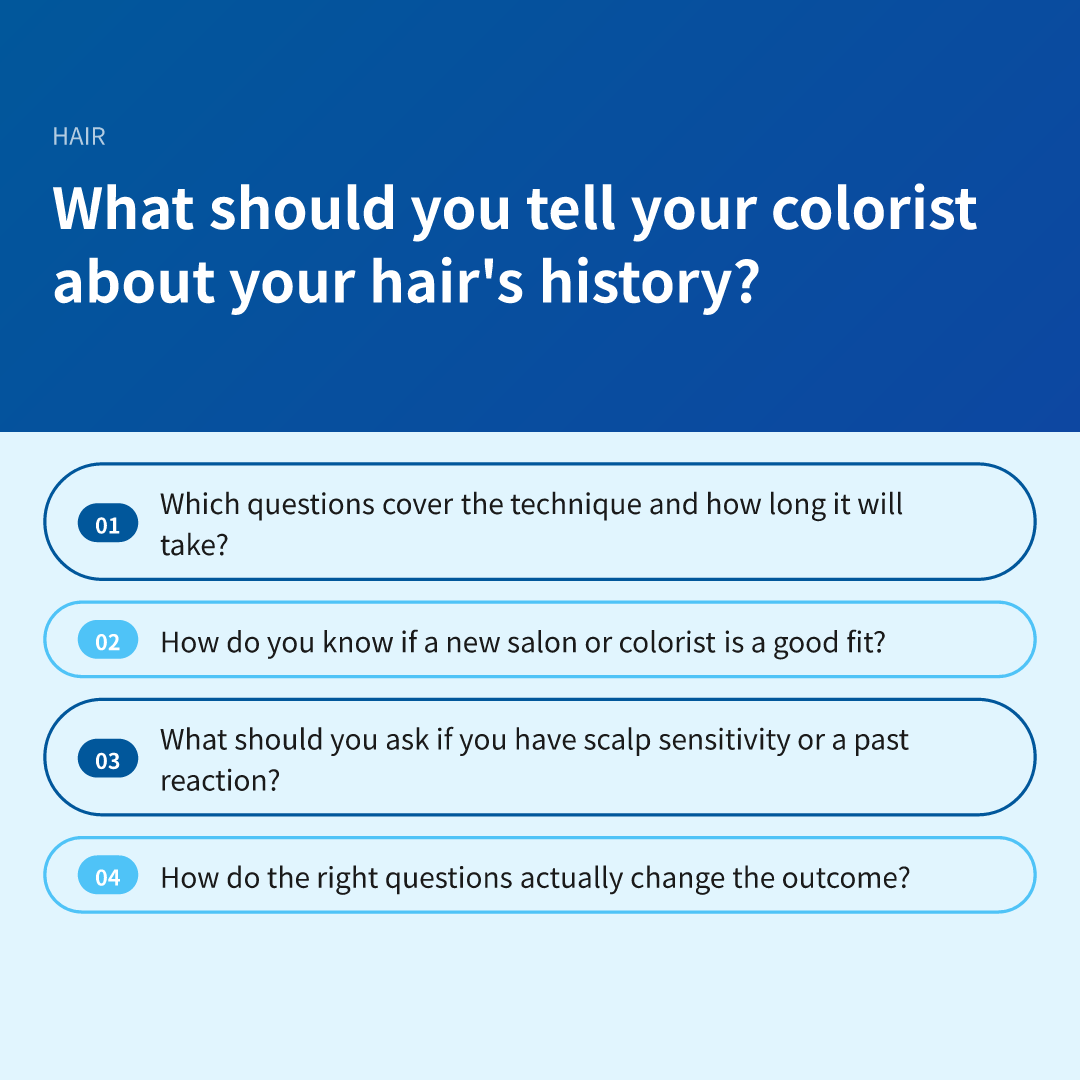
What should you tell your colorist about your hair's history?
Start by mentioning any previous chemical treatments — bleach, keratin smoothing, box dye, even old perms. This matters because certain combinations of chemicals react in ways that aren't visible just by looking at your hair.
A colorist who knows your hair's past can adjust developer strength, timing, or even suggest a strand test first. The exception is virgin hair with no chemical history — in that case, this conversation is shorter, but it's still worth confirming so nothing gets assumed.
Which questions cover the technique and how long it will take?
Ask directly what technique is planned — balayage, foils, a global color, or a gloss — and roughly how long that will take in the chair. This sets expectations before you're committed, since some methods take an hour and others stretch well past three.
Techniques involving lightening almost always take longer than a single-process color. One exception: color correction from a previous dye job can add time regardless of the technique chosen, so it helps to ask if any correction work is needed before the main service begins.
How do you know if a new salon or colorist is a good fit?
Ask how they typically run a consultation and whether they do a strand test for major changes. Their answer tells you a lot about how carefully they plan before committing dye to your hair.
This question matters more the first time you sit with someone new, since they don't have any history with your hair yet. If you're a longtime client returning to a stylist who already knows your hair well, this becomes less critical, though it's still reasonable to ask if their process has changed.
What should you ask if you have scalp sensitivity or a past reaction?
If you've ever reacted to hair dye, or you have a sensitive scalp, ask plainly whether a patch test is available before your appointment. According to guidance from the American Academy of Dermatology, allergic reactions to certain dye ingredients can happen, and testing in advance is one way to check for sensitivity.
A colorist can walk you through how a patch test works at their salon, but if you have a documented history of reactions, that decision is better discussed with a dermatologist first. The exception is a known, well-tolerated color routine — in that case, a patch test may be less urgent, though still not unreasonable to request.
How do the right questions actually change the outcome?
Asking about shade, damage risk, and aftercare upfront reduces the chance that what you imagined and what you get are two different things. Bringing reference photos and asking your colorist to describe the plan back to you often reveals a gap early, while there's still time to adjust.
It also opens space to ask, "will this weaken my hair, and what can we do about it," which lets a colorist suggest options like spacing out sessions or adding a bond-building treatment. Without that question asked directly, some colorists assume you already understand the tradeoffs of a dramatic change — which isn't always a safe assumption.
Frequently Asked Questions
Do I need to ask about cost before the appointment starts?
Yes, ask for a rough estimate and whether it could shift once your colorist sees your hair in person. Color correction, added length, or extra lightening can all change the final price, so a ballpark figure upfront avoids surprises at checkout.
Is it necessary to ask about maintenance if I just want a subtle change?
It's still worth a quick question, even for small changes. Fading speed, shampoo recommendations, and touch-up timing vary by technique, so a subtle gloss might need different upkeep than a full color.
What if I don't understand a term my colorist uses?
Ask them to explain it in plain language — terms like toner, balayage, or bond-builder aren't always self-explanatory. This isn't a sign you're unprepared; it's part of making sure you understand a process that involves real chemicals on your hair and scalp.
Should I ask about allergies even if I've colored my hair before without issue?
It's reasonable to mention it briefly, since sensitivities can develop over time even with products you've used before. If you notice any unusual reaction after a previous appointment, that's worth raising with your colorist and, if needed, a dermatologist.
⚠️ 면책 조항: This article is for informational purposes only and does not replace professional medical or dermatological advice.
Related reading: What Does Hair Conditioner Actually Do to Your Hair?