Does Hard Water Affect Your Hair? What to Know
Yes, hard water can affect your hair for some people, mostly by changing how strands feel, look, and respond to products. Hard water is simply tap water that carries a higher load of dissolved minerals, usually calcium and magnesium, and those minerals can leave a film on hair and scalp. Below, you will find what the term means, when it tends to matter, how it gets confused with other hair problems, and how to decide what is worth doing about it.
What Hard Water Actually Means
"Hardness" describes the mineral content of water, not its cleanliness. Water picks up calcium and magnesium as it moves through soil and rock, so the same city can have softer or harder water depending on where the supply comes from. According to the U.S. Geological Survey, hard water is a common feature of many regions and is generally not considered a health concern for drinking.
That last point matters. Hard water being fine to drink does not mean it behaves the same way on your hair. Minerals that pass through your body without trouble can still cling to the surface of a hair strand after a shower.
Minerals, in plain terms
- Calcium and magnesium: the main minerals behind hardness. They are the ones most often linked with residue on hair and showers.
- Limescale: the chalky crust that forms on faucets and showerheads when hard water dries. Same minerals, different surface.
- Chlorine and other treatment chemicals: not part of hardness, but they are often discussed alongside it, and they affect hair in different ways.
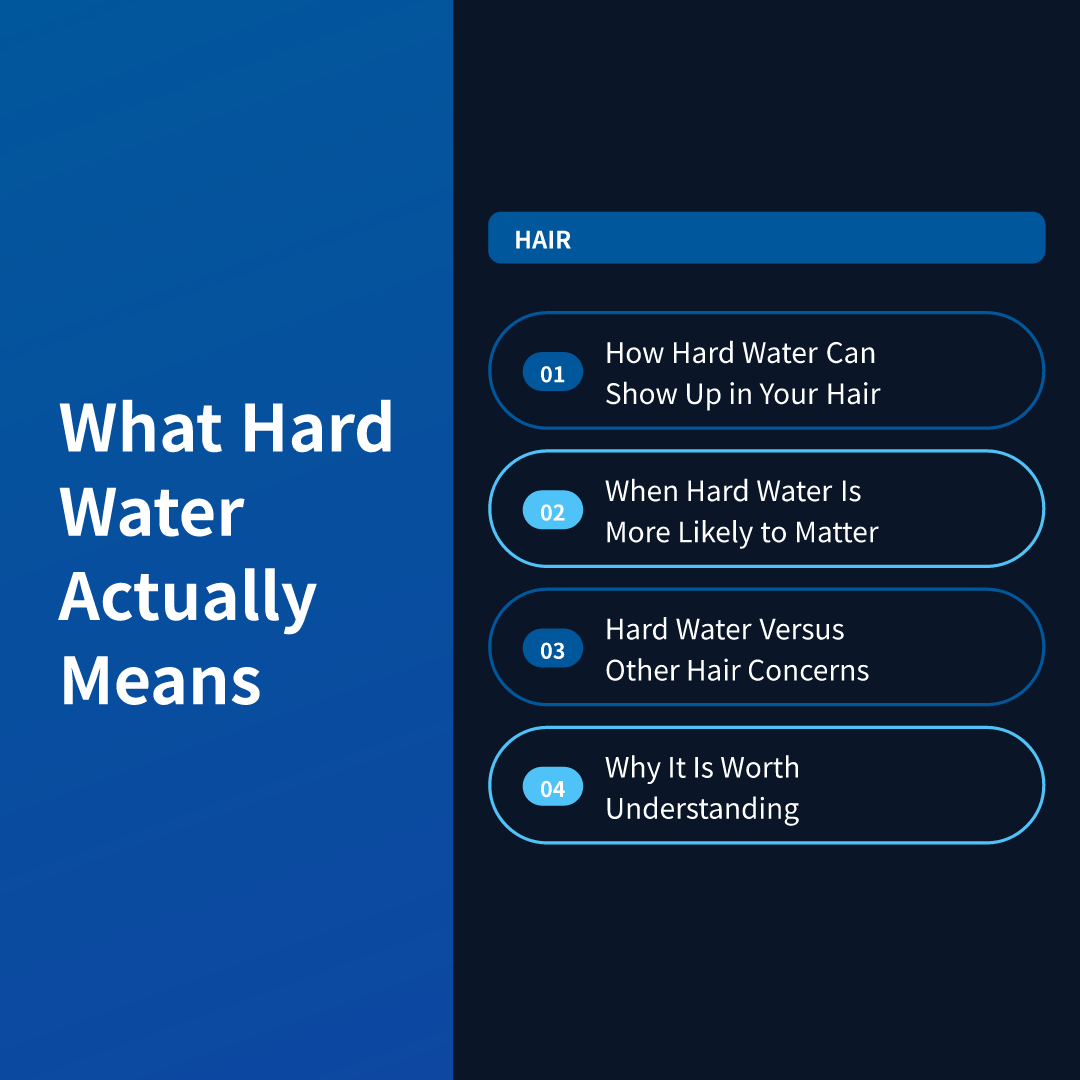
How Hard Water Can Show Up in Your Hair
Think of a glass that has been washed in hard water and left to air dry. It ends up with a faint cloudy film. Hair can behave a bit like that glass: minerals may sit on the outer layer of each strand, called the cuticle (the overlapping, scale-like outer surface of hair). Many people describe the result as hair that feels rougher, looks less shiny, or seems harder to style.
Because evidence on this topic is limited and often comes from small lab-style tests rather than large real-world studies, it is fair to say the effects are plausible and commonly reported, but not the same for everyone. Hair type, hair length, color treatment, and how much product you use all change the picture.
Things people commonly notice
- A dull or lackluster look that does not seem to match how healthy the hair is otherwise.
- A dry, straw-like or slightly stiff feel, especially on longer hair that has had more exposure.
- Shampoo that seems to lather less, since minerals can interfere with how some cleansers foam.
- Tangling or a rough texture when hair is wet or while detangling.
- A scalp that feels tight or a little itchy in some people, though itching has many possible causes.
- Color that seems to fade or shift sooner than expected on dyed hair.
When Hard Water Is More Likely to Matter
Not everyone with hard water has a hair complaint. The effect seems to depend on who is washing and how. Hair that is already dry, porous, bleached, or heavily styled has a more fragile cuticle, so it may show changes sooner than virgin, short, or thick hair.
Curly and coily hair types are often mentioned in this conversation because they tend to be drier by nature and can show texture changes more visibly. That is a general observation rather than a rule, and plenty of people with straight hair report the same issues.
Situations worth paying attention to
- You recently moved and your hair changed soon after. A change in water supply is one clue worth noting.
- Your hair feels different at home than when traveling. If it behaves better elsewhere, water could be a factor, though different products and humidity also play a role.
- You see limescale on faucets, kettles, or showerheads. That is a visible sign of mineral-rich water in your home.
- You color, bleach, or chemically treat your hair. Damaged cuticles can hold on to residue more readily.
Related reading: How to Tell Good From Bad Hair Advice Online
Hard Water Versus Other Hair Concerns
This is where people most often get tripped up. Dullness, dryness, and tangles are some of the most common hair complaints, and plenty of things besides water can cause them. Blaming minerals too quickly can mean overlooking the real cause.
Product buildup
Buildup comes from styling products, conditioners, oils, and silicones that are not fully rinsed away. It can look and feel similar to mineral residue, which is why the two are easy to mix up. Hard water and buildup can also happen together, because minerals may make some products harder to rinse cleanly.
Heat and mechanical damage
Frequent hot tools, tight styles, rough towel drying, and brushing wet hair can all rough up the cuticle. These are everyday habits, so they are often the quieter explanation behind hair that feels brittle.
Chlorine and swimming
Pool water has its own effects on hair, and chlorine is a separate issue from mineral hardness. If you swim often, your hair concerns could be connected to that rather than to your home water.
Scalp conditions
Flaking, redness, persistent itching, or hair thinning are not things to attribute to water on a guess. Scalp conditions such as dandruff, eczema, or other skin concerns have their own causes. According to the American Academy of Dermatology Association, hair and scalp problems that persist or come with symptoms like pain, patches, or noticeable hair loss are worth having evaluated by a board-certified dermatologist.
Hard water and hair loss
A common worry is whether hard water causes hair to fall out. Hair shedding has many known contributors, including stress, hormonal changes, nutrition, illness, medications, and genetics. Mineral residue may make hair feel more brittle and lead to breakage along the strand, but breakage is different from shedding at the root. If you notice more hair loss than usual, a clinician is the right person to sort out why.
Why It Is Worth Understanding
Knowing whether hard water plays a role helps you avoid two costly mistakes: spending money on products that cannot fix a water problem, and ignoring a water problem while buying more and more products. It also helps you recognize when a symptom has nothing to do with water at all.
Because hard water seems to affect hair in a gradual way, the changes are easy to miss. Hair rarely goes from fine to rough in a single wash. More often it drifts over weeks or months, which makes people assume their products stopped working.
Common approaches people explore
People who suspect hard water often look at a few general categories of solutions. None is guaranteed, and results vary from person to person.
- Showerhead filters: marketed to reduce certain substances in water. How well a given filter handles minerals specifically differs by product, so it helps to read what a manufacturer actually claims.
- Whole-house water softeners: systems that exchange minerals in the water supply. These are a household-level decision and involve cost, installation, and maintenance considerations.
- Chelating or clarifying shampoos: products designed to help lift residue. They can feel stripping on some hair, especially dry or color-treated hair, so people with sensitive scalps or treated hair often check with a stylist or dermatologist first. Follow the manufacturer's label and ask a pharmacist or professional if you are unsure.
- Acidic rinses: a popular home idea, but the evidence is thin and irritation is possible, particularly on a sensitive scalp or damaged hair. A professional can say whether it suits you.
How to check your own water
You do not have to guess about your water. According to the U.S. Environmental Protection Agency, local water utilities typically publish water quality reports, and these can give a sense of what is in your supply. A local utility can often tell you whether your water is considered hard. Home test kits also exist, though their accuracy varies.
What Changes Once You Know the Difference
Once the concept is clear, two decisions get easier. First, you can judge a hair problem more realistically: if your water is mineral-rich and your hair is dry, dull, and a bit rough, hard water is a reasonable suspect, but you can weigh it against buildup, heat, color treatment, and scalp health instead of assuming. Second, you can spend with more purpose: checking your water report or asking a stylist or dermatologist before buying filters or specialty shampoos, and holding off on big household changes until you have a clearer picture.
So, does hard water affect your hair? For some people it plausibly does, mostly in texture, shine, and manageability, while the effects stay uneven and hard to separate from other everyday causes. If your hair or scalp symptoms are persistent, painful, or involve noticeable hair loss, a qualified professional is the best next step.
Disclaimer: This article is for informational purposes only and is not a substitute for professional medical advice, diagnosis, or treatment. Please consult a licensed professional for personal health decisions.