How to Care for Hair at the Gym: Match the Fix to the Cause
Knowing how to care for hair at the gym starts with one idea: the same complaint can come from different causes, and each cause needs a different response. Hair that feels greasy after a workout might be sweat and scalp oil, or it might be product buildup that sweat has reactivated. Hair that feels dry and brittle could be friction from a tight elastic, or it could be chlorine from the pool. Guessing wrong wastes time and money, and sometimes it makes things worse. This guide sorts the common problems into causes, explains how to tell them apart, and offers general options that many people find reasonable.
A note on scope: this is general cosmetic information, not personal advice. Hair and scalp types vary widely, so treat everything below as a starting point to adapt.
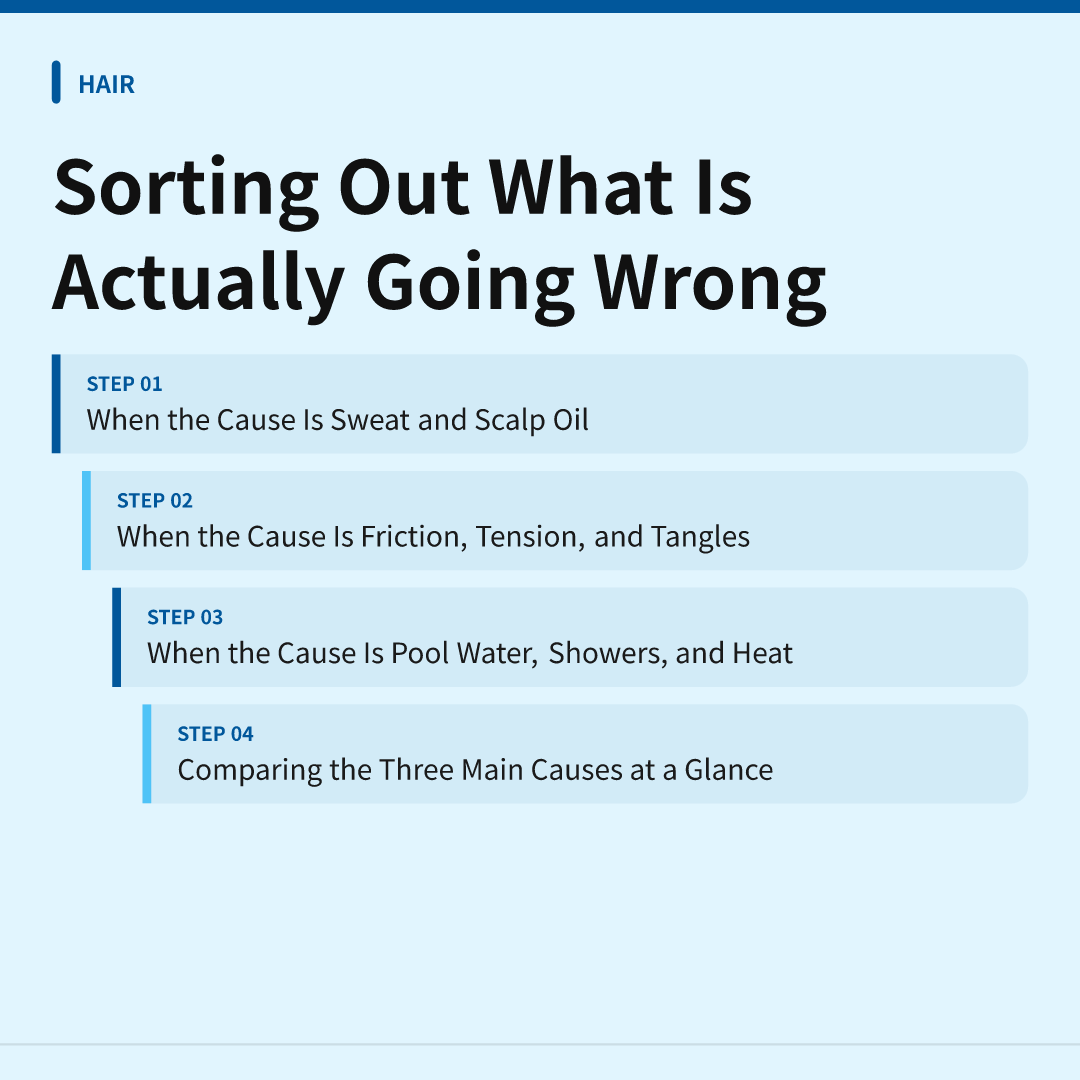
Sorting Out What Is Actually Going Wrong
Before changing your routine, it helps to name the problem. Most gym-related hair complaints fall into a few groups, and they overlap more often than people expect.
- Sweat and oil: the scalp feels damp, hair looks flat or greasy, and there may be a sour or musty smell.
- Friction and tension: hair is tangled, frizzy, or breaking near the elastic, headband, or hat line.
- Water exposure: hair feels rough, straw-like, or tinted after swimming or a long shower.
- Heat and styling stress: ends are dry or split, often worse on days with a hot sauna or blow dryer.
Two things make this tricky. First, sweat itself is mostly water and salt, and it is not inherently harmful to hair. The trouble tends to come from what sits on the scalp afterward, how long it stays, and how you wash it out. Second, scalp conditions such as dandruff or seborrheic dermatitis can look like "just sweaty hair" but need different handling. The American Academy of Dermatology describes dandruff and similar scalp issues as common and manageable, and it encourages people with persistent flaking, itching, or redness to have them checked.
A quick way to separate the groups is to look at timing. If the problem shows up within an hour of exercise and eases after washing, sweat and oil are the likely cause. If it shows up as breakage or tangles regardless of how sweaty you get, friction is a better suspect. If it appears only after pool days, water exposure is the prime candidate.
When the Cause Is Sweat and Scalp Oil
How to tell if this is your situation
Sweat-and-oil problems tend to feel the same way every time: roots look limp, hair clumps together, and the scalp may itch as it dries. Smell is a clue too. If your hair smells fine on rest days but not after training, sweat is probably playing a role. People with naturally oilier scalps often notice this faster, while those with dry scalps may notice tightness or flaking instead.
One useful test is to skip any styling product for a few workout days. If the greasy look fades noticeably, buildup was likely part of it rather than sweat alone.
What commonly helps
Many people find that rinsing sweat out sooner is the single most useful habit. Even a quick water rinse after a workout can remove salt and surface moisture before they dry on the scalp. Whether a full shampoo is needed each time depends on hair type, scalp oiliness, and how hard the session was. Some people with very oily scalps wash frequently, while those with coily or very dry hair often prefer to wash less often and rely on rinsing and gentle cleansing.
Cleansing products vary. Lightweight clarifying or balancing shampoos are often used by people who deal with buildup, while gentler formulas are common for dry or color-treated hair. Because scalp and hair needs differ, it is reasonable to read the product label and patch-test anything new. If a shampoo is medicated, such as one marketed for dandruff, ask a pharmacist or doctor how it fits your situation and follow the label.
Dry shampoo is a popular in-between option. It can absorb surface oil, but it does not replace washing, and heavy or repeated use may leave residue that some people find irritating. If your scalp feels itchy or coated, that can be a sign to scale back.
What gets wasted if you guessed wrong
If friction is the real culprit and you respond by washing more often, you may strip hair that was already fragile. Over-cleansing can leave strands rougher and the scalp more reactive, and it does nothing about the elastic that is snapping your hair.
When the Cause Is Friction, Tension, and Tangles
How to tell if this is your situation
Look at where the damage is. Short broken pieces around the hairline, along the part, or at the exact spot where an elastic sits point toward tension. Tangles at the nape, especially with long hair, point toward friction from a ponytail, a hood, or a mat. Frizz that builds across a workout week without much greasiness is another clue.
The American Academy of Dermatology notes that repeated tight hairstyles can contribute to hair loss over time, a pattern often called traction alopecia. That is one reason it makes sense to pay attention to how tightly hair is pulled during training. If you notice thinning, soreness, or small bumps along the hairline, a dermatologist can look at it directly rather than leaving you to guess.
What commonly helps
People who train with long hair often choose softer hair ties, such as fabric-covered or spiral styles, over thin elastics with metal parts. Looser styles, such as a low ponytail or a loose braid, generally put less strain on the roots than a high, tight one. Alternating where the tie sits from day to day is another common habit, since it avoids stressing the same spot repeatedly.
Headbands and caps can rub, too. Smooth, moisture-wicking fabrics tend to cause less snagging than rough cotton for some people, though comfort is personal. Satin or silk-lined options exist for those who want less friction, and results vary.
Detangling is best done gently. Many people find it easier to work through knots when hair is damp and coated with a conditioner or leave-in product, starting from the ends. Pulling a brush hard through dry knots is a common source of breakage.
What gets wasted if you guessed wrong
Expensive repair masks are often bought for friction damage. They may soften strands for a while, but they cannot reverse breakage or remove the cause. If the same tight tie goes back in every day, the pattern simply continues.
When the Cause Is Pool Water, Showers, and Heat
How to tell if this is your situation
Pool-related damage usually appears after swim days: hair feels rough or straw-like, may look dull, and lighter hair can take on a greenish tint. Chlorine and other pool chemicals can dry out hair, and the effect is often more noticeable on hair that is already color-treated, bleached, or chemically straightened. Long, hot showers and frequent heat styling can cause a similar feeling of dryness, so check whether the pattern follows swimming specifically.
Hard water in some gyms or homes can leave hair feeling stiff or coated. If the same hair feels softer after washing elsewhere, water quality may be a factor.
What commonly helps
A common approach is to wet hair with clean water before getting into the pool, since hair that is already saturated tends to absorb less pool water. Many swimmers rinse soon after getting out and follow with a shampoo made for frequent swimmers or a conditioner afterward. Swim caps are also widely used to reduce contact with pool water, though they do not keep hair completely dry.
For heat, it can help to let hair air-dry partway when you have time and to keep sauna or steam-room sessions in mind if your hair is already fragile. Heat protectants are sold for styling tools, and the label explains how a given product is meant to be used.
What gets wasted if you guessed wrong
Clarifying shampoos are often reached for after swimming, but if the real problem is mechanical damage or a scalp condition, they will not help and may add dryness. On the other hand, treating a greasy scalp with heavy moisturizing products can leave roots even flatter.
Comparing the Three Main Causes at a Glance
The table below sums up how the three causes differ in how they show up, where they appear, and the general direction of care.
| Cause | Typical signs | Where it shows | General direction |
|---|---|---|---|
| Sweat and oil | Greasy roots, odor, itch | Scalp and roots | Rinse sooner, adjust washing |
| Friction and tension | Breakage, tangles, frizz | Hairline, nape, tie point | Softer ties, looser styles |
| Water and heat | Rough, dull, tinted strands | Mid-lengths and ends | Pre-wet, rinse, condition |
Real life is rarely tidy. Someone can have an oily scalp, a tight ponytail, and a weekly swim all at once. In that case, it often makes sense to change one thing at a time so you can see what is actually making a difference.
Related reading: Static in Winter Hair: What It Is and How to Handle It
Habits That Tend to Help Whatever the Cause
Some basics apply across the board, and they are worth building in even before you pin down the exact cause.
- Keep gym hair tools clean. Brushes, headbands, and caps collect sweat and oil, and washing them regularly is a low-effort habit that many people overlook.
- Carry a small kit. A wide-tooth comb, soft ties, and a travel-size shampoo and conditioner make it easier to rinse and detangle right after a session.
- Dry gently. Blotting with a soft towel or microfiber wrap is typically gentler than rubbing, especially for fragile or curly hair.
- Go easy on heat. Frequent hot tools on already-stressed hair can add up over time.
- Protect the scalp. For outdoor workouts, hats or scalp-friendly sun protection are often suggested, since the scalp can burn like any other skin.
Hydration, nutrition, and overall health also affect hair, although it is hard to attribute changes to any single factor. Sudden or patchy shedding, in particular, is not something to try to fix with products alone.
Related reading: How to Prevent Hair Breakage: Match the Fix to the Real Cause
Where cosmetic care stops
Gym hair care is about comfort, appearance, and reducing avoidable stress on hair. It is not a way to address medical hair or scalp problems. Persistent itching, scaling, redness, painful bumps, a sudden increase in shedding, or bald patches are reasons to see a dermatologist or other qualified clinician. The American Academy of Dermatology offers general public information on hair and scalp conditions, and a professional can tell you whether something is cosmetic or needs treatment.
If you use prescription or medicated scalp products, ask your prescriber or pharmacist how they fit alongside swimming, frequent washing, or other gym habits. Reactions to hair products vary from person to person, so stopping a product that burns or stings and getting advice is a sensible response.
Bringing It Together
The simplest way to approach how to care for hair at the gym is to diagnose before you shop. If greasy, itchy, or odorous hair is the main complaint, sweat and oil are the likely cause, and rinsing sooner and adjusting how often you wash is usually the first area to look at. If breakage and tangles dominate, friction and tension are more likely, and softer ties, looser styles, and gentle detangling tend to be the more relevant changes. If dryness, roughness, or a green tint follows swim days, water exposure is the better suspect, and pre-wetting, rinsing, and conditioning are the common responses.
When the picture is mixed or unclear, change one habit at a time and give each change a few weeks, since hair responds slowly. If nothing seems to fit, or if you notice thinning, persistent scalp irritation, or patchy loss, a dermatologist or other qualified professional is the better next step than trying more products. Results differ between people, and a little observation usually saves more than a cabinet full of guesses.
Disclaimer: This article is for informational purposes only and is not a substitute for professional medical advice, diagnosis, or treatment. Please consult a licensed professional for personal health decisions.