Static in Winter Hair: What It Is and How to Handle It
Static in winter hair is a buildup of electrical charge on the hair surface, and what to do about static in winter hair comes down to managing that charge. Strands with the same charge repel each other, which is why they lift, cling, and flyaway. This article explains what causes it, when it shows up, how it differs from similar problems, and why that knowledge changes the choices you make.
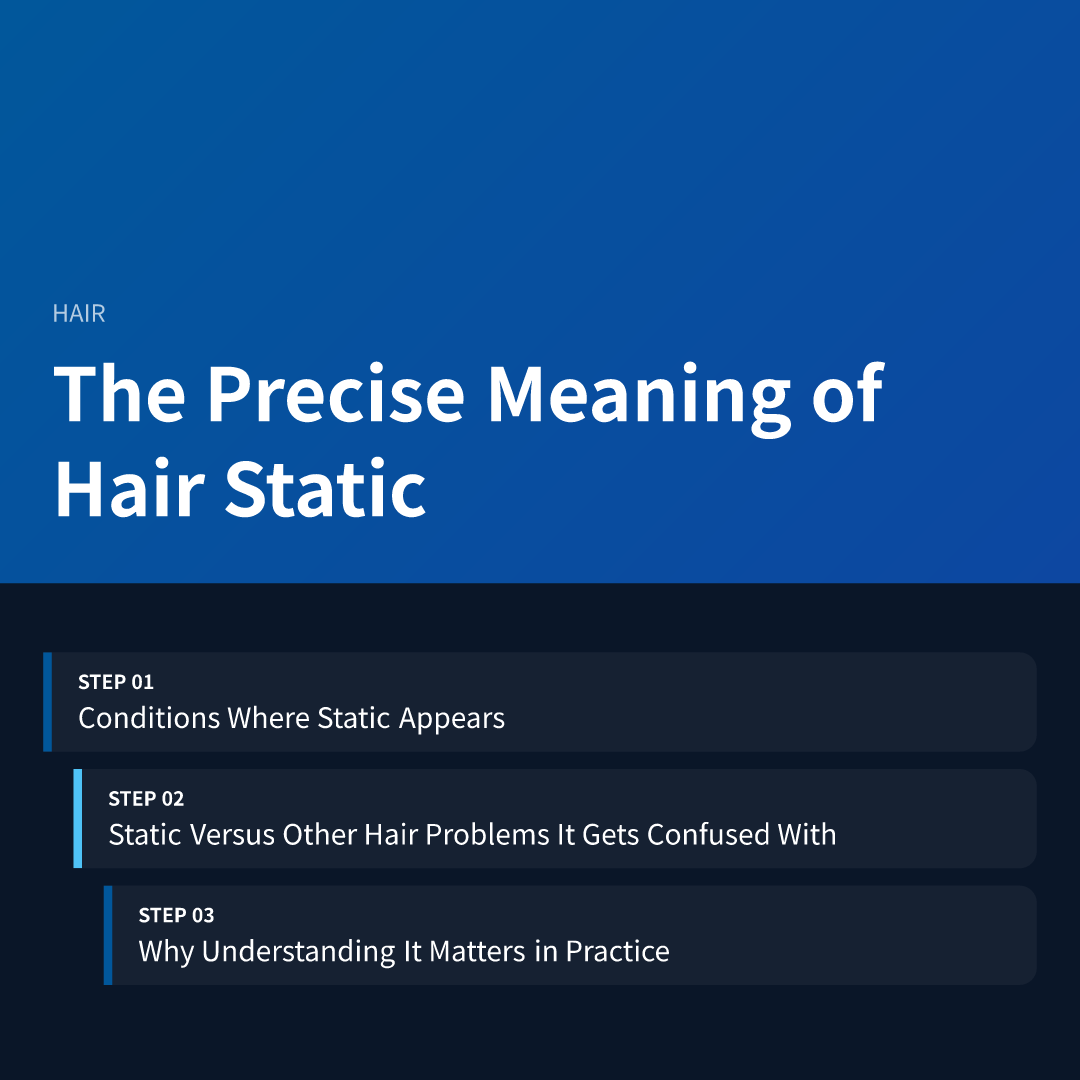
The Precise Meaning of Hair Static
Static electricity is a charge that stays in one place instead of flowing away. When two surfaces rub together, such as a hat and your hair, electrons can move from one to the other. Electrons are the tiny charged particles that carry this effect. Your hair ends up with a charge, and strands carrying the same charge push apart.
Think of each strand as a tiny magnet turned the wrong way around: instead of sticking together, they shove each other away. That is the only analogy you need, because the rest is simple physics rather than a verdict on your hair health.
Moisture matters because water helps charge leak away. Hair with more surface moisture releases charge more easily, while dry hair tends to hold on to it.
Conditions Where Static Appears
Cold air holds less moisture, and heated indoor air is often drier still. Add friction from hats, scarves, coat collars, and brushing, and the conditions for charge buildup are in place. Many people who rarely notice flyaways in summer see them daily from late autumn onward.
Fabrics play a role. Synthetic materials like polyester or acrylic tend to generate more charge than smooth natural fibers, so a knit hat with a synthetic lining can be a quiet troublemaker. Vigorous towel rubbing and brushing dry hair also stir up flyaways.
Some habits can make dryness feel worse:
- Frequent hot-tool styling: Heat can leave hair feeling drier and rougher.
- Very hot showers: Hot water can strip surface oils, which some people notice as extra dryness.
- Shampooing without conditioning: Hair can feel rougher without a conditioner suited to your hair type.
- Plastic combs and brushes: Some materials build more charge than others.
- Dry indoor air: Heating systems often lower humidity in a room.
None of these needs to be eliminated completely. Treat them as dials you can turn a little if static bothers you.
Individual differences are large. Fine hair often shows flyaways more clearly, and hair that is dry, color-treated, or heat-styled may hold less moisture at the surface. Some people have static year-round, which can point to product buildup, very dry conditions at home, or the fabrics they wear rather than the season alone.
Static Versus Other Hair Problems It Gets Confused With
Static is often mistaken for damage. Dry air and friction can cause it even in healthy hair, though hair that is already dry or heat-damaged may show it more. Static is a temporary electrical effect; damage is a physical change to the strand.
It also differs from frizz, which is hair swelling and roughening as it absorbs humidity unevenly. Frizz tends to look puffy and is often worse in damp weather, while static is worst in dry air and shows up as strands lifting or clinging.
Breakage is another separate issue. Persistent breakage, noticeable thinning, an itchy or flaky scalp, or sudden changes can have causes unrelated to winter. A dermatologist or trichologist (a specialist in hair and scalp conditions) can assess what is going on. Chemical treatments such as bleaching, relaxing, or frequent coloring can leave hair more fragile and prone to flyaways, so a trusted stylist can talk through gentler care and spacing between appointments.
Why Understanding It Matters in Practice
Because static is about charge and moisture, the fixes follow logically: add moisture, reduce rubbing, and choose tools and fabrics that build less charge.
Conditioners, leave-in creams, lightweight hair oils, and anti-static sprays are designed to coat or soften the hair surface so it holds less charge. Directions vary by brand and hair type, so follow each label. Fine or oily-prone hair can look weighed down by rich creams, while thick, coarse, or curly hair often tolerates more richness. Starting with a small amount of a light product is a reasonable way to see how your hair responds. For more on this, see how to moisturize dry hair in cold weather.
Tools and fabrics can help too. Wooden combs, natural-bristle brushes, and some carbon-based tools are often described as producing less static than basic plastic ones, though results vary. A silk or satin hat liner or pillowcase may reduce rubbing, and cotton or wool blends may feel calmer than fully synthetic knits. A humidifier in the room where you spend the most time is another option; its usefulness depends on how dry your home is, and manufacturer cleaning guidance should be followed.
For a quick fix away from home, some people lightly smooth a little hand lotion or leave-in product over flyaways. Running a dryer sheet near the hair is a folk trick without strong support, and some people find the fragrance or residue irritating. Patch-testing a new product on a small area of skin is a common label precaution, and anyone with sensitive skin may prefer plain, unscented options. If a reaction persists, a healthcare professional can advise you. Choosing well also depends on choosing a gentle conditioner for your hair type.
Be realistic: static may ease with better moisture and less friction, but it rarely disappears entirely in very dry weather. Knowing the mechanism changes two judgments:
- You stop reading static as proof of damage. You can treat it as a seasonal condition first, and reserve concern for signs like persistent breakage, thinning, or a bothersome scalp.
- You choose fixes by what reduces charge. Instead of buying a new product for every flyaway, you adjust moisture, friction, fabrics, and room humidity, and you keep what your hair actually responds to.
Disclaimer: This article is for informational purposes only and is not a substitute for professional medical advice, diagnosis, or treatment. Please consult a licensed professional for personal health decisions.