How to Care for Hair in Winter: A Step-by-Step Fix
Knowing how to care for hair in winter starts with understanding that cold air outside and dry heating inside tend to pull moisture from both hair and scalp. Hair that felt fine in September can turn brittle, staticky and dull by January, and the scalp may become tight or flaky at the same time. Hats, scarves and wool coats add friction, and hot showers can make things worse.
It is a frustrating pattern, because the usual reaction is to do more: more products, more heat, more washing. Often that backfires. The fix is less about one miracle product and more about order. Work out what is actually going on first, make a few changes right away, build a better routine over the week, and then keep it steady. If nothing improves, there are clear signs it is time to talk to a professional.
Pinpointing What Is Actually Going Wrong
Winter hair complaints often get lumped together as "dryness," but several different things can be happening. Sorting them out helps you choose changes that fit, rather than piling on products that do not match the problem. Individual differences are large, so treat the descriptions below as general patterns, not a diagnosis.
Dry, rough strands
Hair that feels straw-like, tangles easily or looks frizzy usually points to a lack of moisture along the lengths. Hair that is colored, bleached, heat-styled or naturally curly or coily often loses moisture faster, because the outer layer of the strand tends to be more lifted or worn.
Static and flyaways
Static builds up when the air is dry and hair rubs against fabrics like wool, synthetic scarves and knit hats. Fine, straight hair is often more noticeable when it flies around, though anyone can get it.
Tight, itchy or flaky scalp
A scalp that feels tight or flaky in winter may simply be dry. However, flaking can also come from other causes, such as dandruff-type conditions, product buildup or skin sensitivity. According to the American Academy of Dermatology's general guidance, dandruff and dry scalp can look similar, and persistent symptoms are worth having checked.
Oily roots and dry ends at once
Some people notice the scalp getting greasier under hats while the ends turn dry. This combination usually calls for different handling of the scalp and the lengths, which is covered in the steps below.
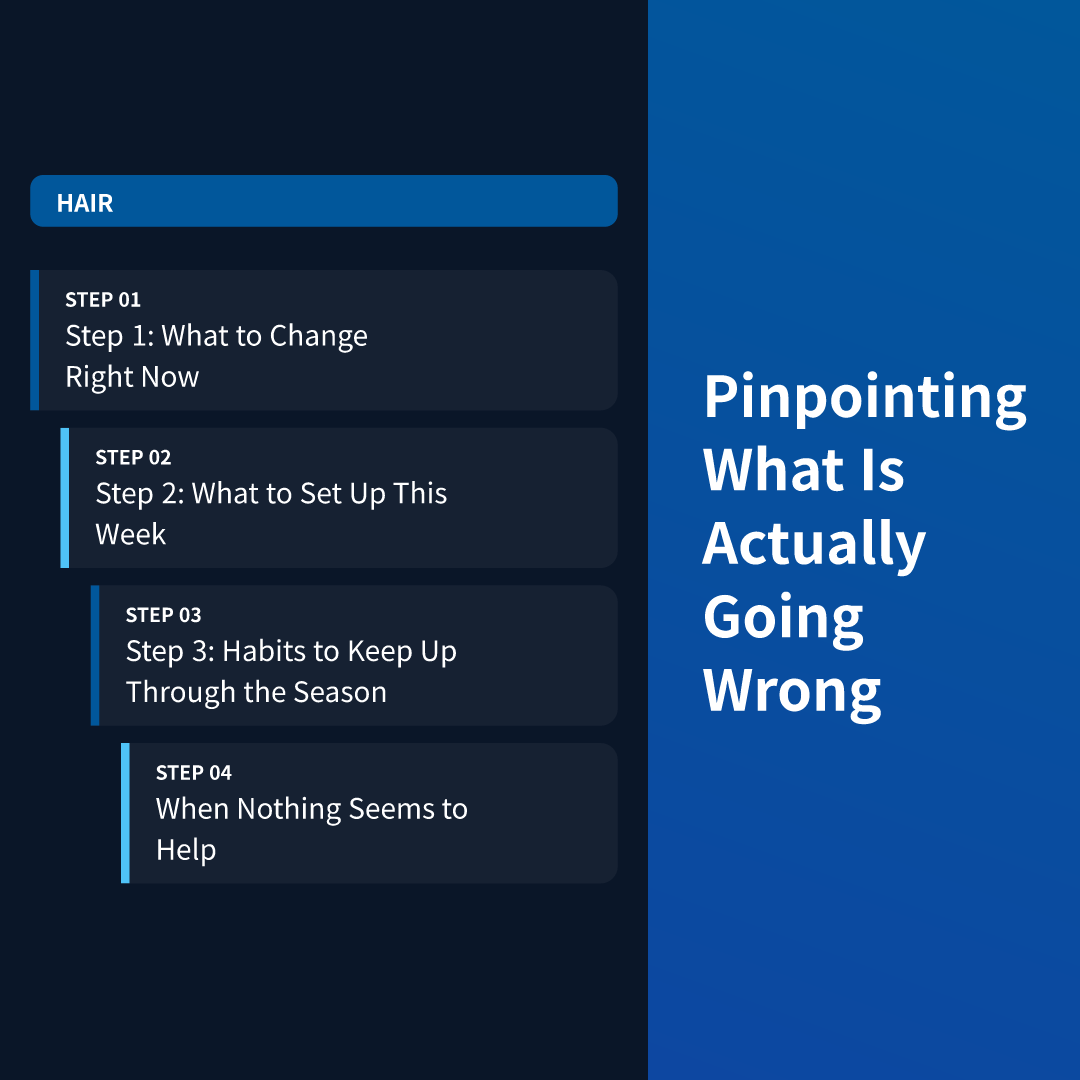
Step 1: What to Change Right Now

These are low-effort adjustments that many people can make today, without buying anything new. Each one targets a common winter stressor.
- Turn down the water temperature. How: Finish with water that feels comfortably warm rather than very hot. Why: Very hot water is commonly associated with stripping oils from the scalp and leaving hair feeling rougher.
- Reduce hot-tool use. How: Give blow dryers, flat irons and curling irons a break where you can, and let hair air-dry partway before using heat. Why: Dry winter hair is generally more vulnerable to heat damage, and tools can add to that.
- Check your fabrics. How: Notice whether wool hats and scarves sit directly on your hair. A smooth lining, such as silk or satin, may reduce rubbing. Why: Friction is a common source of breakage, frizz and static.
- Avoid going outside with soaking wet hair. How: Let it dry mostly indoors when possible. Why: Wet hair is more fragile, and cold air can make the scalp feel uncomfortable. Note that the common belief that wet hair causes colds is not supported; the concern here is simply hair comfort and handling.
- Be gentle with detangling. How: Work from the ends upward with a wide-tooth comb or a brush designed for tangles. Why: Brittle hair snaps more easily when pulled through knots from the roots.
Step 2: What to Set Up This Week
Once the quick changes are in place, use the next several days to adjust your routine. This is where most of the lasting improvement tends to come from, though results vary from person to person and often show up gradually.
Review your shampoo choice
What: Look at whether your current shampoo leaves hair squeaky or tight. How: If it does, a gentler, moisturizing formula may suit winter better. Many people find that a cleansing product made for dry or sensitive hair feels more comfortable in cold months. Why: Stronger clarifying formulas can feel drying when the air is already dry. Those with an oily scalp may still prefer a lighter cleanser, so match the product to your scalp rather than only to the season.
Rethink wash frequency
What: Consider whether you are washing more or less often than your hair needs. How: Many people with dry or curly hair stretch the time between washes in winter, while those with oily scalps may need to keep a regular schedule. Why: Washing frequency is personal, and there is no single correct number. Pay attention to how your scalp and hair feel rather than following a rule.
Add a conditioner that suits your hair type
What: Use a conditioner designed for your hair texture and concentrate it on the mid-lengths and ends. How: Follow the directions on the product label. Why: Conditioners are generally formulated to smooth the outer layer of the strand and reduce tangling and friction. Fine hair may feel weighed down by rich formulas, while thick or coily hair often prefers them.
Consider a weekly moisture treatment
What: A deep conditioning mask or similar product is a common addition for dry winter hair. How: Directions differ by product, so read the label. Why: These products are often used to support softness and manageability, though they are cosmetic and do not repair damage permanently. If you have a scalp condition or sensitivities, check with a pharmacist or clinician before trying new products.
how to choose a conditioner for your hair typeBring some moisture into the room
What: Dry indoor air can add to the problem. How: Some people use a humidifier in rooms where they spend a lot of time. Why: More humid air may make skin and hair feel less dry, although the effect on hair itself is modest. Follow the maker's cleaning instructions, since a dirty humidifier can cause its own problems.
Step 3: Habits to Keep Up Through the Season
Winter lasts a while, so the aim is a routine you can actually maintain. Small, steady habits usually do more than occasional intensive fixes.
- Protect hair from friction. How: Keep hair tucked loosely under a hat or scarf, or choose smoother fabrics. A silk or satin pillowcase is a popular option for reducing overnight rubbing. Why: Less rubbing generally means less breakage and static, though results differ between people.
- Use lightweight leave-in products if hair needs them. How: Choose a formula suited to your hair texture and follow the label. Why: Leave-in conditioners and light oils are often used to help hair feel smoother and to reduce static. Too much product can leave hair limp or greasy, especially on fine hair.
- Handle styling with care. How: Loose styles tend to be gentler than tight ponytails, braids or buns that pull on the hairline. Why: Ongoing tension is commonly linked to breakage and, in some cases, hair loss along the hairline. This is worth knowing if you wear tight styles regularly.
- Schedule regular trims. How: Many stylists suggest trimming when ends look split or frayed. Why: A trim does not make hair grow faster, but it removes ends that are prone to splitting further and tangling.
- Look after your overall health. How: Eat a varied diet, drink water regularly and get enough rest. Why: According to the National Institutes of Health's general nutrition information, a balanced diet supports overall health, and hair is part of that picture. Supplements are a different matter; talk with a pharmacist or doctor before taking any, since they are not necessary for everyone and can interact with medicines.
A note on scalp care
If your scalp feels dry in winter, gentler cleansing and avoiding very hot water are common starting points. Scalp products vary widely, and some contain active ingredients that can irritate sensitive skin. Reactions vary from person to person, so a patch test on a small area is a sensible habit with anything new, and a pharmacist can help you read labels.
Who should be extra careful
People with chemically treated hair, such as bleached, relaxed or permed hair, often find winter harder because the strands are already more fragile. Those with eczema, psoriasis or other skin conditions on the scalp may find that cold, dry air triggers flare-ups. Anyone who is pregnant, taking medication or managing a health condition should ask a clinician or pharmacist before starting new treatments for hair or scalp.
When Nothing Seems to Help
Most winter hair trouble eases with gentler handling and a better-matched routine, but not all of it. If you have made changes steadily and still see no improvement, or if something seems off, it may be time to get professional input. This is a general guide, not a diagnosis.
Signs worth getting checked
- Flaking, redness or scaling that persists despite a gentler routine
- An itchy, burning or painful scalp
- Patches of hair loss, noticeable thinning, or hair coming out in clumps
- Sores, crusting, oozing or swelling on the scalp
- Sudden changes in hair texture or shedding that you cannot connect to a cause
- A reaction after using a new product, such as stinging, rash or swelling
The American Academy of Dermatology's general guidance notes that hair loss and scalp problems can have many different causes, including skin conditions, hormonal changes, stress, nutrition and medical issues, which is why a proper evaluation matters. A primary care clinician or a dermatologist can look at your scalp, ask about your history and, if needed, suggest tests or treatment. Treatment decisions, including any prescription or medicated products, are made by the clinician based on your situation.
Preparing for an appointment
It can help to note when the problem started, which products you use, how often you wash and style your hair, and any medications or supplements you take. Photos taken over time may also help a professional see changes. If a reaction to a product is severe, such as significant swelling or trouble breathing, seek urgent medical care right away.
Caring for hair in winter is mostly about reducing moisture loss, cutting down friction and heat, and giving your scalp a comfortable environment. Start with the quick changes, build the routine over the week, keep up the habits through the season, and let a professional take a look if the problem lingers or looks like more than seasonal dryness.
Disclaimer: This article is for informational purposes only and is not a substitute for professional medical advice, diagnosis, or treatment. Please consult a licensed professional for personal health decisions.