How to Stop a Scarf From Tangling Hair: Daily Habits
Small habits at three points in the day work better than a big overhaul, and that is especially true when you want to stop a scarf from tangling hair. Most scarf snarls come from friction, dryness, and movement, so the goal is to reduce all three: smooth the hair before the scarf goes on, keep the fabric from grabbing strands, and be gentle when you take it off. None of this is complicated, and results vary with hair length, texture, and the scarf itself.
Anyone with long, fine, curly, or dry hair has probably felt the tug of a wool scarf catching strands at the back of the neck. Below, the day is split into morning, daytime, evening, and a short weekly check, with a reason for each step so you can adapt it to your own hair.
Why Scarves Tangle Hair in the First Place
Hair is covered in tiny overlapping scales on its surface, often called the cuticle. When those scales are rough or lifted, strands catch on each other and on textured fabric. Dry, damaged, or highly porous hair tends to be rougher, so it grabs more easily.
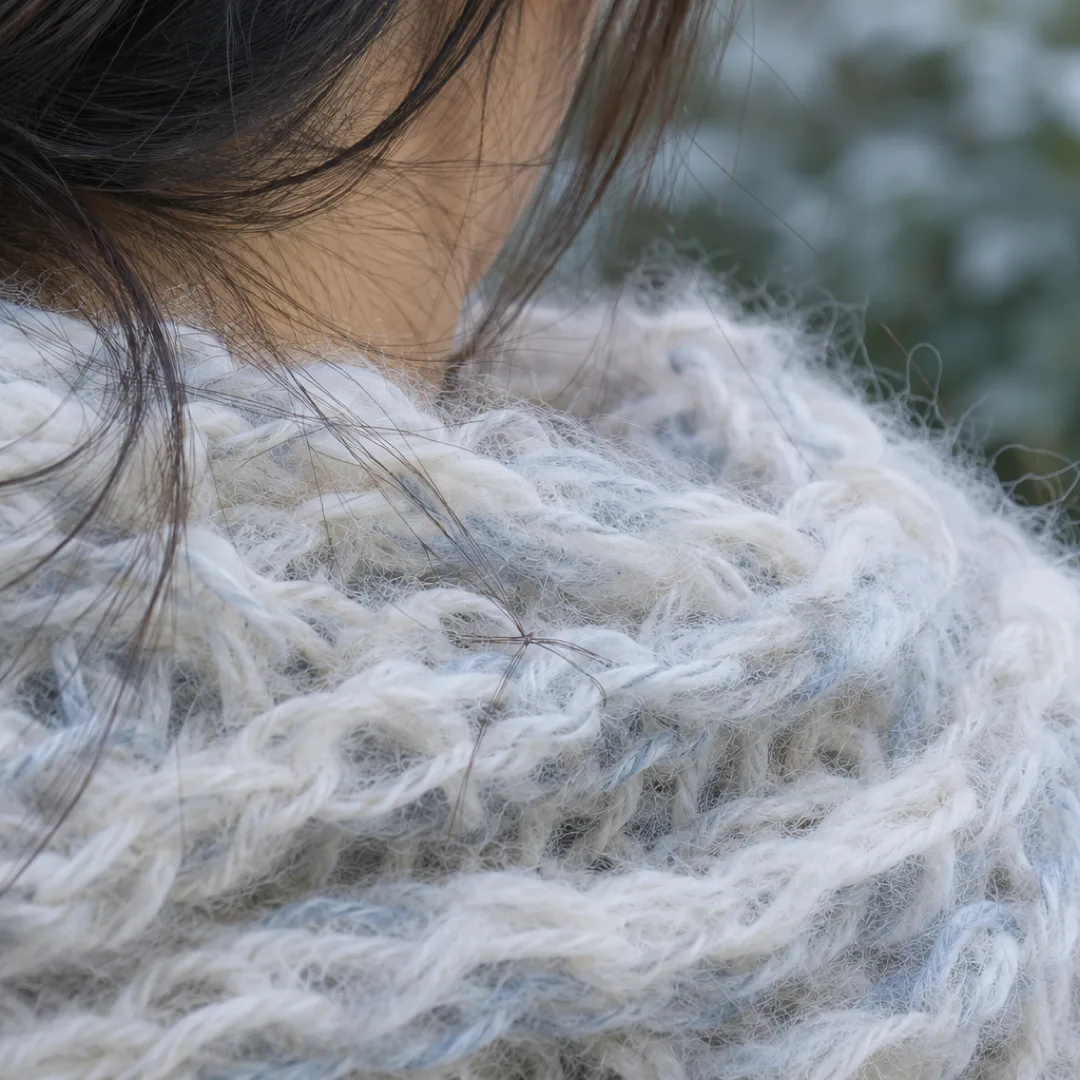
Scarf fabric matters too. Loosely knit wool, mohair, fuzzy acrylic, and fringe have fibers that hook onto strands. Smoother weaves tend to glide more. Add wind, a coat collar, a backpack strap, and constant head movement, and the hair at the nape rubs against fabric all day.
The American Academy of Dermatology Association has general guidance noting that rough handling and friction can contribute to hair breakage. That is a good reason to treat tangles as more than an annoyance: repeated tugging can stress strands over time, though individual experiences differ.
Morning: Set Up the Hair Before the Scarf Goes On
Mornings are the best time to prevent trouble, because the hair is still loose and you are not yet in a hurry. Two small actions make the biggest difference.
Smooth and detangle gently first
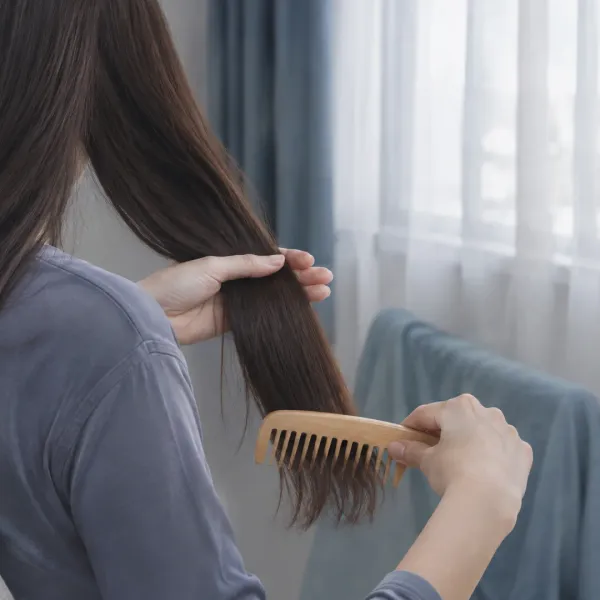
Brushing or combing before you dress means the scarf meets hair that is already free of knots. Many people find a wide-tooth comb or a brush designed for detangling is gentler than a fine-tooth comb, especially on curly or wavy textures. Working from the ends upward is a commonly suggested approach because it avoids dragging a knot down the whole length.
Why this point in the day: a small knot at the nape tends to grow once fabric starts rubbing it. Catching it early is much easier than untangling a matted patch at night.
Decide where the hair will live
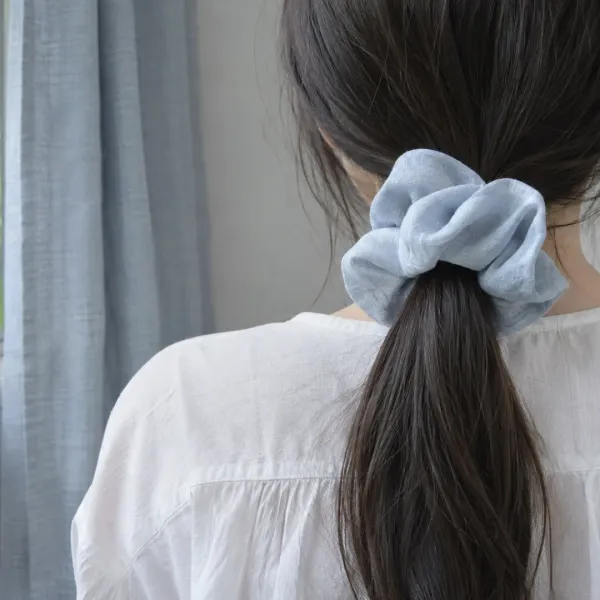
Before the scarf goes on, choose whether the hair will be worn down, tucked, or secured. Many people find that a loose braid, a low bun, or a low ponytail keeps the ends away from the fabric. A soft, snag-free hair tie or a fabric-covered elastic is usually kinder than a thin rubber band, which can catch strands.
Why this point in the day: the style you start with usually decides how much friction you face for the next several hours. Moving the hair out of the contact zone is simpler than managing it after it is already caught.
Consider a light layer of smoothness
Some people like a leave-in conditioner or a lightweight smoothing product to make hair feel slicker. Product needs depend on hair type, scalp sensitivity, and ingredient tolerance, so it is worth reading the label and following the manufacturer's directions. If you have a scalp condition or have reacted to hair products before, a pharmacist or dermatologist can help you decide what fits.
Daytime: Keep Friction Low While You Move
Once you are out the door, the focus shifts from preparation to maintenance. You cannot control wind or a crowded train, but a few choices help.
Pick the right scarf for the day
Fabric choice is one of the most practical levers. Smooth-surfaced scarves, such as silk-feel or satin-feel materials, generally glide over hair more easily than fuzzy or loosely knit ones. If warmth calls for wool, a tighter knit with less loose fiber tends to snag less than an open, fluffy one. Fringe is a frequent culprit, so folding it away from the neck can help.
Why this point in the day: the choice is made at the closet, but you feel the effect all day. A scarf you reach for in a rush is often the one that causes trouble.
Wrap with the hair in mind
How the scarf sits matters as much as what it is made of. Some people lift their hair out and over the scarf rather than trapping it underneath. Others drape the scarf loosely instead of pulling it snug at the nape. A tight wrap presses strands against the fabric, which increases rubbing when you turn your head.
- Lift hair over the scarf so it is not pinned between fabric and coat collar.
- Keep the wrap loose at the back of the neck, where hair gathers.
- Tuck fringe and loose ends away from the hairline.
Check in during the day
If you take the scarf on and off, do it slowly. Pulling it quickly over the head or off the neck is when strands get yanked. Freeing the hair first, then lifting the scarf, is gentler than tugging both at once. If you feel a snag, pausing to release it by hand is usually kinder than pulling through.
Why this point in the day: most breakage-causing tugs happen at moments of transition, such as arriving indoors or getting into a car, when people are busy and not paying attention to their hair.
Evening: Undo the Day Gently
Evening is when small tangles can be handled before they turn into stubborn knots. A calm few minutes here saves effort the next day.
Remove the scarf carefully
Loosen the wrap fully before lifting it away. Pull it forward or sideways from the hair rather than straight up, which can drag strands. If a section is caught, working that piece free with your fingers is generally gentler than forcing the scarf through.
Detangle with patience
Once the scarf is off, gently comb or brush from the ends upward. Many people find damp or slightly conditioned hair detangles with less resistance, although very wet hair can be more fragile for some textures, so gentleness matters either way. If a knot will not budge, stopping and working at it slowly is usually better than yanking.
The American Academy of Dermatology Association notes in its general hair care guidance that being gentle with hair, and avoiding excessive pulling, is part of reducing breakage. That applies to evening routines as much as any other time.
Protect the hair overnight
Some people sleep with hair in a loose braid or a loose bun, or use a satin-style pillowcase or bonnet, to reduce rubbing while they sleep. Experiences vary, and not everyone finds these comfortable. The idea is simply to keep hair from knotting against bedding, so the next morning starts with smoother hair.
Why this point in the day: hair that has been rubbed all day is at its most tangle-prone at night. Detangling then, instead of leaving it, stops small snarls from compounding.
Weekly Check: What to Look For and Adjust
Once a week, a quick review helps you spot patterns. Maybe one scarf causes most of the trouble, or the knots always form at the same spot. Small adjustments based on what you notice tend to work better than guessing.
Look at the scarves themselves
Run a hand along each scarf you wear often. Rough patches, pilling, loose threads, and stiff fringe can all catch hair. Some people trim loose threads carefully or retire a scarf that consistently snags. Washing according to the care label can also change how a fabric feels against hair.
Look at the hair
Notice whether the ends feel dry, rough, or frayed, and whether the nape is where breakage shows up. Dry or damaged hair is generally more prone to tangling, so overall hair care, such as gentle washing and avoiding harsh handling, supports everything above. Heat styling and chemical treatments can add to dryness for some people, so it is worth thinking about how often hair is exposed to them.
Weekly checklist
- Did I detangle before putting on a scarf most mornings?
- Did I move my hair out of the scarf's contact zone, with a braid, bun, or ponytail?
- Which scarf snagged the most, and is the fabric or fringe the cause?
- Did I take the scarf off slowly and free the hair first?
- Did I detangle gently in the evening, working from the ends upward?
- Do the ends feel drier or rougher than last week?
- Is there any scalp soreness, itching, or unusual shedding that deserves a professional look?
When Tangling May Point to Something Else
Occasional tangles are normal, but some signs are worth bringing to a professional. Persistent breakage, patchy thinning, scalp pain, redness, flaking, or hair that suddenly changes texture may have causes unrelated to scarves. A dermatologist or a licensed stylist can look at your hair and scalp and discuss options.
The American Academy of Dermatology Association suggests seeing a board-certified dermatologist when hair loss or scalp concerns persist. Cosmetic habits like the ones above can reduce friction, but they are not meant to diagnose or treat any condition, and results differ from person to person.
Related reading: How to Choose Hair Ties That Reduce Breakage
Putting It Together
The most dependable way to stop a scarf from tangling hair is to spread small habits across the day: detangle and style the hair out of the way in the morning, choose a smoother scarf and wrap it loosely during the day, and unwind carefully in the evening. A quick weekly check keeps you honest about which scarf, style, or step is causing the trouble. Adjust the routine to your hair type, and if tangling comes with breakage, soreness, or thinning, a licensed professional is the right next stop.
Frequently asked questions
Does the scarf fabric really make a difference?
If your scarf is a fuzzy or loosely knit wool, it likely snags more than a smoother, tighter weave, because loose fibers can hook onto strands. Fringe is another common culprit, so tucking it away from the neck helps. How much difference you notice depends on your hair texture and how dry the hair is.
Should I wear my hair up or down under a scarf?
If your hair is long and tends to knot at the nape, wearing it in a loose braid, low bun, or low ponytail keeps it away from the fabric. If you prefer it down, lifting it over the scarf instead of trapping it underneath can reduce rubbing. Personal comfort and hair length play a role, so it is reasonable to try both and see which causes fewer knots.
Is it better to detangle in the morning or at night?
If you only have time once, the evening is useful for working out the day's knots, while the morning prevents new ones from forming under the scarf. Doing both gently is a common approach because each catches a different problem. Always work from the ends upward and avoid forcing a stubborn knot.
When should I ask a professional about tangled or breaking hair?
If tangling comes with ongoing breakage, patchy thinning, scalp pain, redness, or flaking, a dermatologist or licensed stylist can assess it. These signs may have causes beyond scarf friction. Bring a note of when it started and which products or styling habits you use.
Disclaimer: This article is for informational purposes only and is not a substitute for professional medical advice, diagnosis, or treatment. Please consult a licensed professional for personal health decisions.