How to Transition From Relaxed to Natural Hair
If you are wondering how to transition from relaxed to natural hair, the short answer is that you let your new growth come in while you decide how to handle the relaxed ends, either by trimming them gradually or cutting them off all at once. It is completely normal not to know where to begin, because most of us were never taught what happens when chemically straightened hair meets its natural texture. We will walk through the journey in order, from the first decision to the weeks and months that follow, with every term explained along the way.
Things to know before you start
Moving from relaxed to natural hair means growing out hair that has been chemically straightened until the straightened lengths are removed or replaced by your natural texture. A relaxer is a chemical product that changes the structure of the hair so it stays straighter. Because that change is lasting for the strands it touched, those strands generally do not return to their original curl pattern. Your new growth, the hair that comes out of the scalp after your last relaxer, is what shows your natural texture.
Two main paths: the big chop or a gradual transition
The big chop means cutting off all the relaxed hair in one go, often leaving a short, fully natural style. A long-term transition means keeping the relaxed lengths while the natural hair grows, and trimming over time. Neither is the "right" option for everyone. The choice often comes down to how you feel about short hair, how much styling time you have, and how patient you want to be.
- Big chop: A fresh start with one texture to manage, but a major change in length and look that some people find emotional.
- Gradual transition: You keep length while you adjust, but you will care for two textures at once, which takes more attention.
- In-between approach: Some people trim in stages, removing a little relaxed hair at regular salon or home visits so the change feels less sudden.
Why the two textures cause trouble
The place where your natural hair meets the relaxed hair is often called the line of demarcation. It tends to be the most fragile spot, because the curly or coily new growth is a different texture from the straightened hair below it. Hair commonly breaks at this point when it is pulled, tangled, or handled roughly. Understanding this one idea explains most of the advice you will read about transitioning.
A note on honest expectations
Hair growth speed, curl pattern, density, and how your hair responds to products vary a great deal from person to person. Some people see their texture clearly within a few months, while others need longer to know what their natural hair looks like. Treat any timeline you read online as a rough idea rather than a promise.
The first things you will actually do
Once you have chosen a path, your routine usually shifts in a few practical ways. None of these require special skill, and you can change your approach as you learn what your hair likes.
Stop relaxing and decide on your last touch-up
Transitioning begins when you stop applying relaxer to new growth. Some people choose a specific date and let the roots grow from there. If you currently have a stylist, it can help to tell them your plan so they can support it with trims and styling suggestions rather than relaxer appointments.
Focus on gentle handling
Because the line of demarcation is delicate, gentleness matters more than any single product. Many people find these habits helpful:
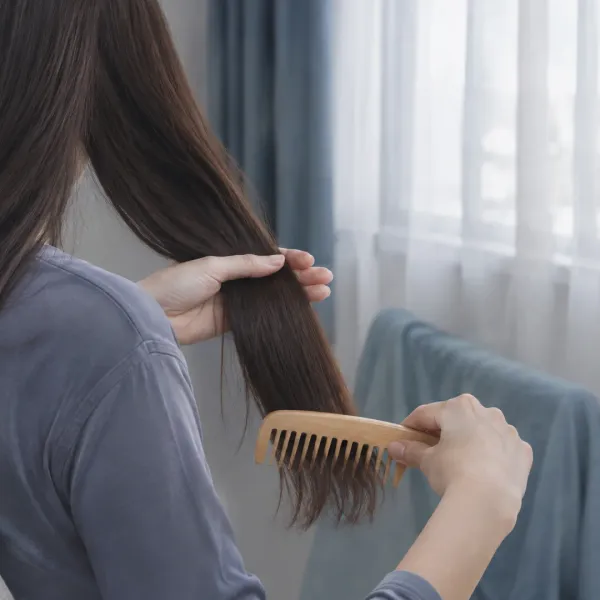
- Detangling slowly, often with a wide-tooth comb or fingers, starting from the ends and working upward.
- Avoiding tight styles that pull on the hairline or the weak spot where the textures meet.
- Keeping heat tools to a minimum, since heat can change the curl pattern of your new growth over time.
- Sleeping in a satin or silk bonnet or on a satin pillowcase, which many people prefer because it creates less friction than cotton.
Moisture and conditioning
Natural curly and coily hair often feels drier than straightened hair, because the scalp's natural oils travel less easily down a curled strand. Many people lean on conditioners, leave-in products, and regular wash days to keep both textures soft. Product labels differ, and some ingredients can irritate sensitive scalps or skin. For specific instructions, follow the product directions, and if you have a scalp condition or allergies, check with a pharmacist or a dermatologist before trying something new.
Protective and low-manipulation styles
A protective style is one that tucks the ends away, such as braids, twists, or wigs, so the hair is handled less. Many people use them while transitioning to keep the two textures from tangling. Even so, styles that are installed too tightly can stress the scalp and hairline, and tension-related hair loss is something professionals describe in general guidance. If a style hurts or causes bumps or soreness, that is a sign to loosen it or have it taken out by a trained stylist.
Trimming along the way
Regular trims remove the relaxed ends bit by bit, which reduces breakage at the line of demarcation. How much to take off and how often is a decision to make with your stylist, based on your hair's condition and your goals. Some people prefer a stylist experienced with textured hair, since that skill can make the process smoother.
Related reading: Hair Serum vs Hair Oil: Which Suits Your Routine?
Worries first-timers often have
Almost everyone has the same handful of worries at the start. Here are the common ones, along with some reassurance that does not overpromise.
"My hair is breaking where the two textures meet."
This is one of the most commonly described experiences, and it is generally linked to that fragile line of demarcation. It does not necessarily mean you are doing something wrong. Slower detangling, lower tension, and regular trims are often discussed as ways to reduce stress on that area. If breakage is severe, or you notice patchy thinning, a dermatologist can look at your scalp and hair to see what else may be going on.
"I do not know my natural texture."
That is expected, because many people have not seen their natural hair since childhood. Your texture can also look different in different areas of your head, which is common. Give yourself time to experiment with how it behaves when wet, when damp, and when dry before deciding what it "is."
"Styling two textures feels impossible."
It can feel awkward at first. Many people use methods that blend the textures, such as twist-outs, braid-outs, or roller sets, since these shape both the curly and straight sections to look more uniform. How well any method works depends on your hair, so treat early attempts as practice rather than a verdict.
"Will I regret cutting my hair?"
Feelings about length and identity are personal, and it is okay to take your time. If you are unsure about a big chop, a gradual transition lets you decide as you go. Looking at photos of different lengths and talking to your stylist about what cut might suit you can make the decision feel less risky.
"My scalp feels itchy or sore."
Itching can have many causes, including product buildup, dryness, a reaction to an ingredient, or tight styles. Reactions vary from person to person. If itching, redness, flaking, or pain continues, it is worth getting checked by a healthcare professional instead of guessing at a fix, since some scalp conditions need proper evaluation.
Be careful about quick promises
You may see products or services that claim to speed up the process or repair relaxed hair completely. Results vary, and hair that has been chemically straightened is not generally expected to revert to its natural curl. According to the U.S. Food and Drug Administration's general consumer guidance on cosmetics, products are meant to cleanse or beautify rather than change how the body works, so be wary of bold claims about growth or "repair."
Where to go from here
Your path is yours to set, and you can adjust it at any time. A helpful way to think about the months ahead is in three simple parts: handle your hair gently, keep it moisturized, and remove the relaxed lengths at a pace that feels right. Other people's experiences can be inspiring, but your hair type, lifestyle, and comfort level matter more than any schedule.
It also helps to know when to ask for professional input. A stylist who understands textured hair can guide trims and styling, and a dermatologist is the right person for concerns such as ongoing scalp irritation, unusual shedding, or bald patches. If you have used chemical products and notice burning or skin reactions, it is reasonable to seek advice rather than waiting.
If you are ready to take one small step today, set aside a few minutes to look closely at your new growth in natural light and notice how it feels and curls. That simple observation gives you a starting point for deciding how to transition from relaxed to natural hair at a pace that suits you.
Frequently asked questions
How long does it take to transition from relaxed to natural hair?
If you choose a gradual transition, the timeline depends on how fast your hair grows and how much relaxed length you want to remove. Some people trim in stages over many months, while others who big chop finish the change at once. Because growth speed and goals differ, it is more useful to plan around your own hair than a set calendar.
Is a big chop better than a gradual transition?
If you want one texture to manage and are comfortable with short hair, a big chop may suit you, while a gradual transition may fit better if keeping length matters to you. Each option has trade-offs, such as handling two textures at once during a gradual change. A stylist familiar with textured hair can help you weigh them for your situation.
Why does my hair break where the new growth meets the relaxed hair?
If the breakage is happening at the line of demarcation, it is often because the two textures behave differently and that spot is fragile. Rough detangling, tight styles, and heat can add stress there. If breakage is heavy or comes with scalp symptoms, a dermatologist can help look for other causes.
Can I still use heat on my hair while transitioning?
If you use heat tools, keep in mind that heat can change the curl pattern of your new growth over time, which may make it harder to see your natural texture. Many people limit heat during a transition for that reason. For personal guidance, a stylist can talk through options that fit your hair.
Disclaimer: This article is for informational purposes only and is not a substitute for professional medical advice, diagnosis, or treatment. Please consult a licensed professional for personal health decisions.