Shampoo Bars Explained: What They Are and Who They Suit
A shampoo bar is a solid, water-free cleanser made to wash hair and scalp, usually by combining cleansing agents with oils, butters, or other binders and pressing them into a block. It is not the same thing as a plain bar of soap, even though the two can look alike. This article walks through what shampoo bars are made of, when they tend to work well, which products they get confused with, and why the differences matter for your hair and scalp.
What a Shampoo Bar Actually Is
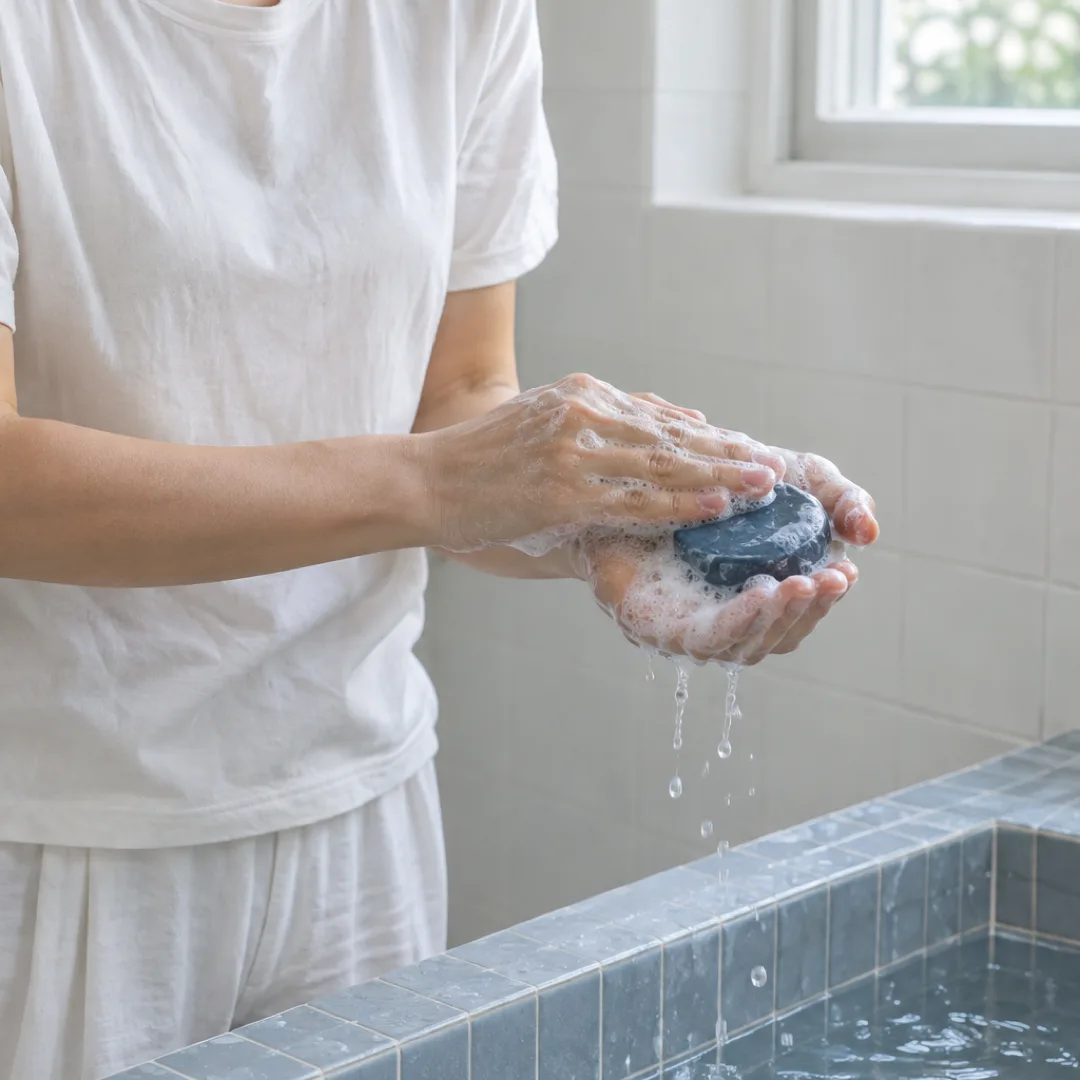
Think of a shampoo bar as liquid shampoo with the water taken out. Most bottled shampoos are largely water, with cleansing ingredients and conditioning agents dissolved in it. A bar skips that water, so the cleansing ingredients are concentrated into a solid form that you lather up with water at the moment of washing.
That is the one analogy worth holding onto: a bar is to a bottle what a drink powder is to a ready-made drink. The core job is the same, but the packaging and the preparation step change.
The cleansing ingredient is what matters
The thing that does the cleaning is a surfactant, meaning a compound that helps oil and dirt mix with water so they can be rinsed away. Shampoo bars generally fall into two broad groups based on which surfactants they use.
- Syndet bars (short for "synthetic detergent") use milder, purpose-built cleansing agents, often ones also found in liquid shampoos. They are usually formulated with a scalp-friendly pH in mind.
- Soap-based bars are made through saponification, the chemical reaction between fats or oils and an alkali such as lye. The result is true soap, which tends to be more alkaline.
Many products sold as "natural shampoo bars" sit in the second group. That is not automatically good or bad, but it changes how the bar behaves on hair, which comes up again below.
What else is usually in the bar
Beyond the cleanser, bars often include plant oils or butters for a softer feel, fragrance or essential oils, and sometimes protein or botanical extracts. Some are made without sulfates, and some are made without added fragrance. Because formulas vary so widely, the ingredient list tells you more than the front label does.
Situations Where Shampoo Bars Tend to Fit
Shampoo bars are often chosen for lifestyle reasons as much as hair reasons. Whether one suits you depends on your hair type, your water, and how much you value the format.
Travel and minimal packaging
A solid bar has no liquid to leak and is generally easy to pack. Many people also like that bars often come with little or no plastic packaging. That convenience is real, though it is a practical benefit rather than a hair-health one.
Different hair and scalp types
Hair that is fine, oily, or easily weighed down sometimes does well with a bar that rinses clean. Thick, dry, curly, or color-treated hair may need more attention to the formula, since a bar that feels stripping on one person can feel perfectly balanced on another. Reactions vary from person to person, and there is no universal answer.
Water type can change the experience
Hard water contains higher levels of minerals such as calcium and magnesium. According to the U.S. Geological Survey's general explanation of water hardness, these minerals can interact with soap and leave a residue. That is one reason soap-based bars can feel waxy or coated on hair in hard-water areas, while syndet bars often behave differently. If your tap water is hard, this is worth keeping in mind.
The adjustment period
Some people notice their hair feels different during the first few washes after switching from liquid shampoo. Hair can feel heavier, drier, or less slippery than usual. Whether this settles or signals a poor match differs between people, so it helps to pay attention rather than assume either way.
Shampoo Bars vs. Soap, Conditioner Bars, and Dry Shampoo
Several products get lumped together with shampoo bars. Separating them clears up most of the confusion.
Shampoo bar vs. body soap
Plain body soap is made for skin, not hair. Traditional soap is typically more alkaline than the scalp and hair surface, which naturally lean mildly acidic. The American Academy of Dermatology's general hair care guidance discusses how choosing products suited to your hair type matters, and a bar made specifically for hair is formulated with that in mind. Using ordinary hand or body soap on your hair is not the same as using a shampoo bar.
Shampoo bar vs. conditioner bar
A conditioner bar is a separate product. Rather than cleansing, it usually contains conditioning agents meant to soften and smooth hair after washing. Some bars are marketed as "2-in-1," but how well that works depends on the formula and on your hair. Many people still prefer a separate conditioning step.
Shampoo bar vs. dry shampoo
Dry shampoo is a powder or spray that absorbs oil between washes. It does not clean hair with water the way a shampoo bar does. The two serve different purposes and are not interchangeable.
"Solid" is not the same as "natural" or "gentle"
A solid format says nothing by itself about mildness. Terms like "natural," "clean," or "eco-friendly" are marketing language and are not a guarantee of how a product will feel on your scalp. The ingredient list and your own experience are better guides. Natural-origin ingredients, including essential oils, can still irritate some people.
Why the Details Matter for Your Hair and Scalp
It is easy to treat a shampoo bar as a simple swap, but a few details shape how it feels on your head.
Formula and pH
The formula type, soap-based or syndet, influences how the bar interacts with hair and with your water. Soap-based bars can leave hair feeling stiff or dull for some people, particularly with hard water. Some people use a diluted acidic rinse afterward, but opinions on that vary, and it is worth checking with a hair or scalp professional before building it into a routine.
Scalp conditions need extra care
If you have persistent itching, flaking, redness, or other scalp symptoms, a shampoo bar is not a substitute for finding out what is going on. The American Academy of Dermatology notes that ongoing scalp problems can have different causes, and some situations call for a dermatologist rather than a product swap. Medicated shampoos, whether bar or liquid, should be used according to the label and the guidance of a pharmacist or clinician.
Fragrance and sensitivity
Fragrance, essential oils, and botanical extracts are common reasons for reactions to personal care products. If you have sensitive skin or known allergies, scanning the ingredient list first is sensible. Stopping use if irritation appears, and speaking with a professional if it continues, is standard cautious practice.
Storage and hygiene
A bar that sits in standing water tends to soften and wear down faster. Letting it dry between uses on a surface that drains is a common recommendation from makers. The exact care depends on the formula, so the manufacturer's instructions are the best reference.
Cost and longevity
Bars are often described as lasting a long time because they are concentrated, but how long one lasts depends on hair length, how often you wash, and the formula. Price comparisons with liquid shampoo are only rough, since the amount of product used varies by person.
Two Judgments That Change Once You Understand Shampoo Bars
First, you can stop judging a bar by its look or its "natural" label and start checking whether it is soap-based or syndet. That single distinction explains much of why one person loves a bar and another finds it leaves their hair coated or dry, especially when water hardness is involved.
Second, you can decide whether a shampoo bar is the right tool for what you are trying to solve. If the goal is less packaging, easier travel, or simply trying a different format, a bar may fit. If the goal is to manage a stubborn scalp issue, the better step is usually a conversation with a qualified professional, not a switch in product format. Treat any shampoo bar as one option among many, and expect results to vary.
Frequently asked questions
Can I use a shampoo bar if I have color-treated hair?
If your hair is color-treated, the formula matters more than the format, so check the ingredient list and the maker's guidance. Soap-based bars are more alkaline, and some people find that they feel harsher on treated hair, while others do not notice a difference. A stylist who knows your hair history can help you judge what fits.
Why does my hair feel waxy after switching to a bar?
If you have hard water and are using a soap-based bar, the minerals in the water can interact with the soap and leave a residue that feels coated or waxy. The U.S. Geological Survey explains that hard water contains higher levels of dissolved minerals, which is the usual reason for this reaction. A syndet bar often behaves differently, though individual results vary.
Is a shampoo bar the same as a bar of hand soap?
No, because a shampoo bar is formulated for hair and scalp, while hand or body soap is made for skin. Traditional soap tends to be more alkaline than hair and scalp, which lean mildly acidic. That difference is why bars made specifically for hair are generally preferred over ordinary soap.
Should I switch to a bar if I have an itchy, flaky scalp?
If the itching or flaking is persistent, a new product format is unlikely to address the cause on its own. Scalp symptoms can have several causes, and the American Academy of Dermatology suggests seeing a dermatologist when problems continue. A professional can tell you whether a medicated product or another approach fits your situation.
Disclaimer: This article is for informational purposes only and is not a substitute for professional medical advice, diagnosis, or treatment. Please consult a licensed professional for personal health decisions.
Related reading: Satin Bonnet Basics: What They Do and How to Choose