Where to Put Conditioner on Mid Lengths and Ends
You stand in the shower with a handful of conditioner and a nagging doubt: does it go on the scalp, the roots, or just the lower half of your hair? Most conditioner advice points to the lengths and ends, which are the oldest and driest parts of the hair, and the scalp area is usually left lightly covered or skipped. Where to put conditioner on mid lengths and ends comes down to how hair is built, how it ages, and how your scalp behaves, so the details below are worth a closer look.
Rules of thumb are useful, but hair is not one-size-fits-all. Fine, thick, curly, coloured, and oily-scalp hair can all call for small adjustments, and some of those adjustments are covered here. Where a claim leans on outside guidance, the source is named beside it.
What does it mean to put conditioner on your mid lengths and ends?

It means concentrating conditioner on the section of hair from roughly ear level down to the tips, rather than spreading it from the scalp outward. The "mid lengths" are the stretch between the roots and the very bottom, and the "ends" are the last few inches. Together they make up the part of the hair that has been around the longest.
Hair grows from the scalp, and the scalp produces natural oils called sebum. Those oils tend to coat the roots first and travel down the strand only gradually. By the time you reach the ends, there is often much less natural oil left, which is one reason the tips can feel rougher than the top of the head.
The American Academy of Dermatology (AAD) hair care guidance generally describes shampoo as the step aimed at the scalp and conditioner as the step aimed at the hair itself. That split of jobs is the reason the lower lengths get the attention. It is a general principle, not a strict rule for every head of hair.
Why the lower half of the hair gets the focus
Hair has no way of repairing itself once it leaves the scalp. Everything the strands go through, including brushing, heat styling, towel drying, sun, and colouring, adds up over time. The ends have simply been through more of it than the roots have.
Conditioners are generally formulated to smooth the outer surface of the strand and reduce friction, which can make hair feel softer and easier to comb. That is a cosmetic effect on the hair's surface, and it wears off as the product is rinsed and washed away. It does not rebuild damaged hair, and results vary from person to person.
Why the roots usually get less
Conditioner left near the scalp can make some hair types look flat or greasy, especially hair that is already fine or prone to oiliness. Some people also find that heavy products near the scalp feel like buildup. Others with very dry, coarse hair or a dry scalp may do fine with a little product higher up.
If you notice itching, flaking, or irritation after conditioner touches your scalp, that may be a reaction to a product ingredient or a scalp condition. In that case, it is reasonable to ask a pharmacist or a dermatologist about it rather than guessing.
How do you get conditioner onto the right part of your hair?
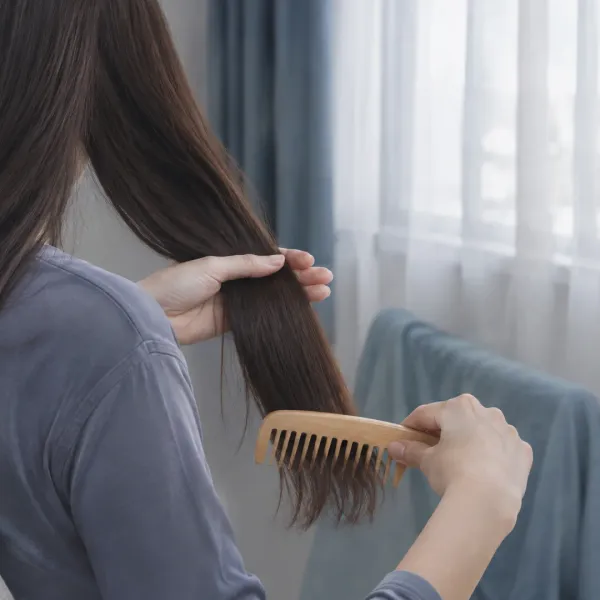
Start by removing excess water, then work the product through the mid lengths and ends with your hands or a wide-tooth comb, keeping it away from the scalp. The goal is even coverage on the lower lengths, not a thick layer in one spot. Product directions on the bottle are the best guide for amounts and timing, since formulas differ.
Here is the general flow many hair care guides describe, kept as a description rather than a strict instruction:
- After shampooing and rinsing: Many people squeeze out extra water first, because very wet hair can dilute the product and make it slide off the strands.
- Dividing the hair: Splitting hair into a few loose sections can make it easier to reach the underlayers, particularly with thick or long hair.
- Starting around ear level: Starting the product at the mid lengths and moving down toward the tips keeps most of it away from the scalp.
- Using a wide-tooth comb: Some people find that a wide-tooth comb helps distribute product and ease tangles, especially with wavy or curly hair.
- Rinsing: Rinsing thoroughly, based on the directions on the label, helps avoid a coated or heavy feel.
Adjusting for different hair types
Fine or straight hair often looks best with a lighter touch, since heavy products can weigh it down. Placing conditioner mainly on the ends and a bit on the mid lengths is a common approach for this hair type. Applying it higher up is usually what leads to that limp, flat look.
Thick, coarse, or curly hair tends to run drier, because natural oils have a harder time travelling down a bent or textured strand. People with these hair types often use more product on the lengths and may find that the ends need the most attention. Even so, the scalp area usually stays lightly covered at most.
Coloured, bleached, or heat-styled hair often has a rougher surface than untreated hair. That can make the lower lengths feel more fragile, so some people spend extra time on those areas. If your hair feels very brittle or breaks easily, a hairstylist can look at the strands in person and help you work out what might be going on.
A note on leave-in products and masks
Rinse-out conditioner is not the only product that goes on the lower half of the hair. Leave-in conditioners and deep conditioning masks are also usually aimed at the lengths and ends. Because each product has its own directions, the label is the right place to check how long to leave it on and how much to use.
What if you've been putting conditioner in the wrong place?
Putting conditioner at the roots now and then is not likely to harm your hair, but it can change how your hair looks and feels. The most common result is a greasy or heavy look at the scalp, particularly for people with fine or oily hair. Reactions vary, so what bothers one person may not bother another.
If you have been applying conditioner all over and your hair seems fine, there is no need to change a routine that works for you. The mid-lengths-and-ends approach is a widely used starting point, not a requirement. Adjusting based on how your hair actually behaves is reasonable.
Signs your routine may need a tweak
A few signals can suggest the conditioner is landing in the wrong place or in the wrong amount:
- Roots look oily or flat soon after washing, which may mean too much product is reaching the scalp.
- Ends still feel dry, rough, or tangled, which may mean the lower lengths are not getting enough coverage.
- Hair feels coated or waxy even after rinsing, which can point to using too much product or not rinsing long enough.
- The scalp feels itchy or looks flaky, which can have many causes and may not be related to conditioner at all.
When to ask a professional
Hair that is breaking, thinning, or shedding more than usual deserves more than a change in conditioner habits. The American Academy of Dermatology notes that hair loss can have a range of causes, and a dermatologist is the right person to evaluate it. Persistent scalp redness, burning, pain, or sores are also worth having checked rather than treated by trial and error.
A hairstylist can help with cosmetic questions, such as which products suit your hair texture, whether your ends need trimming, or how colour treatments are affecting the strands. Split ends generally cannot be repaired by conditioner, and trimming is the usual approach. A stylist can tell you how much is worth removing.
What conditioner can and cannot do
It helps to keep expectations realistic. Conditioner is a cosmetic product, and its job is to improve how hair feels and behaves on the surface, such as smoothness, shine, and ease of combing. It is not meant to treat a scalp or hair condition, and it will not permanently repair damage.
Over time, consistent gentle habits, such as limiting heat, being careful when detangling wet hair, and protecting hair from harsh conditions, tend to matter alongside any product. These are general habits, and the benefit differs for everyone.
Frequently asked questions
Should conditioner ever go on the scalp?
If your hair and scalp are very dry, some people use a small amount a little higher up, but most guidance keeps conditioner on the lengths. If your scalp tends to get oily or itchy, keeping product away from it is generally the safer starting point. A dermatologist can advise if you have a scalp concern.
Does thick or curly hair need conditioner in a different place?
If your hair is thick, coarse, or curly, the lower lengths usually run drier because natural oils travel down textured strands more slowly. That is why many people with these hair types put more product on the mid lengths and ends. The scalp area is still usually kept light.
Can conditioner fix split ends?
If your ends are already split, conditioner may make them look and feel smoother for a while, but it generally cannot join them back together. Trimming is the usual way to remove split ends. A hairstylist can tell you how much length is worth taking off.
Disclaimer: This article is for informational purposes only and is not a substitute for professional medical advice, diagnosis, or treatment. Please consult a licensed professional for personal health decisions.
Related reading: How to Keep Ends Healthy Between Trims