How to Clean Hair Ties and Scrunchies the Right Way
Two scrunchies can look equally grubby and still need completely different care, because the cause of the grime decides the fix. Knowing how to clean hair ties and scrunchies starts with figuring out whether you are dealing with oil and sweat, styling product residue, or simple wear and stretch. Guess wrong and you can waste time, loosen the elastic, or fade a fabric you liked.
This guide sorts the usual causes into two main branches, explains how to tell which one you have, and then covers what helps in both cases. It is general editorial information, not personal care advice, and fabric labels or maker instructions always come first.
Why your hair accessories get dirty in the first place
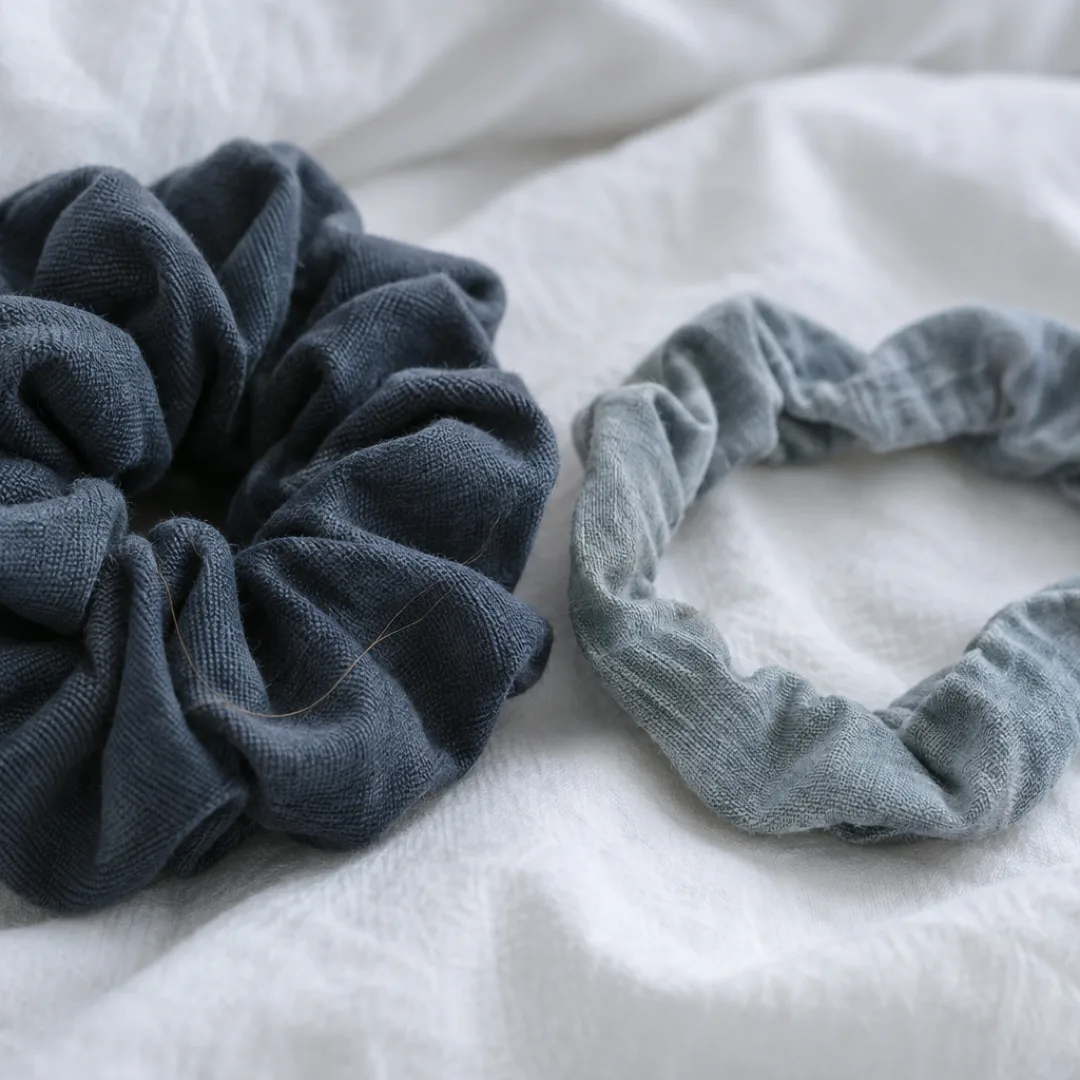
Anything that sits against your hair and scalp collects what is on them. Natural scalp oil, sweat, dry shampoo, hairspray, leave-in conditioner, and even the dust that settles on a bathroom counter can transfer onto an elastic or a fabric-covered band. Over time, that mix can make accessories look dull, feel stiff, or pick up a stale smell.
Here is the catch: not every worn-out accessory is dirty. Some are simply stretched out, and washing a tired elastic will not bring its grip back. Sorting the problem first saves effort.
Three common causes to tell apart
- Body residue: oil and sweat that build up on the part touching your hair or scalp.
- Product buildup: a tacky or crusty film from sprays, gels, creams, or dry shampoo.
- Wear and tear: loose elastic, fraying fabric, snagging threads, or a bent metal piece. This is a materials issue, not a cleanliness issue.
A quick way to sort which one you have
Hold the accessory up to bright light and look closely. A darkened, slightly shiny patch on the inner side usually points to oil and sweat. A whitish, flaky, or sticky film usually points to product. If it looks fairly clean but slides out of your hair or feels limp when you stretch it, the elastic is likely the issue.
Smell can help too. A musty, sweaty note suggests body residue or damp storage. A sweet, perfumed stickiness suggests styling products. Many accessories have a bit of both, which is normal, and the steps below overlap.
When the problem is oil, sweat, and odor
How to tell this is your situation
The fabric looks darker or duller where it touches your hair, the accessory smells stale even after airing out, or it feels slightly greasy. This is especially common with ties worn overnight, during workouts, or on days between hair washes. If the film is more sticky than greasy, jump to the next section instead.
What usually helps
Oil is generally handled well by a mild, gentle cleanser and lukewarm water. Many people use a small amount of the same gentle soap or detergent they use on delicate laundry. Working it lightly through the fabric with your fingers and rinsing until the water runs clear is a common approach. Check the care tag if there is one, and when a product-specific instruction is needed, follow the manufacturer's directions.
For silk and satin scrunchies, gentler handling is usually recommended, because harsh scrubbing can roughen the surface and dull the sheen. Cotton, jersey, and velvet tend to be more forgiving, though velvet can mat if rubbed hard. Pressing water out with a towel instead of wringing is a widely suggested habit for all of these.
The cost of guessing wrong
If you treat oil as if it were product buildup and reach for something strong, you may fade the color or weaken the fabric for no good reason. Scrubbing hard on delicate fabrics can also cause pilling and snags that hair then catches on.
Related reading: How to Wash Thick Hair Thoroughly: Fix Common Mistakes
When the problem is product buildup
How to tell this is your situation
The accessory feels stiff, crunchy, or tacky. You may see a flaky white residue, especially on dark fabrics, or notice it grabbing at strands more than it used to. This often shows up if you use hairspray, texturizing sprays, or dry shampoo regularly.
What usually helps
Residue from styling products tends to need a bit more soak time than plain oil. A common approach is letting the accessory sit in lukewarm water with a gentle cleanser so the film can loosen, then rinsing well. Rinsing thoroughly matters, because leftover soap can leave its own stiff, dull coating.
Some people find that a soft toothbrush used lightly on sturdy fabrics helps lift stubborn residue, though this is not suited to silk, satin, or loosely knit materials that can snag. If a product label or fabric tag warns against soaking, trust that over general tips.
The cost of guessing wrong
Treating buildup like simple oil with a quick rinse often leaves the film in place, so the accessory looks cleaned but still feels sticky. On the other side, treating a sensitive fabric with aggressive scrubbing to chase residue can leave it worse than before.
A note about elastic-only hair ties
Plain elastic bands, especially thin ones with a bare rubber feel, are small and tend to stretch when wet and rubbed. Many people simply replace these when they become grimy, since they are inexpensive. If you do clean them, a brief, gentle rinse is usually all they tolerate. Heat from very hot water or a hot dryer may weaken elastic, according to general fabric care guidance, so cooler settings are the common recommendation.
When the real issue is wear, not dirt
Sometimes the accessory is already clean and the actual problem is that the elastic has lost its snap. Cleaning will not rebuild stretch. If a tie slips out, pulls in an odd direction, or leaves a rough edge, replacing it is usually more sensible than washing it again.
Check for fraying, exposed elastic, loose stitching, or metal pieces that have bent or rusted. A snagging edge can catch hair and contribute to breakage, so setting those aside is a reasonable call. Results from replacing accessories vary from person to person, but a fresh, smooth band is simply less likely to tug.
What helps in every case
Check the care label and test first
Fabric tags and maker instructions come before any general advice. If there is no tag, testing a cleaning method on a hidden spot is a sensible habit, especially for dark or brightly dyed fabrics that may bleed.
Rinse well and dry flat or in the air
Soap left in the fabric can attract more dirt and leave a stiff feel, so thorough rinsing is widely recommended. Letting accessories air dry away from direct heat is generally gentler on elastic and fabric than a hot dryer. Make sure they are completely dry before storing, since trapped dampness is a common source of musty smells.
Keep the hair-contact side as clean as you can
Putting a tie on very product-heavy hair means more transfer onto the tie. Letting hairspray or gel settle before wearing accessories can reduce how much residue ends up on them, though how much it matters depends on the products you use.
Rotate a few instead of wearing one constantly
Rotating a small set gives each piece time to rest and recover its shape, and it spreads out the wear. This also makes cleaning less urgent, since no single scrunchie takes all the oil and sweat.
Store them somewhere dry and clean
A small pouch, a drawer, or a covered container keeps dust and bathroom moisture away. Wrapping a tie around a wrist or doorknob for long periods can stretch it out, so many people prefer a dedicated spot.
Watch your own skin and scalp
Fabric softeners, strongly scented detergents, and some soaps can irritate sensitive skin, and reactions vary from person to person. If you notice itching, redness, or flaking along the area where an accessory sits, a dermatologist or other qualified professional can help sort out whether the cause is the accessory, a cleaning product, or something else.
Related reading: How to Choose Hair Ties That Reduce Breakage
Putting it together
If your accessories look dark and smell stale, body oil and sweat are the likely culprits, and a gentle cleanser with lukewarm water and a careful rinse is the usual route. If they feel stiff, crusty, or sticky, product buildup is more probable, and a slightly longer soak with thorough rinsing tends to help. If they look clean but no longer hold, stretch and wear are the real issue, and replacement beats washing.
When you cannot tell which cause you are dealing with, start with the gentlest option, check the care label, and test on a small area before committing. Skipping the harsh methods is a safer default, and for persistent scalp irritation, a qualified professional is the right person to ask. Whatever the cause, the approach to cleaning hair ties and scrunchies comes down to matching the method to the fabric and the kind of grime.
Frequently asked questions
Can I wash a silk scrunchie the same way as a cotton one?
Not quite, since silk and satin are generally treated more gently than cotton. Cotton and jersey tend to tolerate light rubbing, while silk can roughen or lose its sheen with hard scrubbing, so pressing water out rather than wringing is the common suggestion. Always defer to the care label if there is one.
Why does my hair tie still feel sticky after washing?
If it still feels tacky, styling product buildup or leftover soap is the likely reason. Product film often needs a longer soak and a more thorough rinse than plain oil does. If the stickiness persists, the elastic itself may be breaking down, in which case replacing it makes more sense.
Will heat damage the elastic in my hair ties?
If the tie contains elastic, very hot water or a hot dryer may weaken it over time, according to general fabric care guidance. Lukewarm water and air drying are the usual gentler choices. A tie that has already lost its stretch will not recover from being cleaned, so it may simply be time to replace it.
How do I know when to replace a scrunchie instead of cleaning it?
If it looks clean but slips out of your hair, shows fraying, or has exposed elastic, replacement is typically the better call. Washing addresses dirt, not stretched-out or damaged materials. A rough or snagging edge can also catch strands, which is another reason to retire it.
Disclaimer: This article is for informational purposes only and is not a substitute for professional medical advice, diagnosis, or treatment. Please consult a licensed professional for personal health decisions.