Wide Tooth Comb vs Brush: Which Suits Your Hair?
The wide tooth comb vs brush debate rarely has a single answer, because the better tool depends on your hair texture, how wet or dry it is, and what you want from the next ten minutes. Plenty of people swear that one of them is the only "right" choice, but that kind of rule usually ignores how different hair can be. Curly, fine, thick, coily, color-treated, and straight hair all behave differently under tension. This article lays out the conditions in which each tool tends to make sense, what to watch for when you change tools, and which questions are worth bringing to a professional.
Why a simple comparison falls short
Search for advice and you will find confident claims in both directions: "never brush wet hair" on one side, "combs miss the surface smoothing a brush gives" on the other. Each statement holds up in some situations and falls apart in others. A rule that leaves out hair type, hair condition, and technique is really just a habit passed along as a fact.
Hair is not one thing
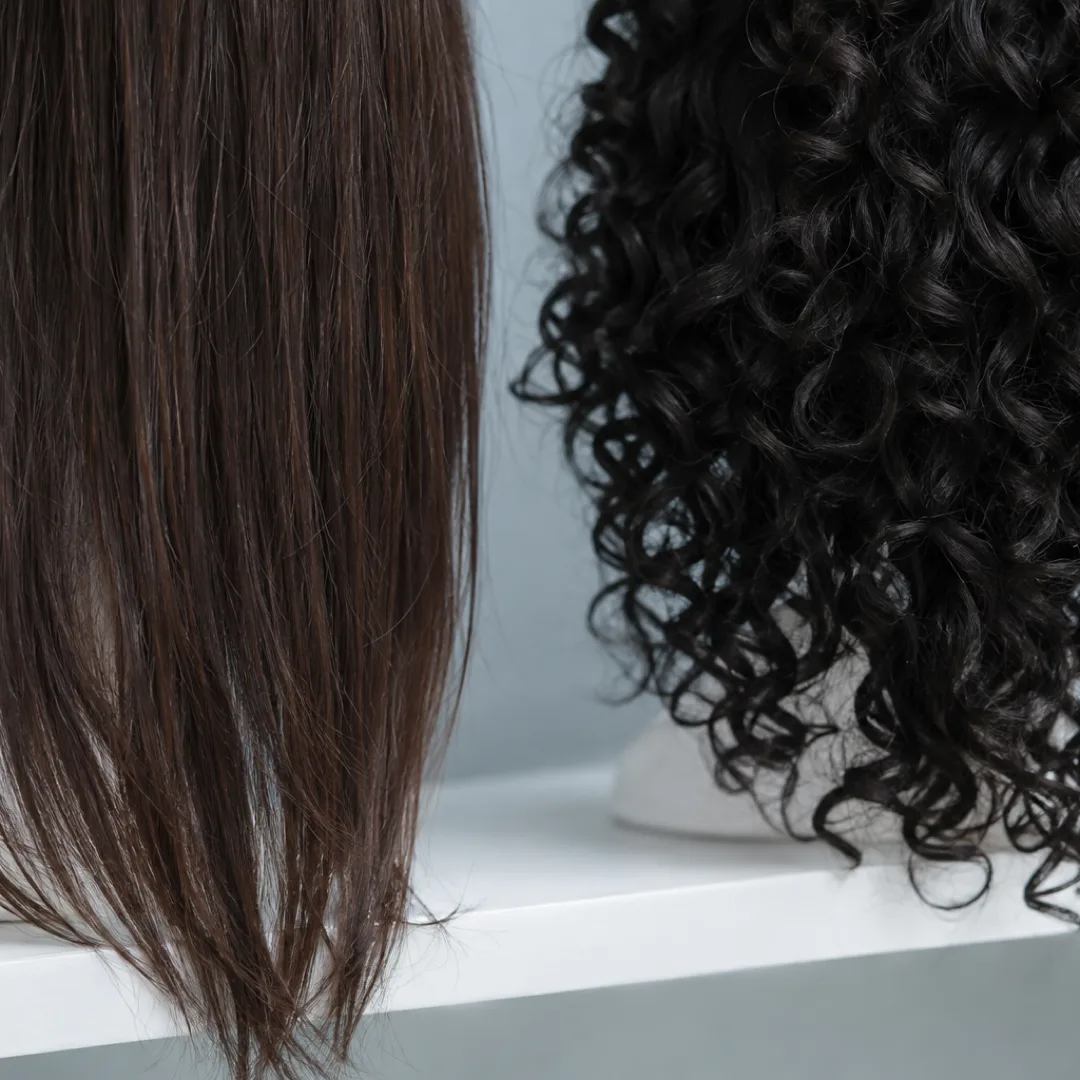
Strand thickness, curl pattern, porosity, density, and past chemical or heat treatment all change how hair responds to a tool. A fine, straight strand and a dense, tightly coiled strand do not experience the same pull from the same bristles. That is why a tool that feels wonderful on a friend's hair can feel rough on yours.
Wet and dry hair behave differently
Hair is generally described as more elastic and more vulnerable when it is wet, which is why many stylists and hair-care resources lean toward gentler, wider-spaced tools after washing. Dry hair, on the other hand, is often more stable under a brush. According to the American Academy of Dermatology's general hair-care guidance, being gentle with hair, especially when it is wet, is a common recommendation. Still, "gentle" is a matter of how you use the tool, not only which tool you pick.
Technique matters as much as the tool
A wide tooth comb dragged hard through a knot can cause as much stress as a brush yanked through the same knot. Working from the ends upward, going slowly, and holding the hair above a tangle are widely mentioned habits that reduce pulling. A comparison that ignores technique can make a good tool look bad, or a rough habit look harmless.
The risk of comparing without conditions
When a comparison skips the conditions, people tend to over-correct. Someone with very curly hair may hear "brushes are bad" and give up a tool that works well on straighter relatives, while someone with fine, oily hair may avoid a brush they would actually benefit from for distributing oils. Context is the missing ingredient in most one-line verdicts.
When each tool tends to fit better
Instead of crowning a winner, it helps to match the tool to the situation. The table below gives a quick overview of the conditions where each option is commonly used. It is a starting point rather than a rulebook, and individual experiences vary.
The following table compares a wide tooth comb and a brush across common situations in which people reach for one or the other.
| Situation | Wide tooth comb | Brush |
|---|---|---|
| Freshly washed, damp hair | Often preferred for gentle detangling | Often approached with more caution |
| Dry, smooth styling | Can work for light separating | Often used for smoothing and shine |
| Curly or coily texture | Commonly used with conditioner in the hair | Used by some, depending on curl goals |
| Spreading scalp oils along strands | Less able to spread evenly | Often used for this purpose |
| Travel and quick fixes | Slim and easy to carry | Bulkier but familiar |
Where a wide tooth comb often makes sense
A wide tooth comb is commonly chosen for damp hair, for textured or curly hair, and for anyone who finds that brushes snag or cause breakage. Its spaced teeth let strands pass through with less resistance, which many people find helpful when working through knots after a shower. It is also a frequent companion to leave-in products or conditioner during detangling, since the extra slip can reduce friction.
People with long hair, hair that tangles easily, or hair that has been lightened or chemically processed often prefer the comb for the same reason: less pulling per stroke. That said, a comb is not automatically gentle. Rough teeth, sharp seams, or a forceful approach can still be hard on strands and scalp.
Where a brush often makes sense
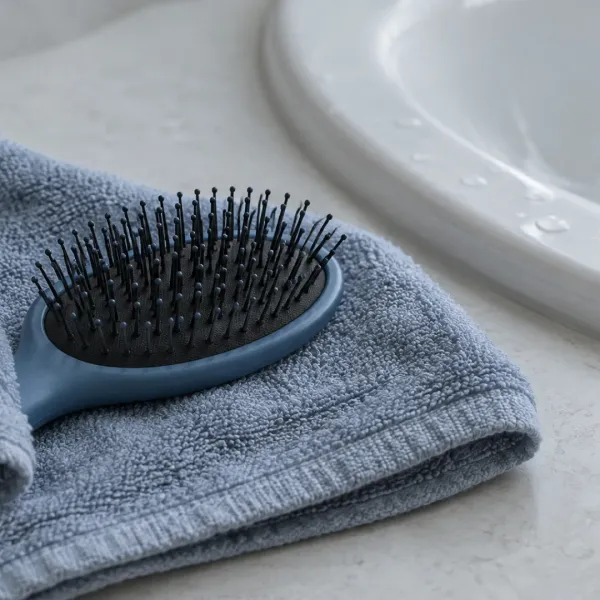
A brush is commonly used on dry hair for smoothing, adding polish, blow-drying, and moving natural oils from the scalp down the strand. Fine or straight hair that tends to look flat or greasy at the roots sometimes benefits from that distribution effect. Brushes also come in many shapes, including paddle, round, and vented styles, each suited to a different styling goal.
Bristle type matters too. Softer, flexible bristles are generally described as kinder than stiff, tightly packed ones, and a brush with a flexible cushion often moves with the hair rather than against it. If you have a sensitive scalp, it is worth noticing how a brush feels on your skin, since irritation varies from person to person.
Using both in one routine
Plenty of people use both. A wide tooth comb handles the wet, tangled stage, and a brush finishes the dry, styled stage. This split respects the idea that hair is more fragile when wet while still taking advantage of what brushes do well on dry hair. If you are unsure how to divide the work, how to detangle hair gently after washing can offer more routine ideas.
Hair concerns that call for a different conversation
If you notice a lot of breakage, patchy thinning, scalp pain, persistent itching, flaking, or redness, the tool you use is probably not the whole story. According to the American Academy of Dermatology, hair and scalp changes can have many causes, and a board-certified dermatologist is the appropriate person to evaluate them. A comb or brush can be part of day-to-day care, but it is not a way to diagnose or address those concerns.
Switching tools without upsetting your hair
Changing from a brush to a comb, or the reverse, can feel strange at first. Your hair, your scalp, and your hands are all used to a particular rhythm. A few thoughtful adjustments can make the change smoother.
Expect an adjustment period
A new tool may feel slower, less smoothing, or less effective at first, especially if you are used to a brush that gave a polished finish. That does not necessarily mean the new tool is wrong for you. Give yourself time to adapt your technique, and pay attention to how your hair and scalp respond over several weeks rather than judging after one use.
Watch how your scalp responds
Some people notice that their scalp feels different when they stop brushing, since brushing can stimulate the scalp and move oils. Others notice that a comb leaves their roots looking oilier or flatter than before. These are personal responses, and they vary widely. If you feel persistent discomfort, itching, or irritation after changing tools, it is reasonable to pause and consider other factors, such as products or washing habits.
Mind your technique, not just your gear
Switching tools does not fix a rough technique. If you are tugging at knots with either one, the same stress can show up in the form of snapping or shedding. Hold the hair above the knot, start from the ends, and work upward in small sections. For more on routines that suit different textures, see hair care routine for curly and wavy textures.
Keep your tools clean and in good shape
Combs and brushes collect hair, product residue, and natural oils. Cleaning them periodically is a common habit, and checking for cracked teeth, rough edges, or bent bristles is a simple way to avoid snagging. A damaged tool can pull and scratch even when your technique is careful. Specific cleaning methods vary by material, so it is worth checking the maker's care notes.
Consider your styling heat and products
If you use heat tools, dry shampoo, or lots of styling products, a brush may pick up buildup quickly and need more frequent cleaning. Combs may glide differently through product-heavy hair too. The tool is only one part of a larger system that includes washing, conditioning, heat, and styling habits.
Frequently asked questions
Can a wide tooth comb replace a brush completely?
For some people it can, particularly those with curly, coily, or easily tangled hair who rarely need a smoothing finish. For others, a brush remains useful for blow-drying, polishing, and spreading oils. Whether you can drop one tool depends on your texture, styling goals, and how your scalp responds.
Does the material of the comb or brush make a difference?
Material can affect how a tool feels, how it handles static, and how smooth its edges are. Wood, plastic, rubber, and metal each have their fans, and individual preferences vary. A well-finished tool without rough seams is generally easier on hair, regardless of the material.
Is it a problem if my hair feels different after I switch?
A change in feel is common and does not necessarily signal trouble. Hair may seem flatter, oilier, or less smooth as you adjust your technique and routine. If you notice ongoing breakage, scalp discomfort, or visible changes, that is a good moment to talk with a professional rather than keep guessing.
What should I ask a professional about my hair tools?
Useful questions include whether your hair type or treatment history calls for a particular kind of comb or brush, whether your detangling technique looks gentle enough, and whether any scalp or shedding changes deserve a closer look. You might also ask how often your tools should be replaced and which styling habits could be adding stress. A stylist or a dermatologist can respond to your specific hair and scalp rather than general patterns.
Disclaimer: This article is for informational purposes only and is not a substitute for professional medical advice, diagnosis, or treatment. Please consult a licensed professional for personal health decisions.